
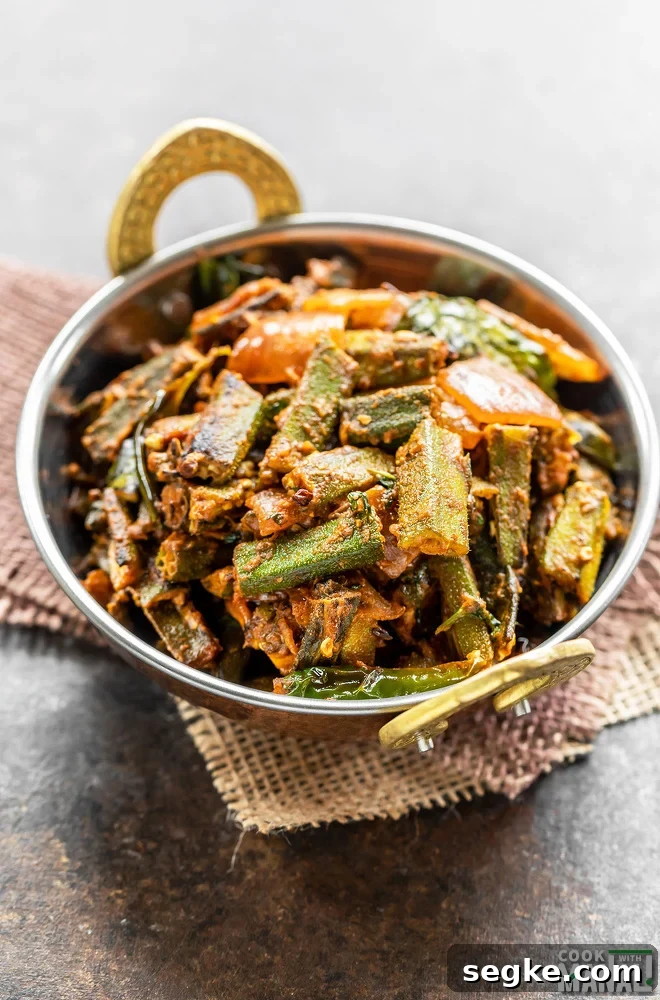
Achari Bhindi is a flavorful Indian okra dish cooked with tomatoes, yogurt and pickling spices such as mustard and fennel. Tangy, slightly spicy and fragrant from the panch phoron, this recipe is a delicious, different way to prepare okra (bhindi) and pairs perfectly with flatbreads like roti or paratha.
Bhindi, known as okra in English, is a vegetable I always enjoy. Many people in India love bhindi for its texture and ability to absorb spices, and it’s a staple in everyday meals. This Achari version highlights the bright, pickled flavors of achar—balanced with yogurt and tomato—making it a standout among okra recipes.
If you enjoy achari flavors, you’ll love this Achari Bhindi. The pickling spices add a warm, aromatic depth while the tomato and yogurt provide the tang that defines an achari-style dish. Below you’ll find ingredients, step-by-step instructions, serving ideas and simple tips to get the best results.
About This Recipe
The word “achari” comes from achar, the Indian pickle. Unlike American-style pickles, Indian achar is a spice-heavy, tangy condiment usually made with oil and a blend of spices. This Achari Bhindi borrows that pickling spice profile—especially mustard and fennel—so the final dish is bright, tangy and savory. Yogurt and tomato deliver the tang, while panch phoron (a five-spice mix of mustard, cumin, fennel, nigella and fenugreek) brings a distinctive aroma. The result is a well-spiced okra curry that’s excellent with rotis, parathas or rice and dal.
Ingredients for Achari Bhindi
This recipe uses common Indian pantry staples and simple fresh ingredients. Use fresh okra (bhindi) when possible for the best texture. Frozen okra may work but the texture can differ.
- 1.5 tablespoons oil (22 ml; neutral oil or avocado oil)
- 1 lb okra (bhindi), approx. 450–500 grams, washed and patted dry
- 1 tablespoon mustard oil
- 1 teaspoon panch phoron (or mix equal parts mustard, cumin, fennel, nigella and fenugreek)
- 1/4 teaspoon hing (asafoetida)
- 1 medium onion, quartered and petals separated
- 1 green chili, sliced
- 10–12 curry leaves
- 2 teaspoons ginger-garlic paste
- 1/3 cup tomato puree (store-bought or homemade)
- 1/4 cup plain yogurt, whisked
- 1 teaspoon coriander powder
- 1/4 teaspoon red chili powder (adjust to taste)
- 1/4 teaspoon turmeric powder
- 3/4 teaspoon salt (to taste)
- 1/2 teaspoon amchur (dried mango powder) — optional, only if more tang is desired
- 2 teaspoons jaggery (or a small pinch of sugar to balance tang)
- 1/3–1/2 cup water
- Cilantro, chopped, to garnish
Step by Step Instructions
Prepare the okra first: wash, dry thoroughly and slice as preferred. Many cooks slice each okra lengthwise then cut into smaller pieces for quicker cooking and better texture.
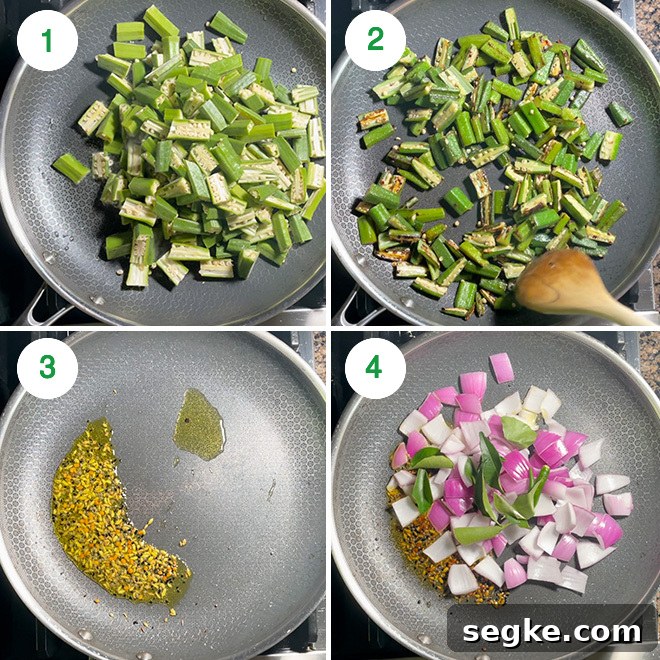
- Add 1.5 tablespoons oil to a pan over medium heat. When the oil is hot, add the chopped okra. I slice each okra in half lengthwise and then cut each half into three pieces. Stir to coat.
- Cook the okra on medium-low heat for about 12–13 minutes, stirring frequently, until it is tender and cooked through. Remove the okra to a plate and set aside.
- In the same pan, add 1 tablespoon mustard oil and heat well. If using mustard oil, heat it until it begins to smoke briefly, then remove the pan from the heat to cool slightly before adding whole spices.
- Add the panch phoron to the hot oil, return the pan to medium heat and let the seeds crackle and mustard pop. Add a pinch of hing and stir.
- Add the quartered onion, curry leaves and sliced green chili. Sauté the onions for 2–3 minutes until they are just turning light brown. Add the ginger-garlic paste and cook another 1–2 minutes.
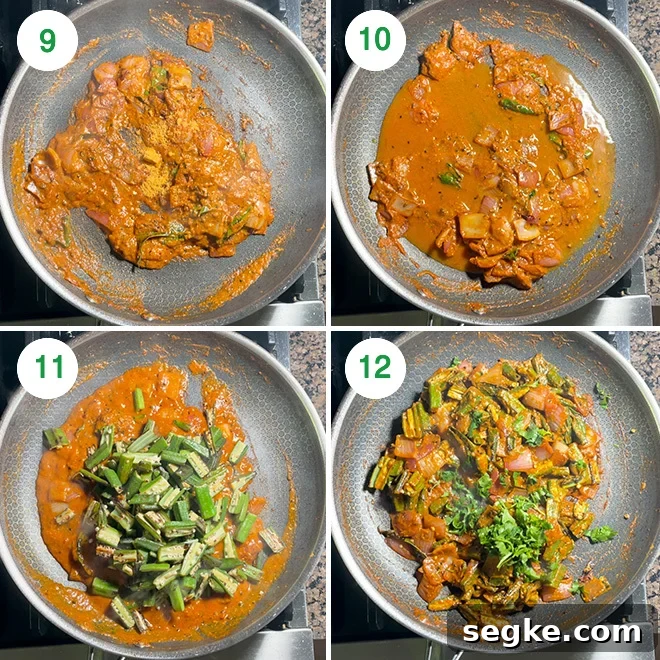
- Pour in the tomato puree with 2–3 tablespoons of water, stir and cook for about a minute.
- Lower the heat and whisk in the yogurt gradually so it combines smoothly without curdling.
- Return heat to medium and add salt, coriander powder, turmeric and red chili powder. If you want more tang, add up to 1/2 teaspoon amchur. Stir in the jaggery and cook for about 30 seconds.
- Add 1/4 cup water, then fold the cooked okra back into the pan. Mix gently until the okra is evenly coated in the achari sauce.
- Let the mixture simmer for 2–3 minutes to meld flavors. Garnish with chopped cilantro and remove from heat.

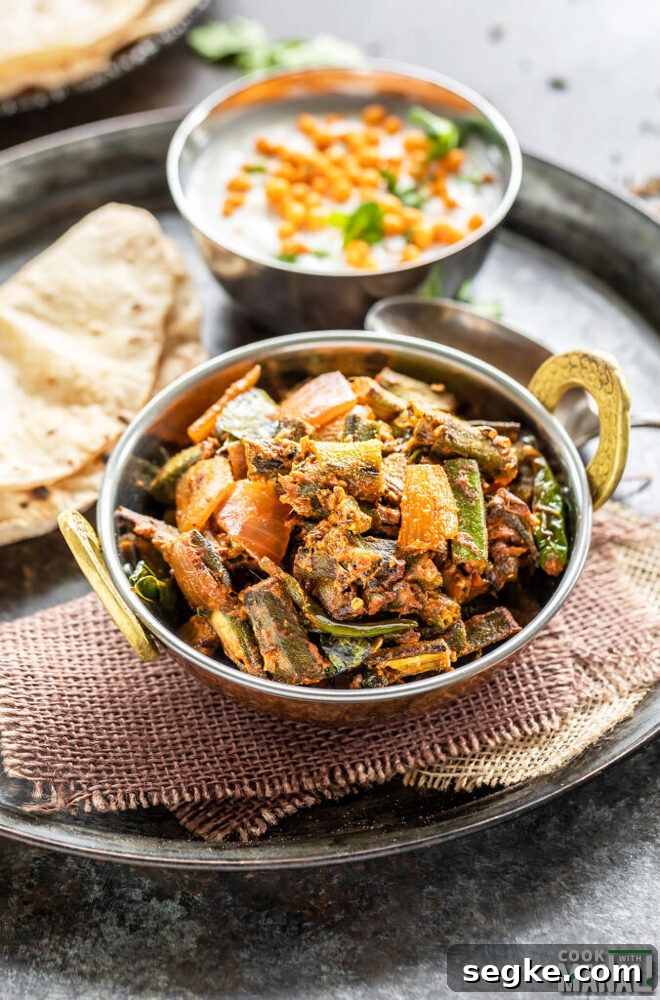
Serve hot with roti, paratha, or alongside rice and dal.
Serving Suggestions
Achari Bhindi pairs wonderfully with Indian flatbreads such as roti or paratha. It also works well as a side dish with plain steamed rice and dal. For a more substantial meal, serve with a cooling raita and a simple lentil or vegetable curry.
Tips & Notes
- For a stronger achari aroma, add 1 teaspoon of your favorite achar masala (from mango or lime pickles).
- Mustard oil gives a characteristic flavor. If unavailable, use a neutral oil such as vegetable or canola, though the flavor will be milder.
- If the yogurt you use is not tangy enough, add 1/2 teaspoon amchur (dried mango powder) to boost acidity.
- Dry the okra thoroughly before cooking to reduce sliminess and improve browning.
Nutrition (approx.)
Per serving (approx): Calories: 163 kcal; Carbohydrates: 18 g; Protein: 4 g; Fat: 10 g; Fiber: 5 g; Sodium: 501 mg. Nutrition values are approximate and intended as a guideline.
Additional Info
Course: Main Course | Cuisine: Indian | Servings: 4