
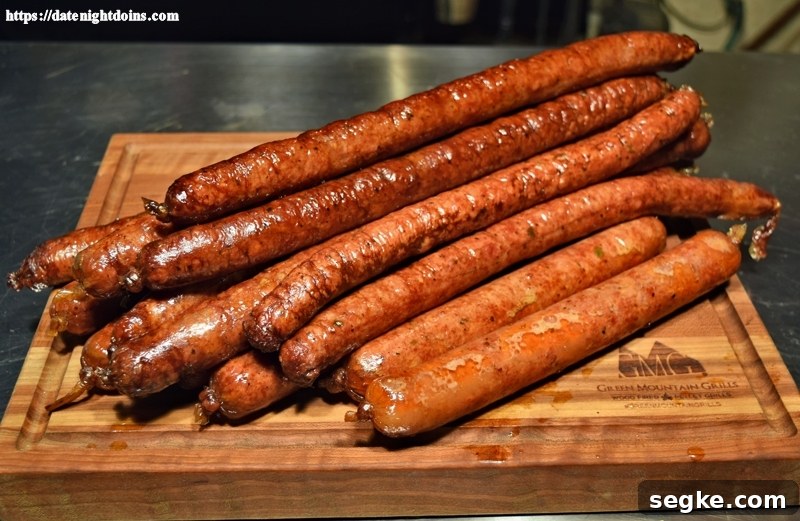
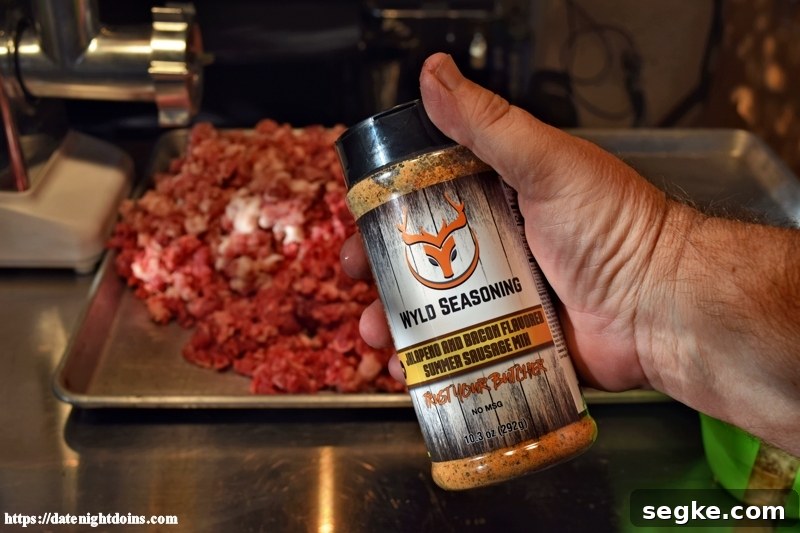
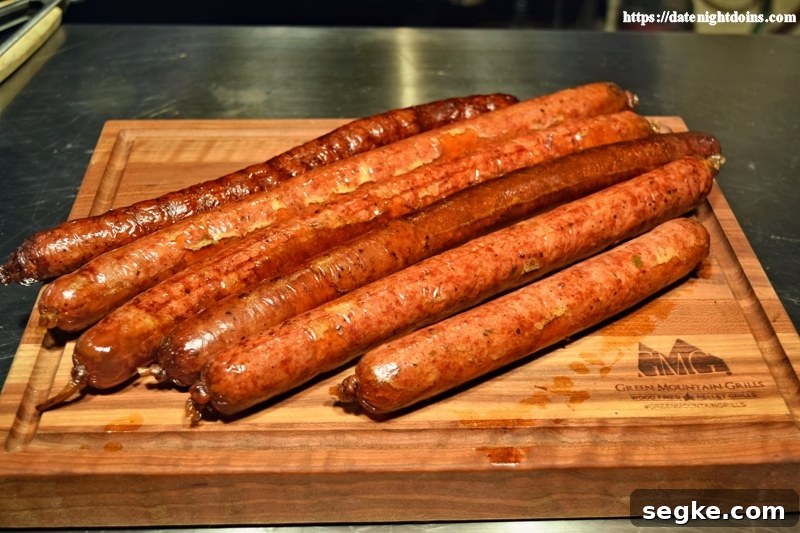
Our Jalapeno Bacon Summer Sausage is easily the best sausage I’ve made to date. I used a ready-made seasoning blend labeled “Jalapeno and Bacon Summer Sausage” from Butcher BBQ’s Wyld Seasoning line, which made the process quicker and gave the sausage a balanced, bold flavor. That said, this recipe works well with other preferred seasonings if you want to customize the spice profile.
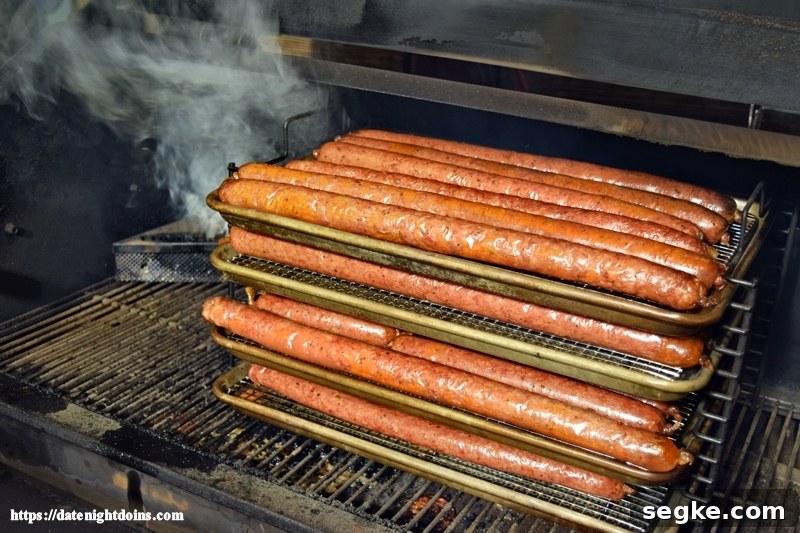
For the meat I used a mix of beef chuck and pork butt, added grated smoked garlic and sweet onion, then stuffed the mixture into snack-size collagen casings. I smoked the links on a Green Mountain wood pellet grill using Bull Racks to keep the sausages organized and evenly exposed to smoke. If you don’t have this exact gear, the technique and temperatures below will still apply to most quality pellet or charcoal smokers.
Making sausage at home is easier than most people expect, and it’s a great appetizer when paired with cheeses and crackers. Sausage is an ancient food—people have been combining ground meat and seasonings for millennia—so modern equipment like a grinder/stuffer simply makes the job cleaner and faster. The only real rules are food-safety basics: keep ingredients and equipment clean and cold throughout the process to prevent bacterial growth and ensure good texture.
Check Out Our Cookbooks — How-To BBQ Picture Books
Jalapeno Bacon Summer Sausage
A Wood Pellet Grill Recipe
Prep Time: 4 hrs. (includes chilling time)
Cook Time: 2.5 hrs. smoke @ 225°F (107°C)
Grill: Green Mountain wood pellet grill
Pellets: Texas blend or your preferred smoking blend
Ingredients
- 8 lb beef chuck
- 2 lb pork butt (leave the fat)
- 2 cups grated smoked garlic
- 1 large sweet onion, grated
- One bottle Wyld sausage seasoning (Jalapeno & Bacon Summer Sausage) or equivalent seasoning
- ¼ cup coarse black pepper
- Collagen or other preferred sausage casing
Cooking Directions
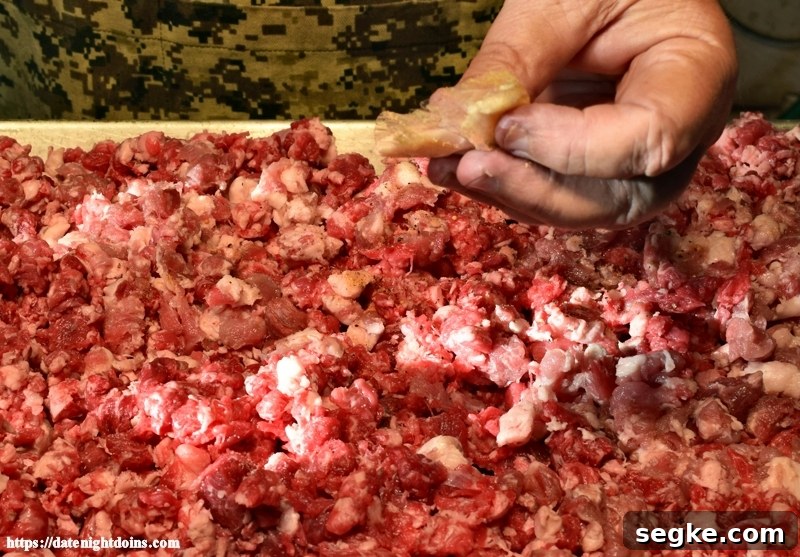
For a firm but juicy snack-style sausage, I blend 8 pounds of beef chuck with 2 pounds of pork butt. Pork butt contributes just the right amount of fat for moisture and texture. If possible, refrigerate the meat until slightly firm—partially frozen meat grinds much cleaner and prevents smearing.
Cut the partially frozen meat into roughly 1½-inch cubes to feed easily through your grinder. Keep bowls, grinder parts, and tools chilled; I store steel bowls in the freezer and work in short steps to keep everything cold.
TIP: Partially freezing the meat makes it easier to cut and grind. Keep bowls and tools cold between steps.
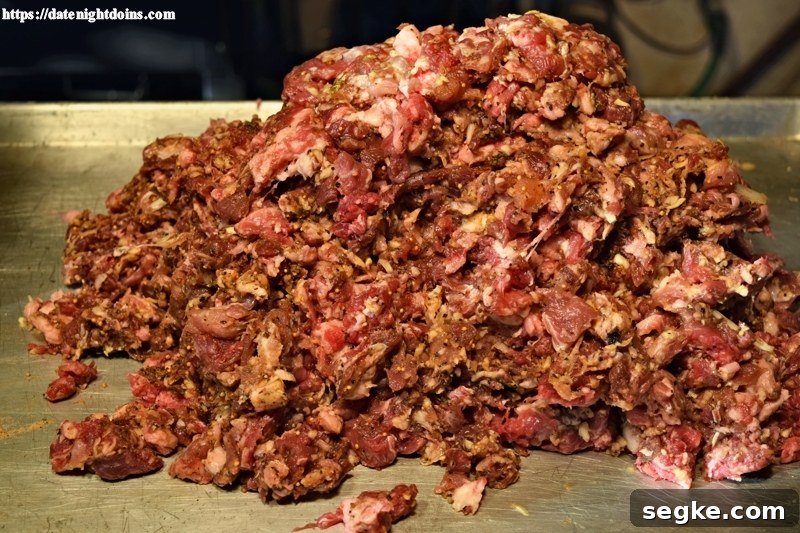
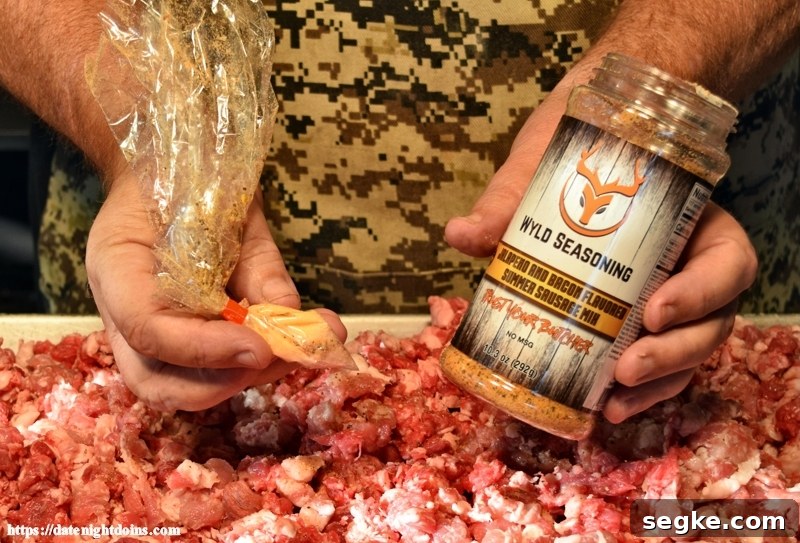
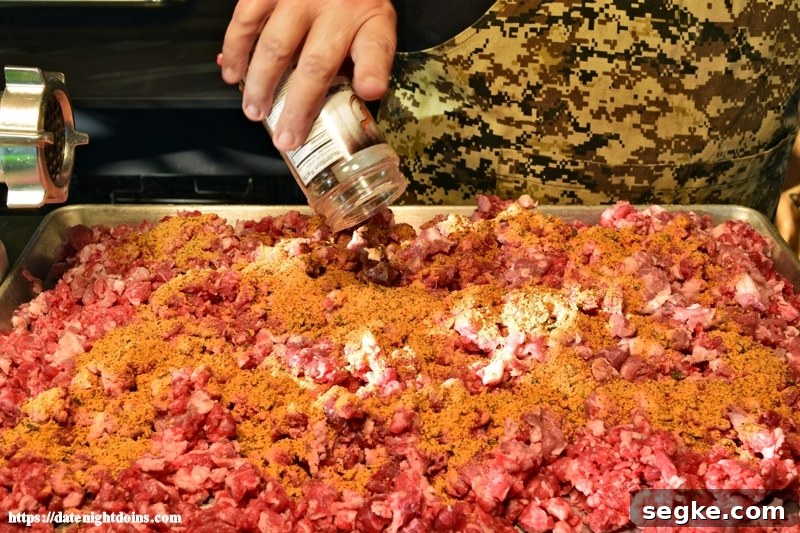
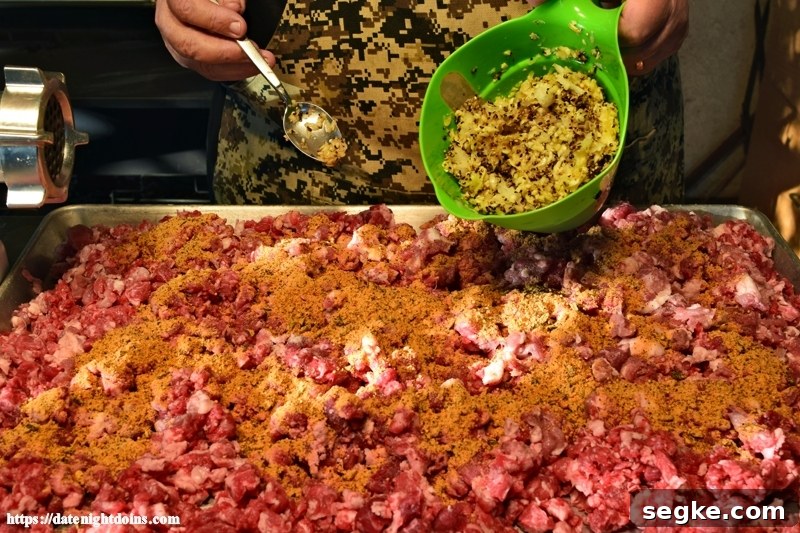
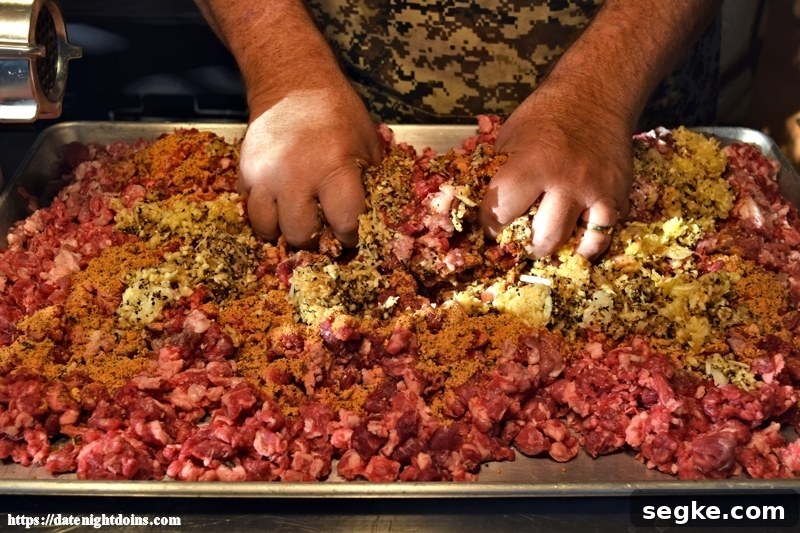
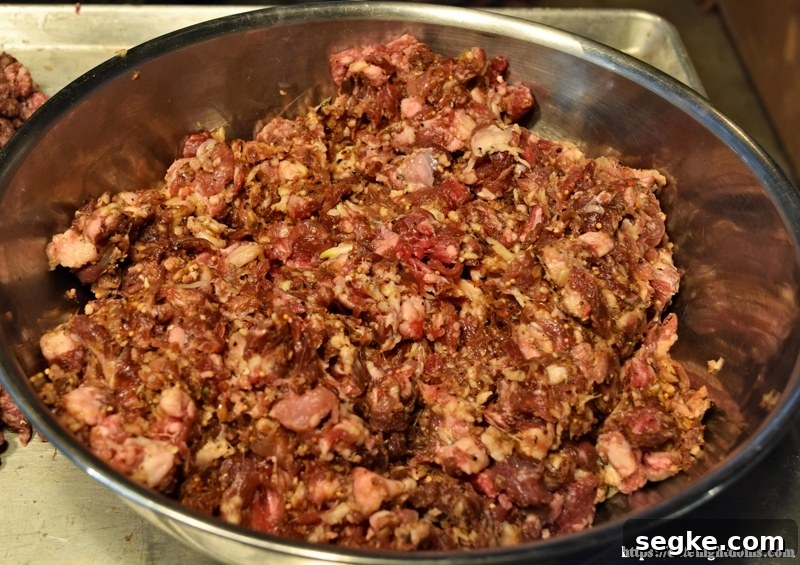
Grind the meat once through a coarse plate into a chilled bowl. Add the seasoning mix—including any small bag of cure the seasoning blend might contain—plus the grated garlic and onion. Mix thoroughly so the cure and spices are evenly distributed. Refrigerate the seasoned mixture overnight to let the flavors meld.
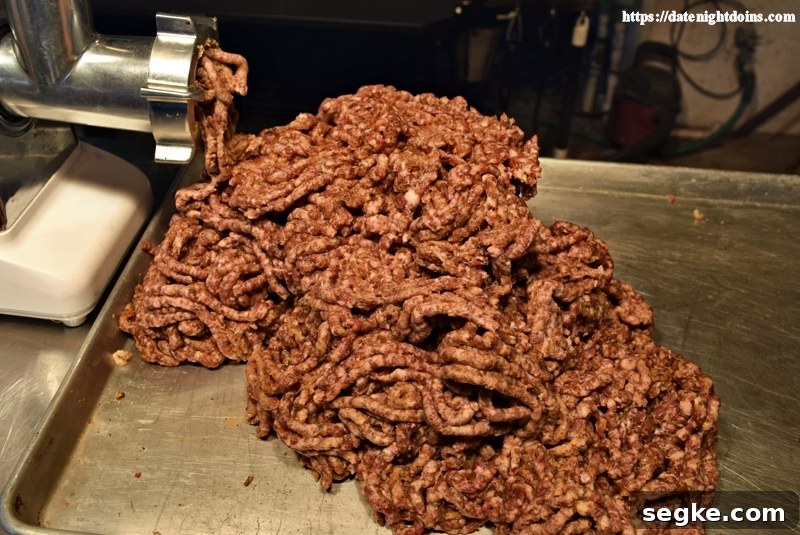
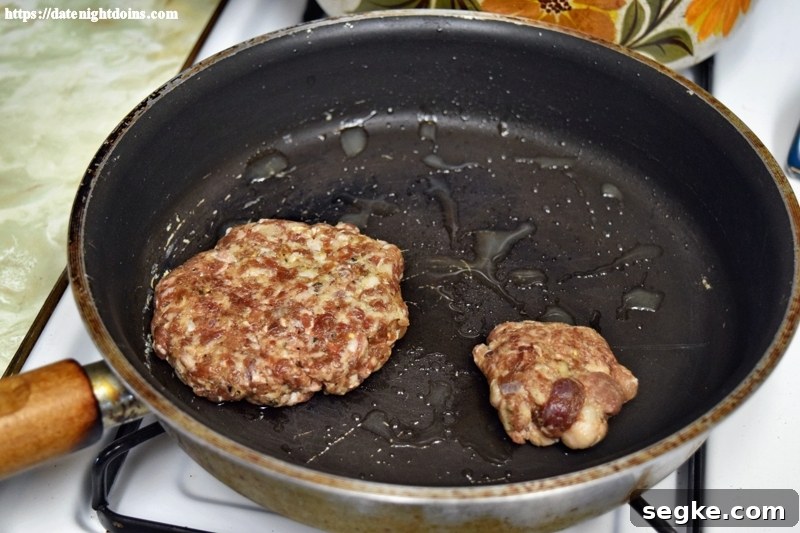
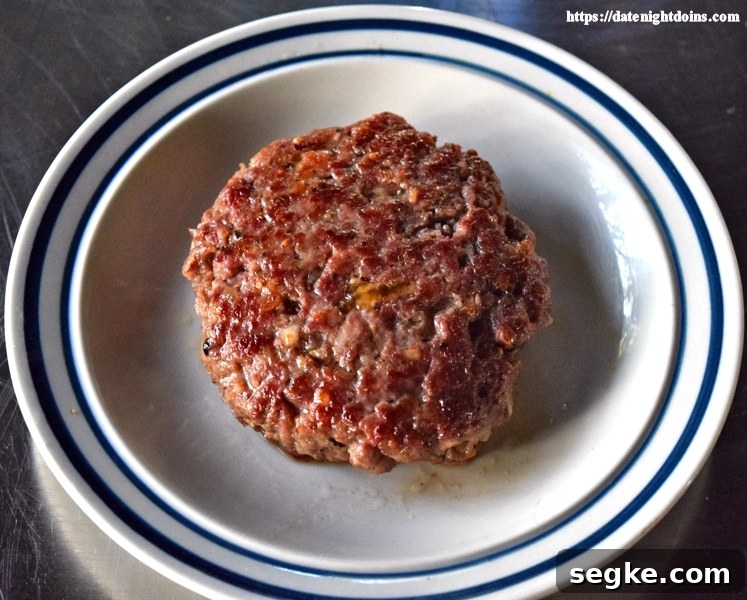
Before stuffing, cook a small patty of the mixture in a skillet as a taste test. Adjust salt, pepper, or heat if needed. When satisfied, grind the meat a second time through a finer plate (3/8″ or similar) for a smoother texture.
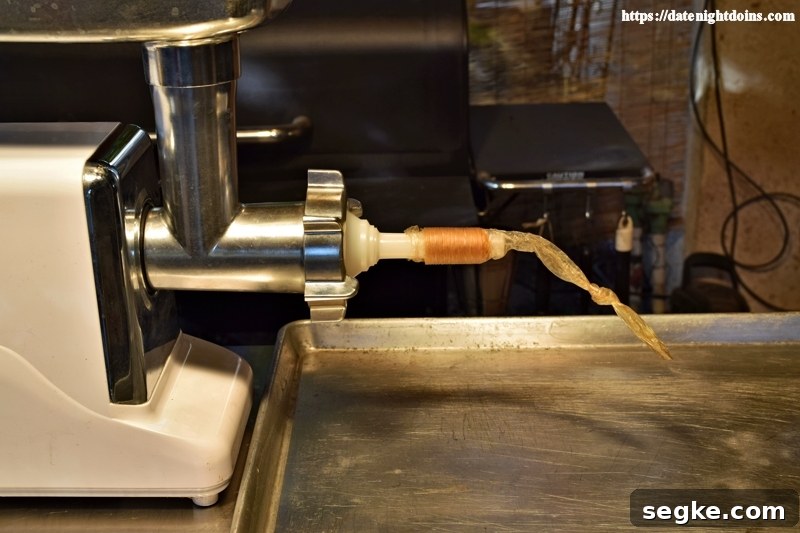
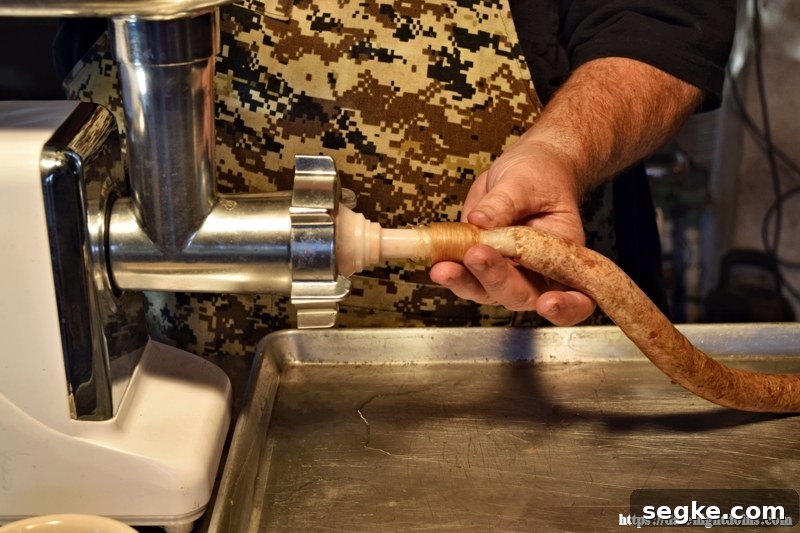
Load casing onto your stuffing tube and fill carefully, keeping air pockets to a minimum. Tie off the end and form links to your preferred lengths. If air gets trapped, use a small sausage needle, toothpick, or pin to release bubbles before tying or twisting.
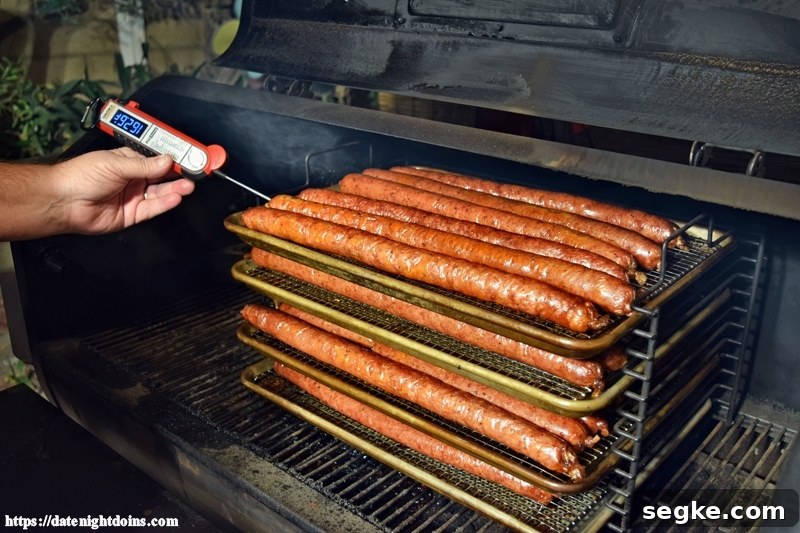
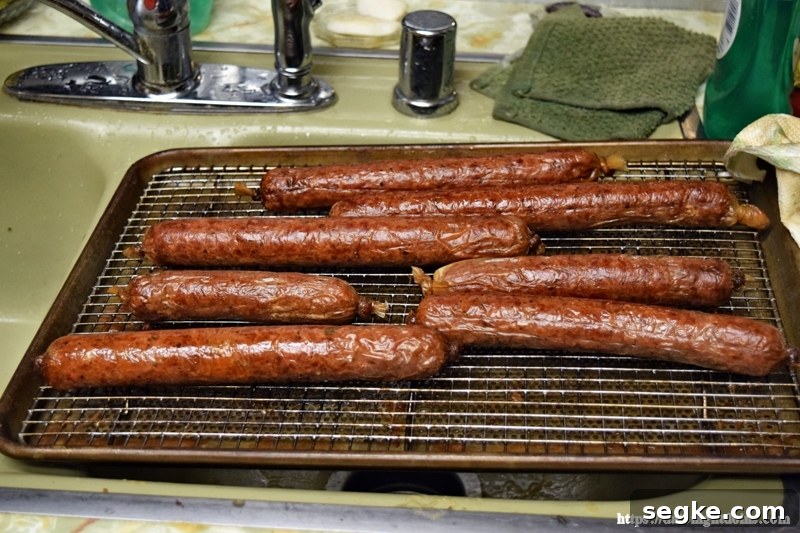
Hang or lay the links on racks, then smoke at about 225°F (107°C) until each link reaches an internal temperature of 165°F (74°C). On my pellet grill this took about 2.5 hours. Use an instant-read thermometer for accurate checks.
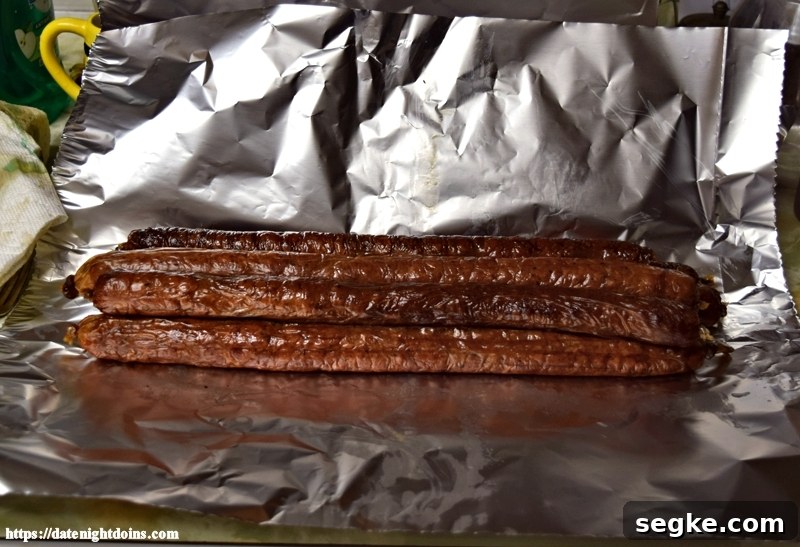
After smoking, plunge the sausages briefly under cold running water and pat dry. This removes surface grease and helps set the casing. Let the sausages cool, wrap them, and refrigerate. They can be sliced and served the same day or stored for later use.
Notes on Pellets and Smoking
A recipe is a guideline—especially with smoking. You can experiment with pellet blends and wood types until you find a flavor profile you enjoy. At smoking temperatures under 250°F (121°C) you will achieve maximum smoke flavor; higher temperatures will cook the meat faster but produce less smoke impact.
About Our Recipes
We test recipes across a range of grills and smokers, from pellet grills and wood-fired ovens to traditional charcoal and gas setups. The core principle is the same: control time and temperature to achieve consistent results. Feel free to adapt spices, wood blends, and smoking times to match your taste and equipment.
A recipe is an outline, not an instruction etched in stone—experiment, adjust, and make it your own. Live your passion and cook what you love.
Ken & Patti