

The hunger-fullness scale is a simple, evidence-informed tool that helps you eat more mindfully. Learn how it can improve your habits and support healthier, more sustainable eating in this article.

Improving your health often comes down to not just what you eat, but how you eat. Many people know the basics — more vegetables, adequate protein, whole grains — yet still struggle to eat consistently or in amounts that match their goals.
The hunger and fullness scale helps bridge that gap. It’s a simple, practical method to tune into your body’s signals so you can choose the right foods in the right amounts without relying on strict tracking or obsessive rules.
Whether you want to feel more in control around food, stop overeating, or adopt a more intuitive approach to meals, this tool gives clear, usable guidance. Read on to discover what the scale is, why it matters, and how to use it to build sustainable eating habits.
What is the hunger fullness scale?
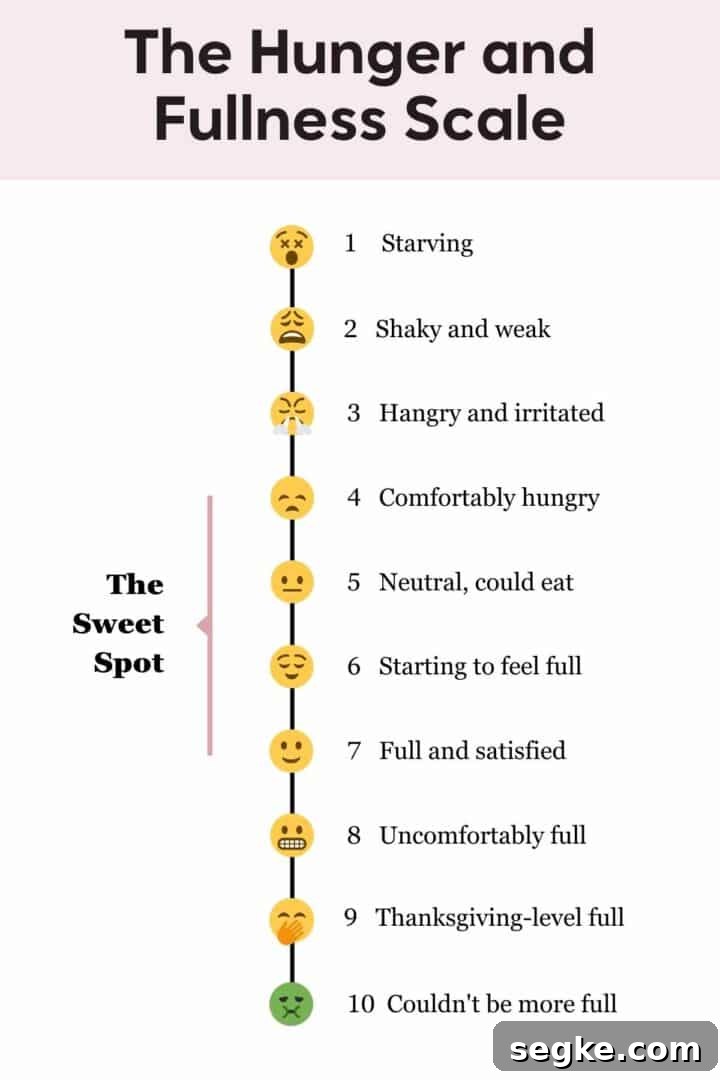
The hunger-fullness scale is a 10-point system designed to help you recognize and respond to physical and mental signals of hunger and fullness. On this scale, 1 indicates extreme, urgent hunger and 10 indicates uncomfortable or painful fullness.
Its purpose is to simplify the range of sensations you experience so you can make calmer, more intentional choices about when and how much to eat. By learning to notice subtle cues early, you can avoid becoming overly hungry and then overeating.
Becoming familiar with this scale improves awareness, encourages slower eating, and helps you tailor portions to your body’s needs rather than external rules.
Free resource: Download a free 3-day dietitian meal plan to get started with balanced meals and practical portions.
How the hunger fullness scale supports health
Many people are taught to ignore hunger in the name of dieting, which often backfires. Going into a meal extremely hungry makes you eat faster and increases the likelihood of consuming more food than you intended.
The hunger-fullness scale helps prevent that pendulum swing. By recognizing early hunger and stopping before discomfort, you can reduce episodes of overeating and develop a steadier, more sustainable pattern of eating. This is useful for weight management, improved energy, better digestion, and a calmer relationship with food.
Common hunger cues
Recognizing hunger is the first step. Common signs of increasing hunger, from subtle to strong, include:
- Thinking about food more often
- Difficulty concentrating
- A hollow or empty feeling in the stomach
- Lower energy or fatigue
- Stomach growling
- Shakiness or lightheadedness
- Irritability or mood changes
- Headache
- Weakness
- Nausea
Early cues like thinking about food or mild distraction are useful signals to plan a meal before hunger becomes urgent.
Common fullness cues
Fullness also arrives in stages. Early and later signs include:
- Relief from hunger
- Slower eating pace
- A gentle stretch or satisfied feeling in the stomach
- Mental contentment with the meal
- Deeper, more relaxed breathing
- Noticeable stomach pressure
- Abdominal discomfort or pain if overeaten
- Lethargy or extreme tiredness
- Gas or bloating
- Nausea from excess
The goal is to stop eating when you feel satisfied — not uncomfortably full. Learning to recognize the mid-range cues helps you avoid the last-category symptoms.
Factors that impact hunger and fullness
Several factors can make it harder to notice or respond to hunger and fullness cues:
- Stress and distraction: Busy schedules, work pressure, or emotional stress can lead to mindless eating or missing hunger signals.
- Exercise: Physical activity affects appetite differently for different people and can either increase or suppress feelings of hunger.
- Meal timing: Long gaps between meals often cause faster eating and reduced awareness of fullness.
- Meal composition: Balanced meals with protein, fiber, and volume from vegetables support lasting fullness, unlike meals high in simple carbs or fat.
- Diet history: Repeated dieting or chronic restriction can dull body signals and make reconnecting with hunger and fullness more challenging.
Small practical adjustments — like regular meal timing and prioritizing protein and fiber — can make the scale easier to use.
How to use the hunger fullness scale
Think of hunger and fullness like a pendulum: the further you wait, the more extreme the swing. To keep eating balanced and comfortable, aim to eat around a level 4 and stop around a level 7:
Start at level 4: You may feel a mildly empty stomach, some thoughts about food, or slight distraction. This is a comfortable, non-urgent hunger that’s ideal for beginning a meal.
Stop at level 7: You should feel satisfied, with gentle pressure in the abdomen and mental contentment, but not stuffed or uncomfortable. This range supports steady energy and easier portion control.
Important tips
Three practical tips make the scale more effective:
- Start with hunger: Learn to recognize early hunger cues. Eating before extreme hunger makes it much easier to stop when you’re satisfied.
- Personalize your cues: Everyone’s body signals hunger and fullness differently. Keep a short log to identify how your body communicates so you can create your own reliable scale interpretation.
- Use it as troubleshooting: If you frequently overeat, review when you start meals. Are you waiting until you’re ravenous? The scale helps you identify patterns and adjust behavior.
Is the hunger fullness scale only for intuitive eaters?
No. While the hunger-fullness scale is a core tool in intuitive eating, it benefits anyone who wants to eat with more awareness. Whether your priorities are weight management, blood sugar control, improved digestion, or a healthier relationship with food, this method helps you respond to your body rather than external rules.
Over time, using the scale can reduce the need for strict tracking and support long-term, sustainable eating habits.
Signs you should use the hunger fullness scale
This approach can help if you experience any of the following:
- Frequently finishing meals overly full
- Often going back for seconds
- Regular evening overeating
- “Treat” foods trigger overeating
- Constant thoughts about food
- Eating much faster than others
- Seldom feeling clear hunger or fullness
- Emotional or boredom-driven eating
- Feelings of guilt or shame after eating
Final thoughts
The hunger-fullness scale is a practical 10-point guide to help you identify and act on real hunger and fullness signals. It supports mindful eating, portion control, and a calmer relationship with food without relying on rigid tracking systems.
Practice noticing early hunger and stopping when you feel satisfied. With time, this approach can lead to steadier energy, fewer episodes of overeating, and more confidence in your food choices. If you’ve felt disconnected from your body or out of control around food, use this tool consistently and watch small changes add up to lasting improvements.