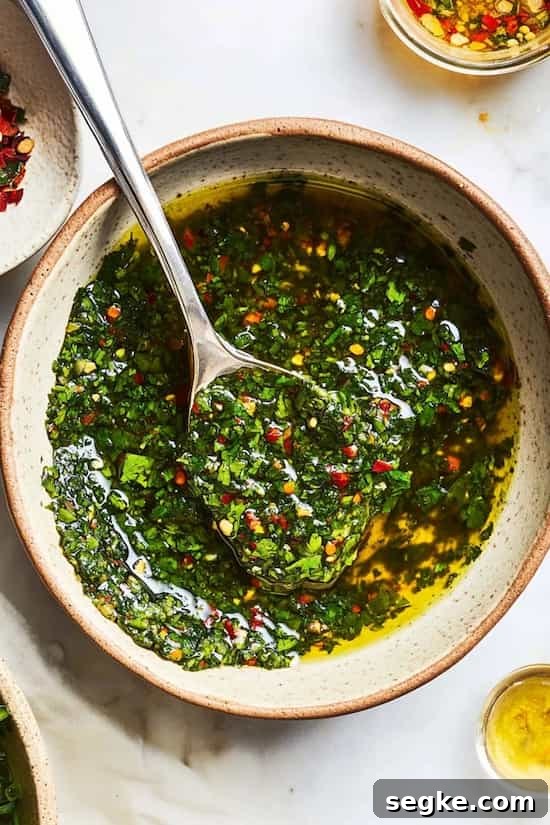
If there’s one sauce that can lift an ordinary meal into something memorable, it’s chimichurri. Bright, herb-forward, and delightfully punchy, this Argentine classic was born to accompany grilled meats, but its fresh flavor works beautifully on vegetables, eggs, sandwiches, and more.
The best part? Chimichurri is incredibly simple to make: no cooking, no special equipment, just a handful of fresh ingredients chopped and stirred together to create a vibrant sauce you’ll want to keep on hand.
Save This Recipe
Why This Chimichurri Recipe Belongs in Your Fridge
Chimichurri is one of those go-to condiments that people always ask you about. It transforms simple dishes with minimal effort, and it’s easy to tweak to suit your preferences.
Here’s why I make it all the time:
- No cooking required. Chop, stir, and serve.
- Extremely versatile. Use it on grilled meat, roasted vegetables, sandwiches, eggs, or as a dipping sauce.
- Fresh and bold. The combination of herbs, garlic, vinegar, and olive oil creates a lively, balanced flavor.
- Easy to customize. Adjust spice, acidity, or garlic to your taste.
- Meal-prep friendly. It keeps in the fridge for several days and often tastes even better after the flavors meld.
Ingredients You’ll Need
This recipe relies on simple, quality ingredients. Measure loosely — chimichurri is forgiving.
- 1 cup fresh flat-leaf parsley, finely chopped
- ¼ cup fresh cilantro (optional, for extra depth)
- 4–5 garlic cloves, finely minced
- 1 small shallot, minced (optional but recommended)
- 1–2 tsp red pepper flakes, to taste
- ½ tsp salt (adjust to preference)
- ½ tsp freshly ground black pepper
- ⅓ cup red wine vinegar
- ½ cup good-quality olive oil
Optional additions
- 1 tbsp fresh oregano, finely chopped (or 1 tsp dried)
- 1 tbsp lemon juice, for extra brightness
Prepping Your Herbs
Fresh herbs are the heart of chimichurri. Use bright, crisp leaves for the best flavor. Rinse and dry the herbs thoroughly so the sauce isn’t diluted.
Tip: Remove the thicker parsley stems and keep the tender bits — they add flavor without toughness.
Chop the herbs finely by hand for a pleasant, slightly rustic texture. A food processor can speed things up, but it often makes the sauce too smooth; hand chopping preserves the lively, flecked appearance of classic chimichurri.
Building That Bold Flavor
Chimichurri’s character comes from garlic and vinegar. Mince the garlic as finely as you can for an even distribution of flavor. If you love garlic, use five cloves; if you prefer it milder, start with three.
Adding a minced shallot is optional but recommended: it adds a subtle sweetness and complexity that balances the garlic and vinegar. Red wine vinegar is the traditional choice and gives chimichurri its bright tang; avoid sweet vinegars that will change the profile.
Mixing It All Together
Combine the chopped parsley and cilantro (if using), minced garlic, shallot, red pepper flakes, salt, pepper, and oregano in a bowl. Pour in the red wine vinegar and stir to combine.
Slowly drizzle in the olive oil while stirring until the ingredients are well coated. The result should be a loose, chunky sauce with green herb flecks suspended in olive oil.
Taste and adjust: add more salt, more vinegar, or more heat until it suits your palate. That flexibility is what makes homemade chimichurri so rewarding.
How to Use Chimichurri
Chimichurri is remarkably versatile. Use it to brighten and lift many dishes:
- Spoon over grilled steak, chicken, pork, or lamb.
- Drizzle on roasted or grilled vegetables for a fresh finish.
- Spread on sandwiches or wraps for an herby kick.
- Top scrambled eggs or omelets.
- Use as a marinade for meats before grilling.
- Serve as a dipping sauce with crusty bread.
A favorite trick: mix some chimichurri into mayonnaise for a quick, flavorful sandwich spread.
Make It Your Own
Chimichurri is endlessly adaptable. Want more heat? Add extra red pepper flakes or a minced fresh chile. Prefer more acidity? Increase the vinegar or add lemon juice. If you enjoy different herbs, try adding more cilantro, oregano, or even a touch of mint for a fresh twist.
If cilantro isn’t your thing, skip it and use all parsley for a more traditional profile. There’s no single correct version — only the one you love.
Tips for the Best Chimichurri
Use the freshest herbs you can find; wilted leaves won’t deliver the same brightness. Hand-chop ingredients for a pleasant texture rather than pureeing into a paste. Balance the vinegar carefully so it enhances without overpowering the herbs. Let the sauce rest for at least 30 minutes or overnight in the fridge so the flavors can meld.
Why Homemade Is Worth It
Store-bought chimichurri can be convenient, but homemade delivers a fresher, more vibrant flavor. It’s quick to prepare, economical, and fully customizable to your taste. Making it yourself means you control the garlic level, heat, and acidity to suit your dishes.
A Must-Try!
Chimichurri brings people together at the table with its bright, bold flavor. Once you make it, you’ll find countless ways to use it, and you’ll wonder how you ever cooked without this simple, transformative sauce.
Grab a bunch of fresh herbs and give it a try — your meals will thank you.
Chimichurri Sauce Recipe
Prep Time: 10 mins
Servings: 8
Course: Side Dish
Cuisine: Latin-inspired
Ingredients
- 1 cup flat-leaf parsley, finely chopped
- ¼ cup fresh cilantro (optional)
- 4–5 garlic cloves, finely minced
- 1 small shallot, minced (optional)
- 1–2 tsp red pepper flakes, to taste
- ½ tsp salt
- ½ tsp freshly ground black pepper
- ⅓ cup red wine vinegar
- ½ cup good-quality olive oil
- Optional: 1 tbsp fresh oregano or 1 tbsp lemon juice
Method
- Wash and dry the herbs thoroughly to prevent a watery sauce.
- Remove any thick parsley stems and finely chop the leaves by hand for best texture.
- Peel and mince the garlic; use more or less to suit your taste.
- In a bowl, combine the chopped herbs, garlic, shallot, red pepper flakes, salt, pepper, and oregano if using. Add the red wine vinegar and stir.
- Slowly drizzle in the olive oil while mixing until everything is well combined and loose.
- Taste and adjust seasoning—add more salt, vinegar, or heat as desired. Let rest for at least 30 minutes, or refrigerate overnight for deeper flavor.
Notes
- Spoon over grilled steak, chicken, pork, or lamb.
- Drizzle on roasted or grilled vegetables.
- Spread on sandwiches or wraps for a fresh lift.
- Top scrambled eggs or omelets.
- Use as a marinade before grilling or as a dipping sauce with bread.