
Developing Key Blogging Skills in Cape Town
As a blogger living in Cape Town, I’ve made a focused list of skills I want to develop. This list grows and changes as I learn, but it currently includes the following areas that are important for building a sustainable, engaging blog:
- Analytics and data literacy
- Advertising and ad networks
- Photoshop Elements and image editing
- Food styling for recipe photography
- Photography techniques and composition
- Building and participating in blogging communities
- Creating and marketing e-books
Since arriving here, I’ve already made progress on several of these skills. I know many other bloggers — and creators in general — are curious about the same topics, so I’m sharing what I’ve learned as I go. My goal is to make the blog more useful for regular readers, improve discoverability, and attract more returning visitors through better content and smarter promotion.
Getting Started with Analytics
To improve my understanding of blog performance, I joined a Google course titled “Google Analytics Platform Principles.” Before the course, my understanding of analytics was very basic: I could see a spike in views and celebrate, or notice when a post didn’t get many shares and feel disappointed. That limited view didn’t help me answer why certain posts do well or how to encourage repeat visits.
For full transparency, growing page views and increasing the number of committed readers are two main priorities for me. Right now I average about 500 views a day, much of which comes from a few older posts that picked up momentum: Not Your Average Mac and Cheese, Healthified Boxed Mac and Cheese, Calzones, and Chicken Enchiladas. From my current perspective these posts contribute a significant portion of daily traffic. My aim is for new content to attract a larger share of traffic and to cultivate a base of readers who return frequently.
What I Learned and How I’m Applying It
Before taking the full course I did a quick review of the recommended fundamentals course to pick up basic vocabulary and understand how Google Analytics is structured. That helped me feel less lost when navigating the interface and exposed me to useful concepts like goals, events, and segmentation.
One practical step I took was to set a duration-based goal: I want visitors to stay on the blog for at least one minute. While the goal options aren’t perfect for tracking things like overall views or direct reader engagement in simple ways, setting a session duration goal gives me a measurable target to improve content engagement. In Google Analytics this is done under Admin > View > Goals.
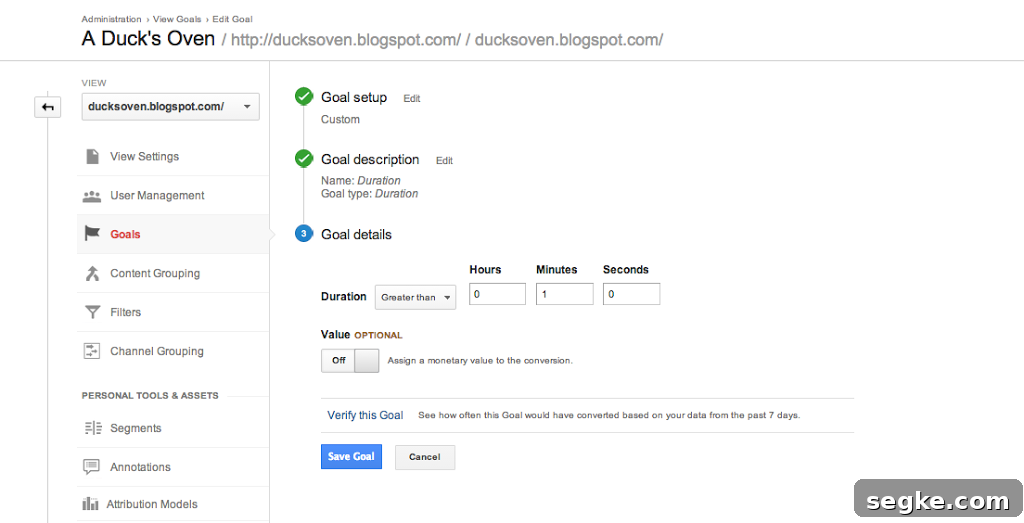
Tracking this objective has been interesting so far. I’m collecting data and watching trends over time. Once enough data accumulates, I’ll be able to identify patterns: which posts keep people reading longer, where visitors drop off, and which referral sources bring more engaged readers.
Using Spreadsheets to Monitor Progress
To monitor longer-term progress, I set up a simple spreadsheet fed by regular reports from Google Analytics. The metrics I’m tracking include Page Views, Visits, Unique Visitors, Pages per Visit, and Average Visit Duration. Google Analytics offers a wealth of data, and I’m only starting to scratch the surface. For now, focusing on a handful of core metrics helps me set realistic targets and notice meaningful changes over time.
As I become more comfortable with analytics, I plan to refine my tracking approach, test small changes to headlines and images, and track how those changes affect engagement and return visits. I’ll share lessons I learn along the way, particularly what works and what doesn’t when applying analytics to real blogging decisions.
Next Steps
Beyond analytics, I’m continuing to improve my skills in photography, food styling, and image editing so that every post looks inviting. I’m also exploring advertising and community-building strategies to increase visibility and foster repeat readership. These efforts are interrelated: better visuals and clearer promotion feed into better user engagement, which analytics then helps me quantify and optimize.
I’ll keep tracking progress and sharing practical takeaways. If you’re working on similar goals, I hope my ongoing experience with analytics and content improvement will be helpful as you build your own blogging practice.