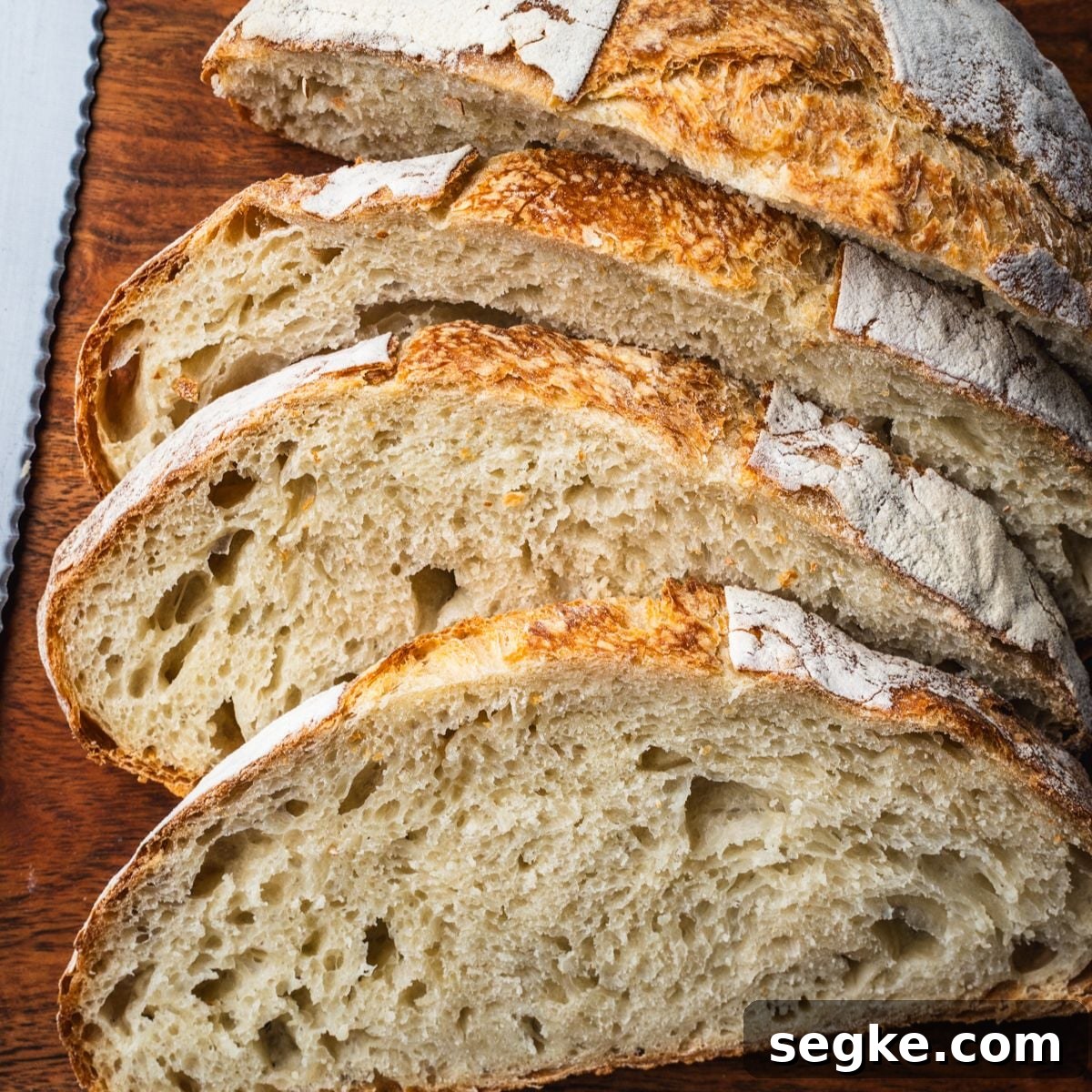
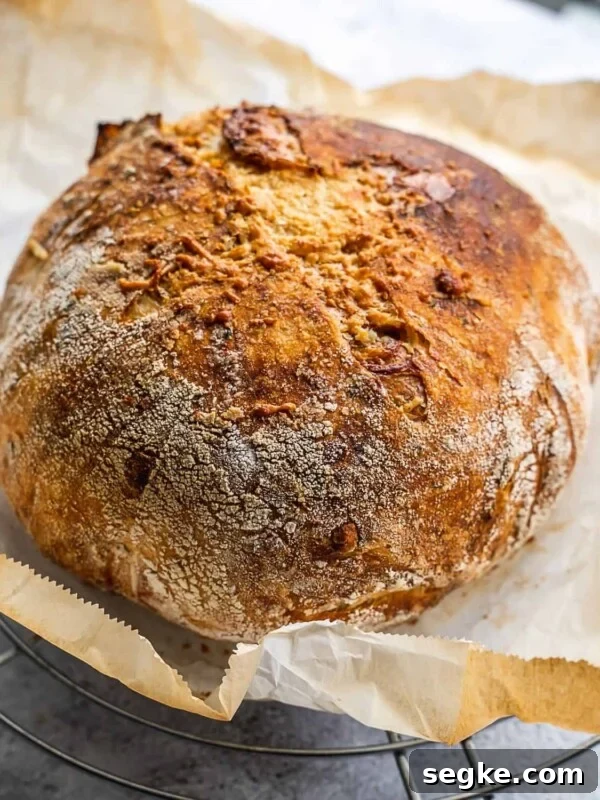
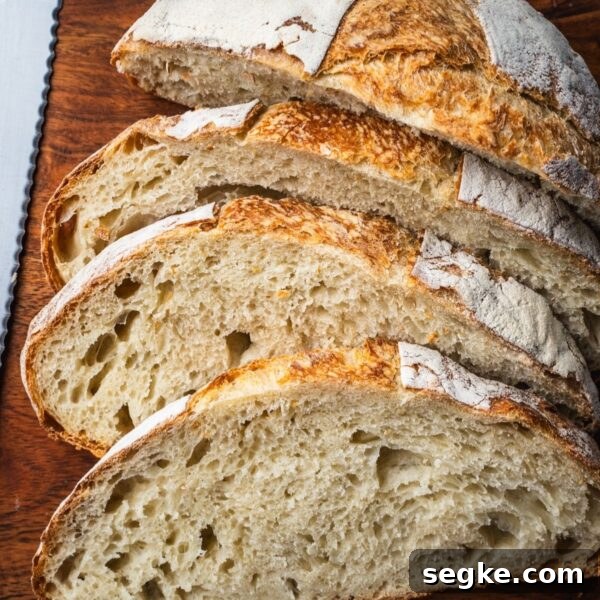
This beginner-friendly no-knead white bread recipe is an excellent place to start for home bakers. It yields a loaf with a crisp, golden crust and a soft, tender crumb. While the recipe requires planning because of long rise times, most of that time is hands-off, and the final loaf is well worth the wait.
Serve this rustic bread with butter, jam, dipping oil, or use it as a base for bruschetta. It also freezes well when pre-sliced for quick breakfasts and sandwiches.
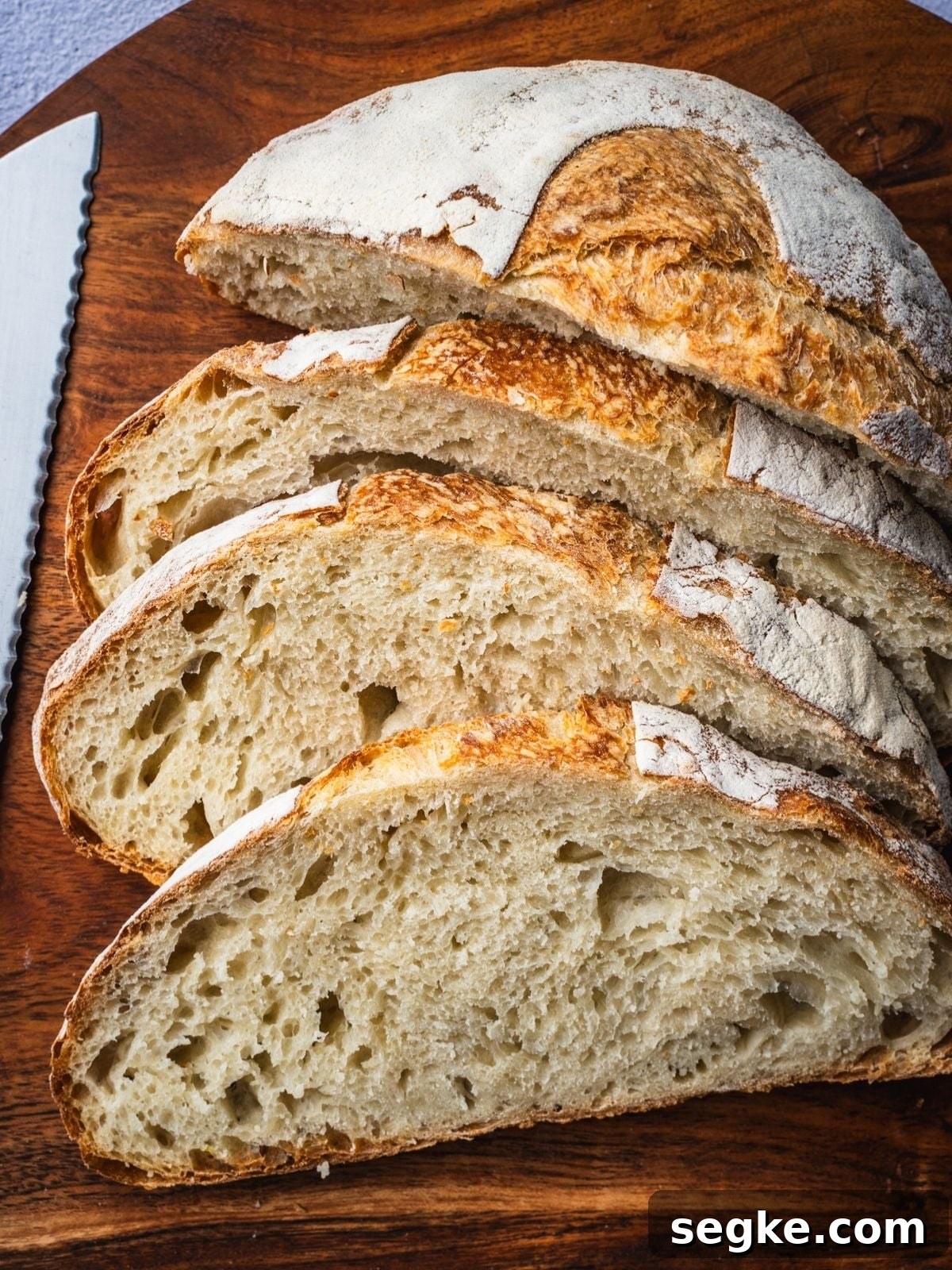
Table of Contents
- What is No-Knead Bread?
- Ingredients
- How to Make No-Knead White Bread
- Expert Tips
- Recipe FAQs
- More No-Knead Baking Recipes
- No Knead White Bread Recipe
Baking artisan-style bread at home can seem intimidating, but this recipe simplifies the process. It removes complicated techniques like frequent folding, shaping, or maintaining a sourdough starter. Instead, it relies on a long, slow fermentation for flavor and structure — making it ideal for beginners who want excellent results with minimal hands-on effort.
- No special techniques: No kneading, no starter, no complicated shaping.
- Mostly hands-off: The dough rests and ferments slowly, often overnight in the fridge or at room temperature.
What is No-Knead Bread?
No-knead bread is mixed and left to ferment slowly rather than being worked extensively by hand or machine. Gluten develops over time during the slow rise, producing a chewy, open crumb and deep flavor without the need for kneading or repeated folds. This method is forgiving and well suited to home kitchens.
Slow fermentation has several benefits:
- Enhanced flavor and texture: A longer rise lets natural enzymes and yeast develop more complex flavors and a better crumb structure.
- Improved digestibility: Slower fermentation helps break down some carbohydrates and proteins, which can make the bread easier to digest for some people.
- Milder gluten structure: While not gluten-free, extended fermentation can partially break down gluten proteins, which some find easier to tolerate than quick-rise breads.
Ingredients
Just four simple ingredients are required for this basic white loaf:
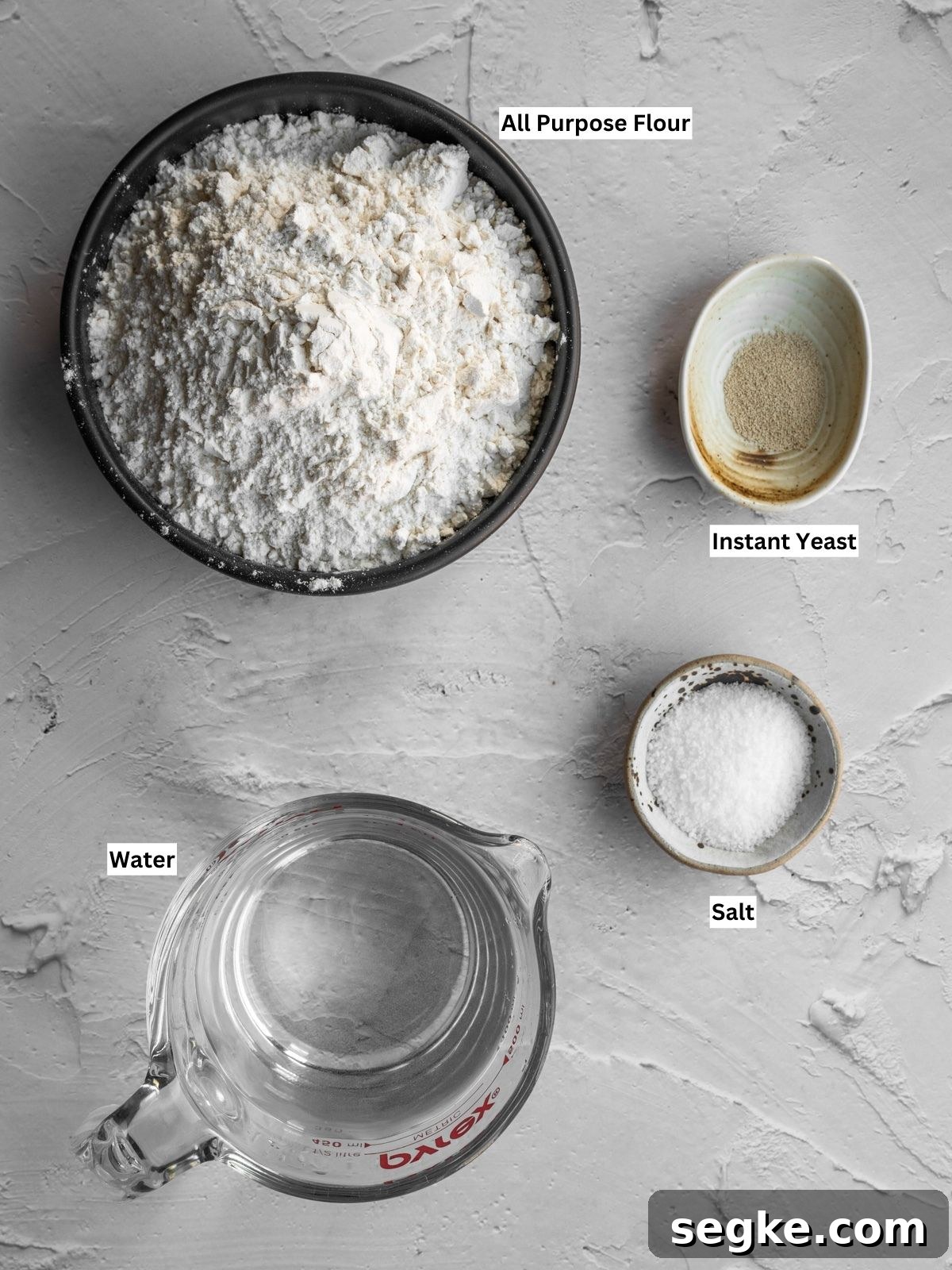
- Flour: All-purpose flour works well; bread flour may give slightly more structure. For a whole wheat version, use a whole wheat recipe.
- Yeast: A small amount of instant or active dry yeast is used. Ensure your yeast is fresh for reliable rising.
- Salt: Essential for flavor and dough strength; do not reduce the amount.
- Water: Lukewarm to room temperature water hydrates the dough and activates the yeast.
See the recipe section below for exact quantities and measurements.
How to Make No Knead White Bread
Read through the steps before starting so you understand the timing. The method is straightforward: mix, rest, shape, proof, and bake in a hot covered pot to capture steam for great oven spring.
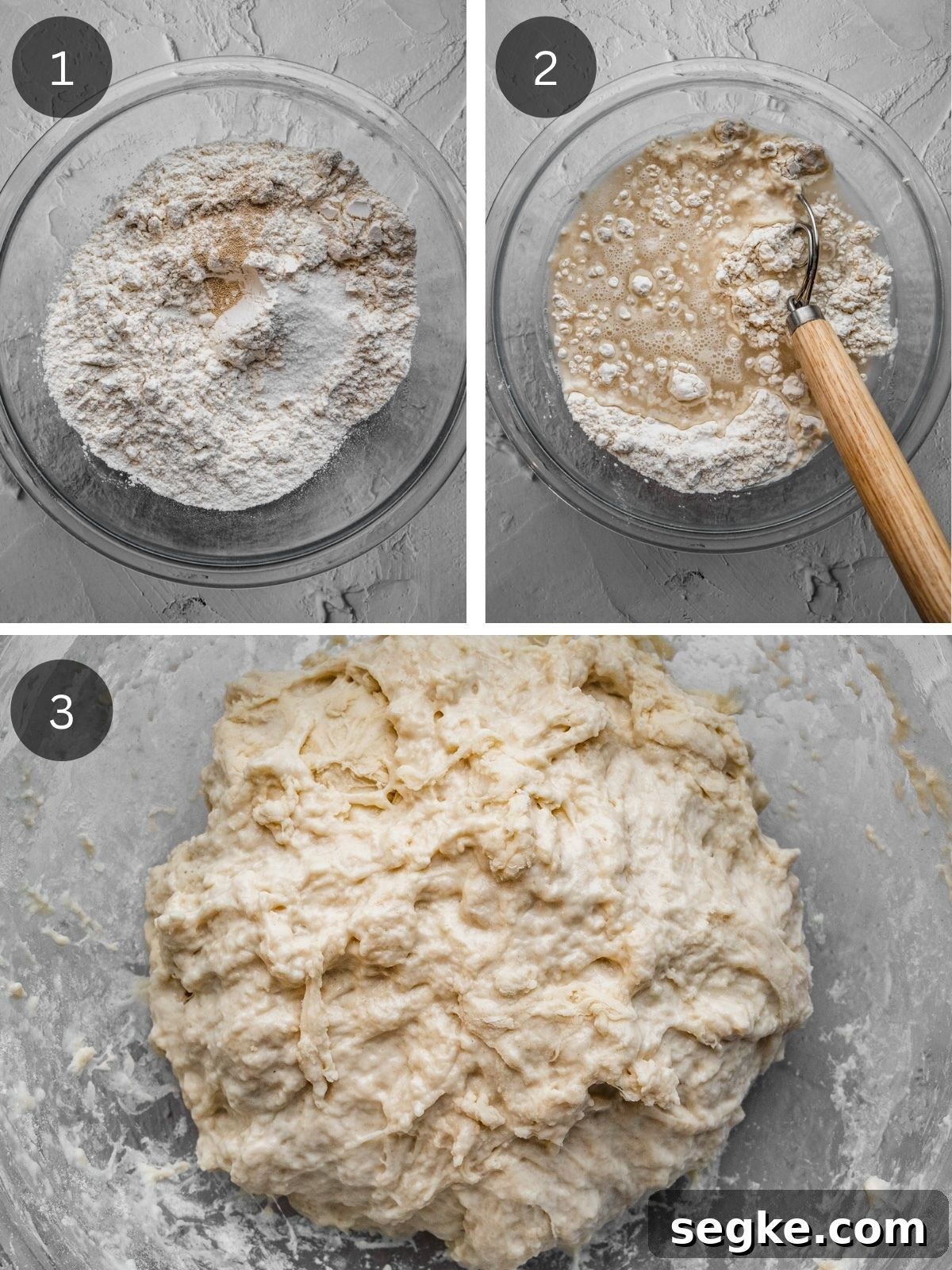
- Mix the dough. Combine the dry ingredients in a large bowl, add the water, and stir until no dry flour remains. The dough will be shaggy and wet — that’s normal.
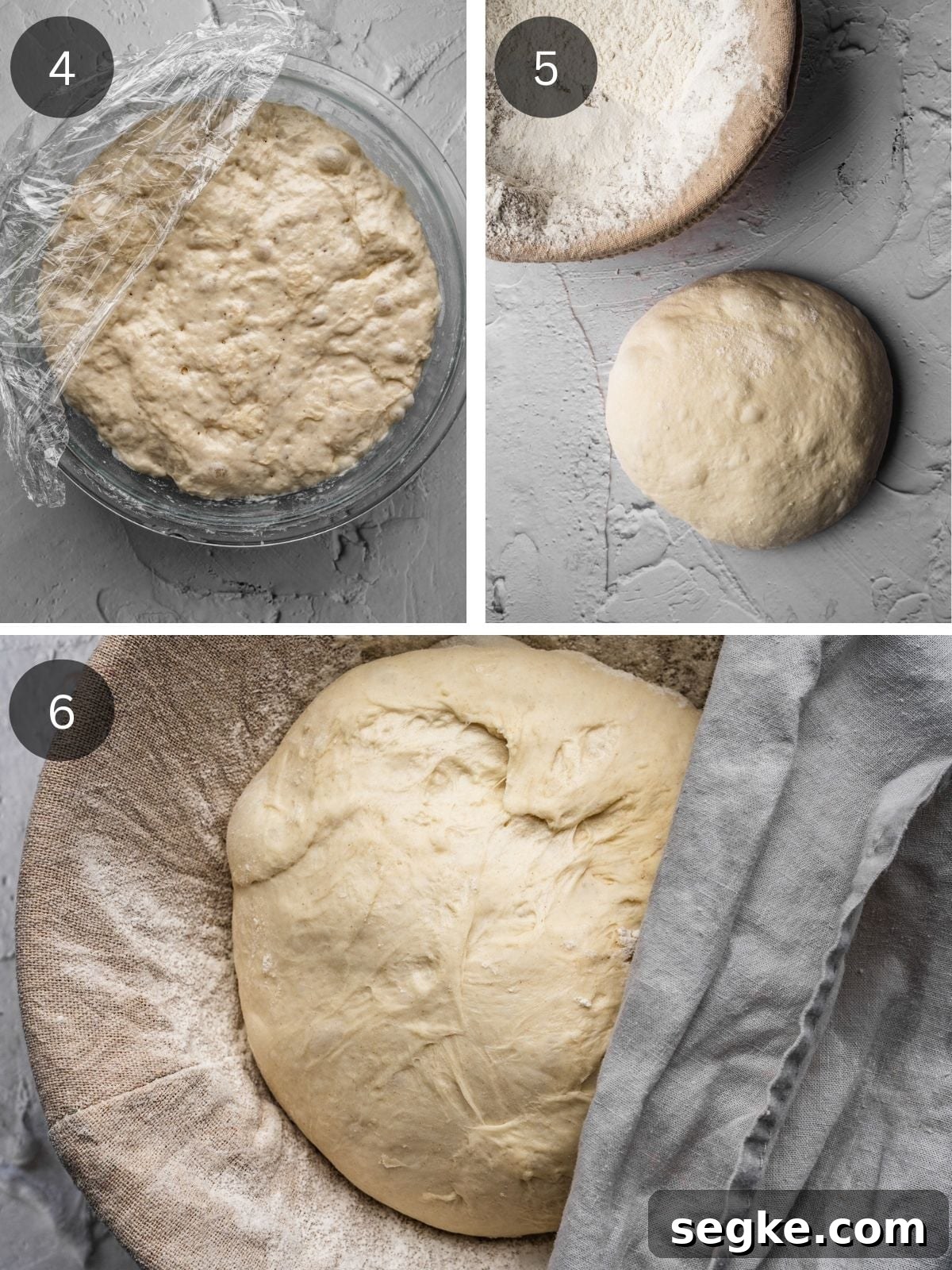
- Long rise. Cover and let the dough rise at room temperature for 12–18 hours until the surface is dotted with bubbles.
- Shape. Turn the dough onto a lightly floured surface, fold it into a rough ball by tucking the edges under, and form a tight round. Handle it gently to preserve gas bubbles.
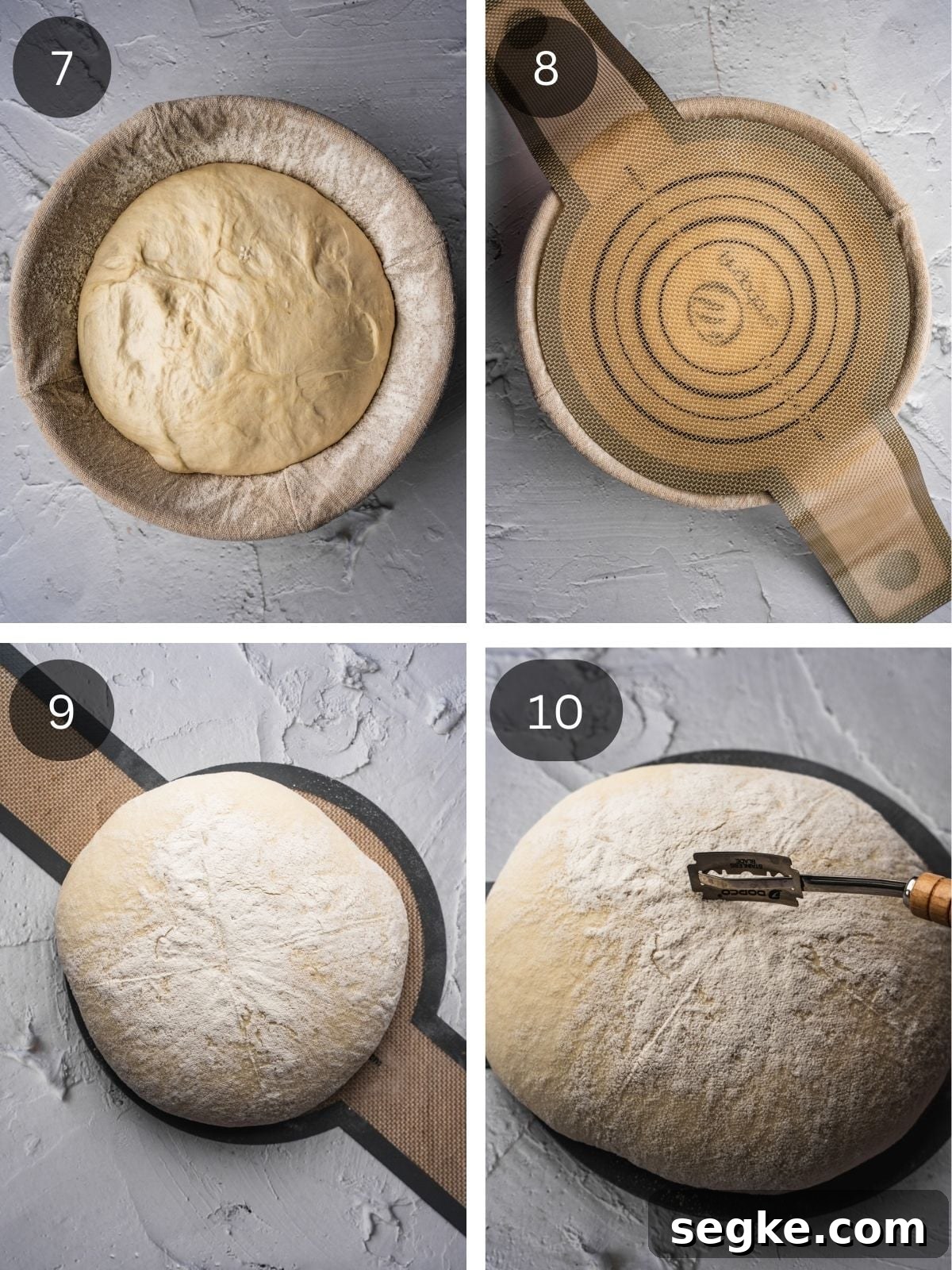
- Proof in a basket. Place the dough seam-side up in a well-floured banneton or bowl lined with a towel. Cover and let it rest 1–2 hours until slightly puffy.
- Preheat the oven and Dutch oven. Heat a covered oven-safe pot to 475°F (240°C) for at least 30 minutes before baking.
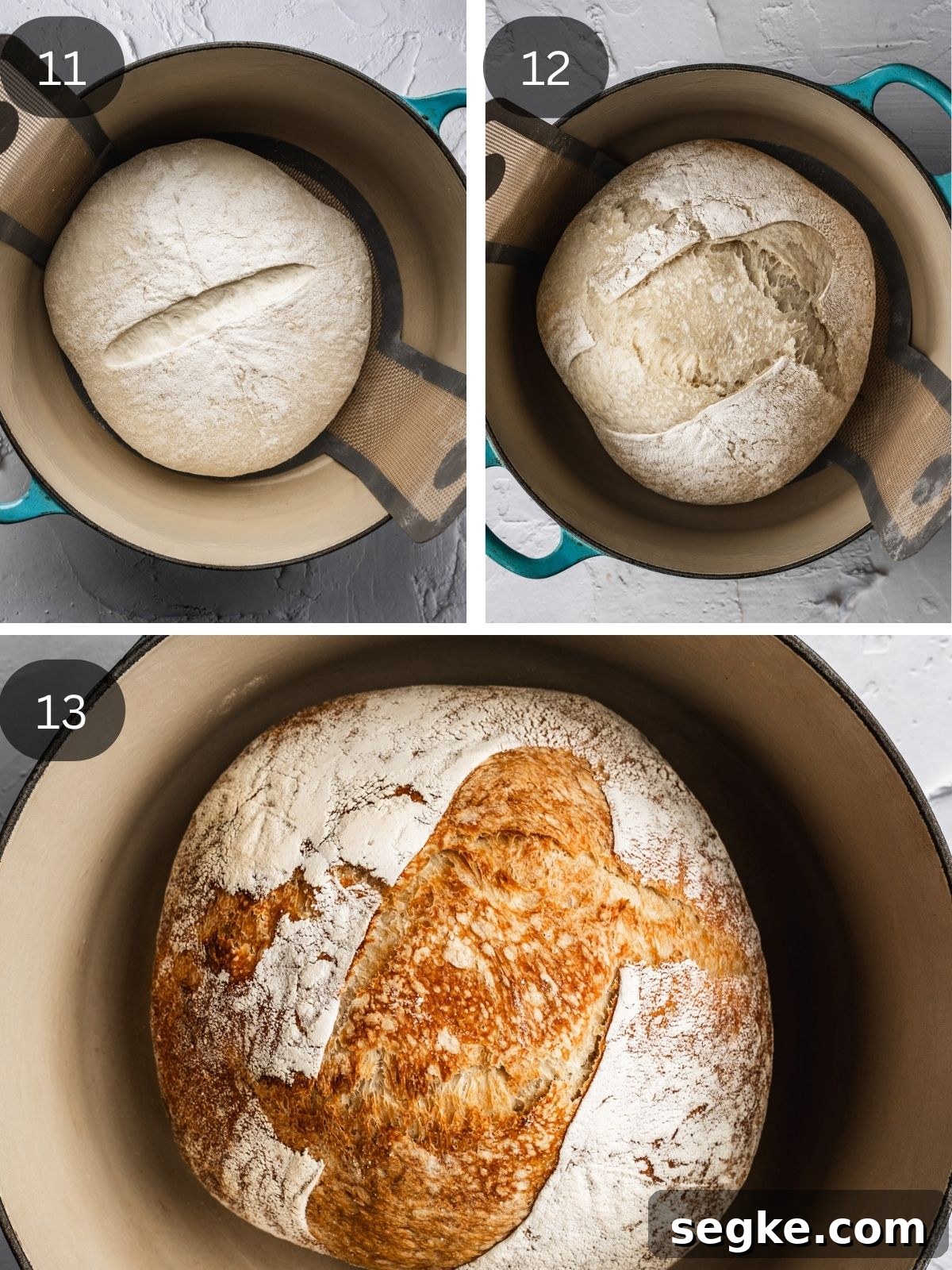
- Bake covered, then uncovered. Transfer the dough to parchment or a silicone liner, score if desired, and bake in the covered pot 30 minutes. Remove the lid and bake another 15–20 minutes until the crust is deep golden brown.
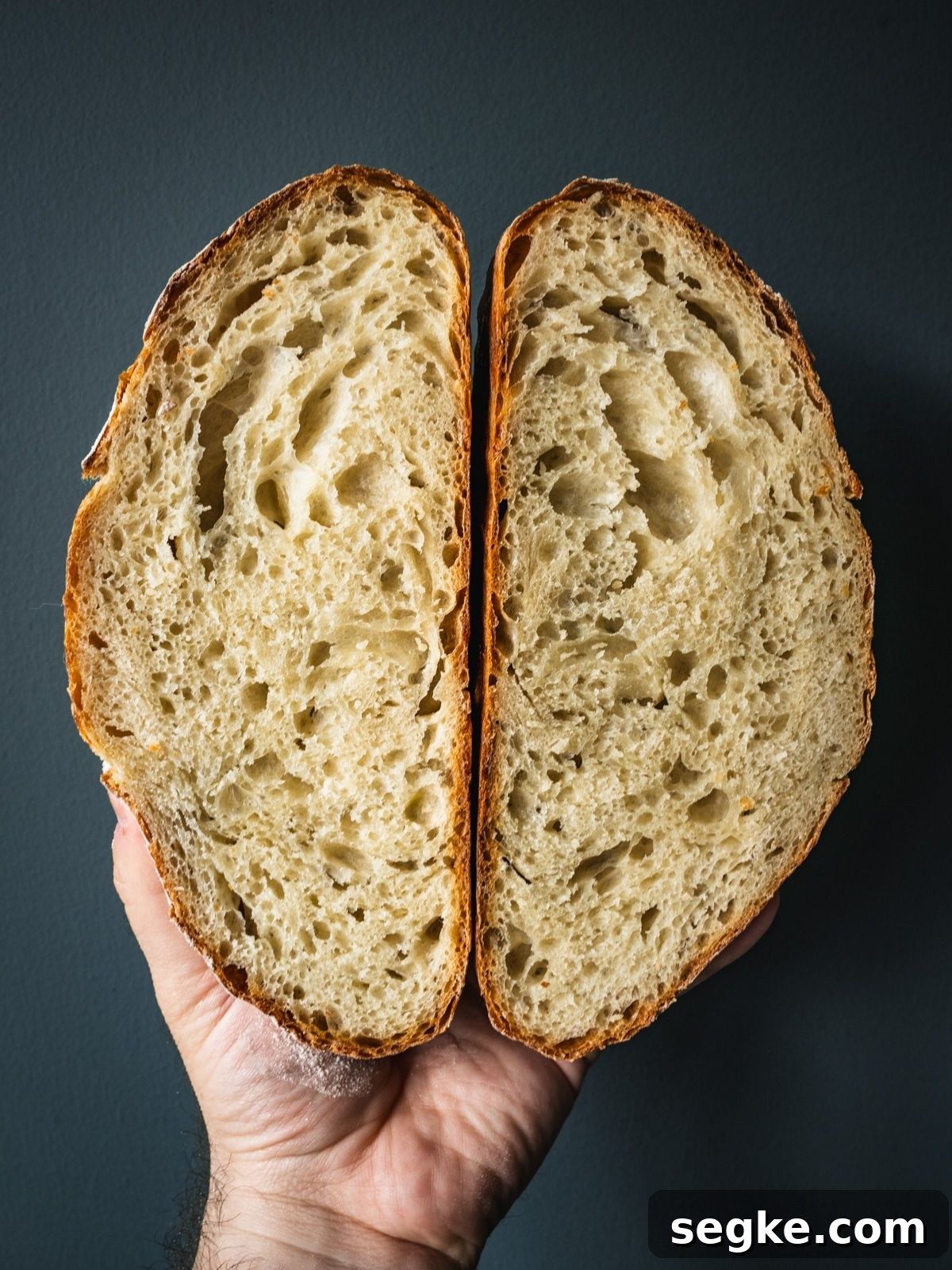
- Cool fully. Let the loaf cool completely on a wire rack before slicing to prevent a gummy crumb.
Expert Tips
- Find warmth for rising: If your kitchen is cool, let the dough rise in the oven with the light on or near another warm spot to help the yeast.
- Be patient: The long rise is essential when using very little yeast. Allow at least 12 hours.
- Handle gently: Preserve the air bubbles created during fermentation by using light hands when shaping.
- Cool before slicing: Always cool the loaf fully to prevent a gummy texture when cut.
- Customize: Add herbs, seeds, nuts, dried fruit, or cheese if you want a flavored loaf.
Recipe FAQs
What is the best way to store this bread? Store the cooled loaf in a resealable bag at room temperature for up to three days. For longer storage, pre-slice and freeze.
Can I freeze this bread? Yes. Slice the loaf, place slices in a freezer bag, and freeze for up to six months. Toast or defrost slices as needed.
Who popularized no-knead bread? The no-knead method became widely known after a recipe by a New York baker was featured in national media. This recipe is inspired by that style and adapted for home baking.
Why bake in a Dutch oven? Baking in a covered pot traps steam and mimics a professional steam-injected oven. The steam helps the loaf get a strong oven spring and a crisp crust.
More No-Knead Baking Recipes
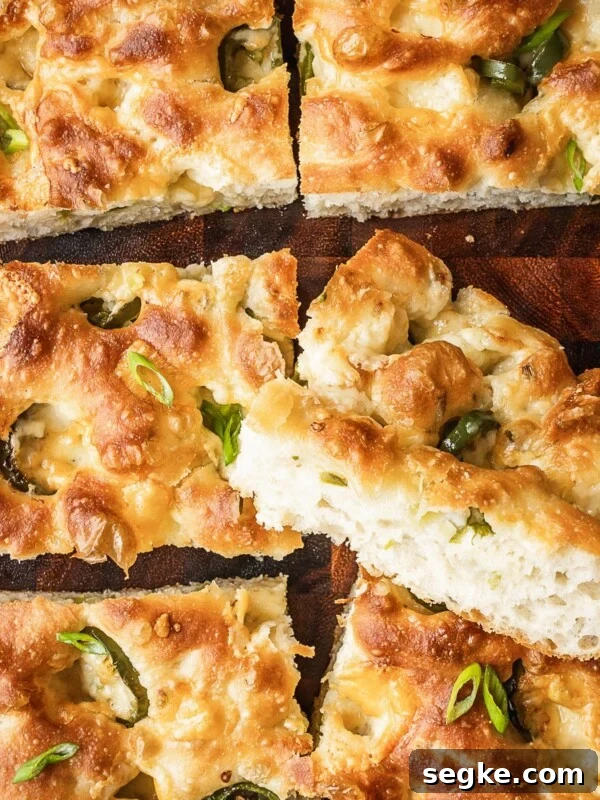
Jalapeno Cheddar Focaccia (easy no-knead option)
No Knead Rosemary Parmesan Bread
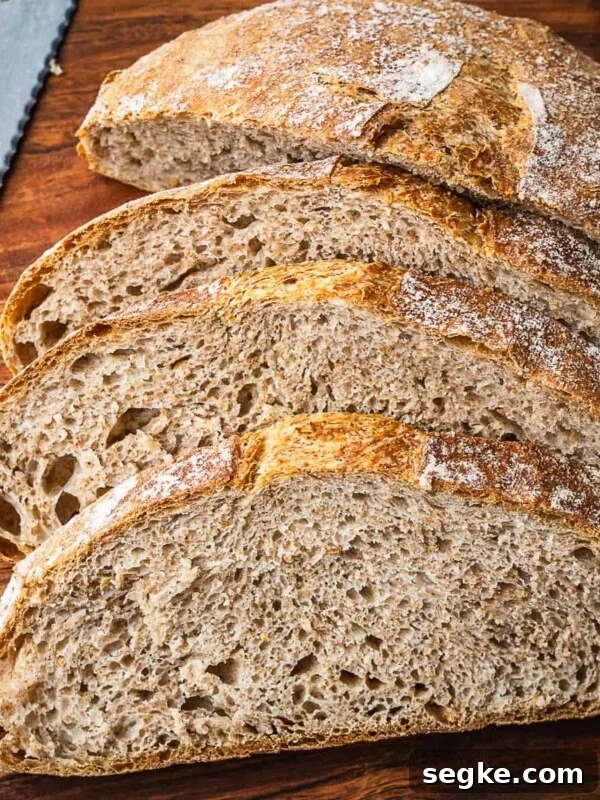
No Knead Whole Wheat Bread
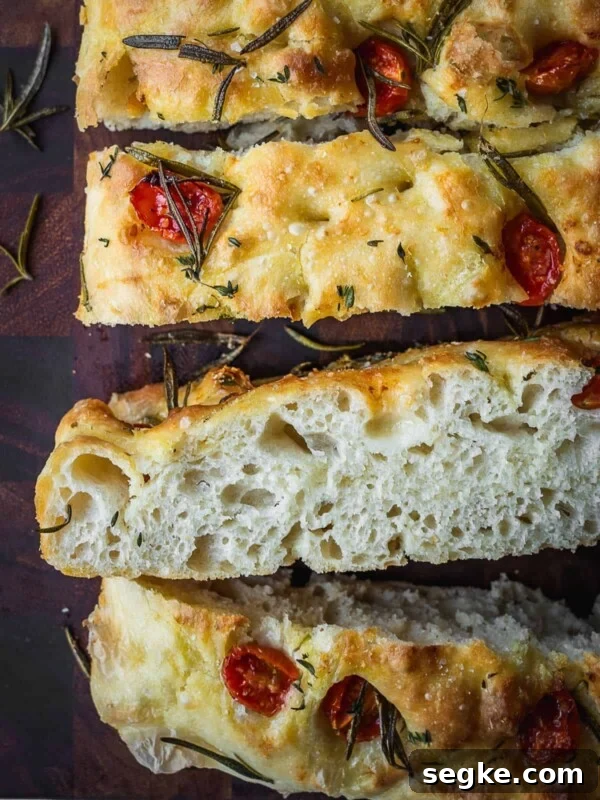
No Knead Tomato Focaccia
If you try this No Knead White Bread Recipe, please consider rating it or leaving a comment with any adjustments you made. Feedback helps others and is appreciated.
No Knead White Bread Recipe
Servings: about 10 slices
Prep time: 15 mins (hands-on)
Cook time: 40 mins
Rise time: 12–18 hrs
Total time: about 18 hrs 55 mins (mostly resting)
Ingredients
- 3 ½ cups (465 g) all-purpose flour
- ¼ tsp (1 g) instant yeast
- 2 tsp (10 g) kosher salt
- 1 ½ cups (350 g) lukewarm water
Equipment (optional)
- Kitchen scale
- Danish mixer or stand mixer (optional)
- Banneton basket or bowl lined with a towel (recommended)
- Oven-safe Dutch oven or heavy covered pot
Instructions
- Mix the dough: In a large bowl, combine the flour, yeast, and salt. Add the water and stir with a fork or spoon until a shaggy dough forms. Ensure all flour is hydrated but do not overmix.
- First rise: Cover the bowl and let the dough rise at room temperature 12–18 hours, until the surface is dotted with bubbles.
- Shape: Turn the dough onto a lightly floured surface. Gently fold the dough into a tight round by tucking the edges under to create surface tension. The seam should sit on the bottom.
- Final proof: Place the dough seam-side up in a well-floured banneton or a bowl lined with a floured towel. Cover and let rise 1–2 hours until slightly puffy.
- Preheat: Place a Dutch oven in the oven and preheat to 475°F (240°C) for at least 30 minutes.
- Bake covered: Invert the dough onto parchment, score if desired, and lower into the hot Dutch oven. Cover and bake 30 minutes.
- Bake uncovered: Remove the lid and bake an additional 15–20 minutes until deep golden brown. Remove the loaf and cool completely on a wire rack before slicing.
Notes
Refer to the step-by-step photos earlier in the post for visual guidance. Using a kitchen scale gives the most consistent results, but the dough is forgiving if you measure by volume. Important ingredient notes:
- Flour: All-purpose is fine; swap for bread flour if you prefer.
- Yeast: Instant or active dry yeast works. Fresh yeast gives the most consistent rise.
- Salt: Do not reduce the salt — it contributes to flavor and dough structure.
Optional additions: Try herbs, seeds, nuts, dried fruit, or cheese for a flavored loaf.
Nutrition (per slice, approximate)
Calories: 160 kcal; Carbohydrates: 34 g; Protein: 5 g; Fat: 0.5 g; Sodium: 468 mg; Fiber: 1 g.