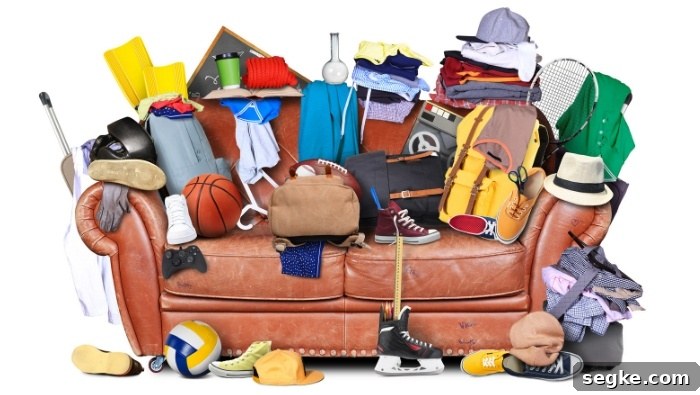
7 Ways Decluttering Your Home Can Improve Your Finances
by Joel Fink
Reviewed July 2024
Clutter doesn’t just crowd your space — over time it can quietly erode your budget and complicate everyday life. Making a deliberate effort to clear out what you don’t need improves your living environment and often leads to meaningful financial benefits. Below are seven practical ways decluttering can help you save money and spend smarter.
1. Living in a larger house or apartment than you need is expensive
Choosing a home that’s bigger than necessary comes with ongoing costs: higher mortgage or rent payments, greater utility bills, larger property taxes, and increased cleaning and maintenance expenses. Downsizing or making better use of existing space can cut those fixed costs, freeing up money for savings or other priorities.
2. Reducing clutter helps you prioritize spending and avoid impulse buys
When you limit the amount of stuff you keep, you force yourself to think before you buy. If you have to consider storage space and usefulness before bringing a new item into your home, you’re less likely to make impulse purchases. That habit reinforces mindful spending and reduces wasteful buys that add up over time.
3. Decluttering prevents redundant and unnecessary purchases
Disorganized spaces hide what you already own. A messy pantry or garage can lead to buying duplicates — another bag of flour, an extra box of cereal, or an extra can of paint — simply because you didn’t see what was already there. Clearing and organizing your belongings makes inventory obvious and avoids needless replacement purchases.
4. Clearing space makes buying in bulk practical and cheaper
When closets and storage areas are full of forgotten items, you’re limited to smaller, more expensive packages. By clearing space, you can store larger, economical bulk sizes of staples like paper products and pantry goods, which typically lower the per-unit cost and reduce your shopping frequency.
5. You may have money tied up in unused items you can sell
Closets and shelves often hide gently used clothing, books, media, and other goods that have secondary market value. Selling items online or through local resellers can convert idle belongings into cash, reducing clutter and improving your financial position at the same time.
6. Owning large, infrequently used items can be costly
Big-ticket possessions like boats, RVs, or specialty equipment often come with storage, maintenance, insurance, and repair costs that add up quickly. If you rarely use these items, renting them when needed or sharing ownership can be far more economical than paying ongoing expenses for underused assets.
7. Paying for self-storage is often an unnecessary expense
Renting a self-storage unit makes sense only when the stored items generate income or are essential. For most households, storage fees simply hide the cost of overconsumption. Selling, donating, or responsibly disposing of items you don’t need will reduce or eliminate that recurring expense.
Decluttering is more than a one-time cleanup chore. It’s a behavior shift that encourages careful buying, clearer decision-making, and smarter use of space and money. Even modest steps — sorting one closet, listing a few items for sale, or consolidating pantry goods — can deliver tangible savings and a calmer home.
How to get started
Begin with a single area and set realistic goals: a drawer, a closet, or a garage shelf. Sort items into keep, sell, donate, and recycle piles. Organize what you keep so it’s easy to see and access. If you plan to sell, research reasonable prices and choose simple selling channels. If you’re uncertain about items, give them a short “trial” period — if you haven’t used them by then, consider letting them go.