
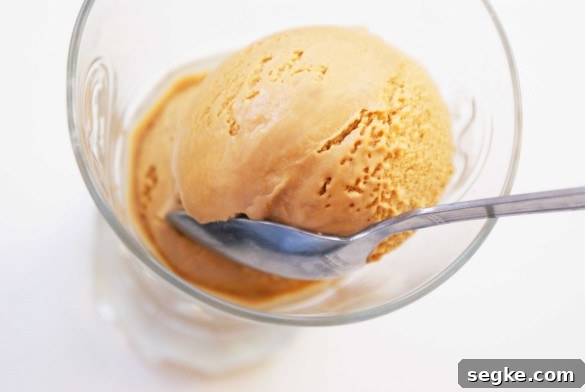
Caramel Espresso Ice Cream: Winter Indulgence Inspired by David Lebovitz
David Lebovitz, I adore you. Your recipes have made this house a happier place, even in the dead of winter. It may seem odd to make frozen desserts when temperatures hover well below freezing, but there are advantages to embracing ice cream in the cold. Your technique—using the natural chill outdoors—keeps the freezer free and speeds up cooling for custard-based recipes. In my kitchen, that practicality is victory enough.
When the mercury drops, the freezer becomes precious real estate. An ice cream machine bowl can take up a lot of room, but during a deep freeze you can simply set it outside on the porch or balcony and let nature do the work. For custard-style ice cream, you also avoid fiddling with ice baths: a pot of hot custard can go straight outside to cool, and within a short time it’s ready to be churned. My motivation for making ice cream rarely comes from a desire to cool off anyway; it’s about flavor, ritual, and, frankly, joy.
I found myself eager to use up cream before I embarked on a short-lived “healthier” streak—something I half-heartedly call a veggie bender. I signed up for a gym membership, resurrected my neglected gym bag, dug out running shoes, and stocked up on inexpensive T-shirts to sweat in. The ritual of getting ready to exercise took longer than expected, which I suppose is the polite name for procrastination. Still, making ice cream felt like a necessary reward for all that planning.
Soon, Sue will arrive for a three-day Beanapalooza. We’ll be working our way through the recipes in the second half of the book, testing and photographing each one. I anticipate many small crises of taste and technique, and an equal number of happy discoveries. If you live within five kilometers of my place, expect leftovers on your doorstep—likely containing beans even if they look like something entirely different. Think chocolate cupcakes and gingersnaps that carry a subtle bean-based twist.
The ice cream that inspired all of this is what David calls caramel espresso ice cream. I hesitate to contradict his dessert wisdom, but I prefer to describe the flavor as burnt-sugar espresso—more bite, more character than straightforward caramel. The technique involves browning the sugar until it takes on that toasty depth, which yields a more complex profile than a simple caramel. Espresso complements the burned sugar perfectly, lending bitterness and aromatic lift without turning the ice cream into coffee ice cream. I say that as someone who loves true coffee ice cream; this is different. It’s more grown-up, more textured, and it lingers on the palate.
What I appreciate about this recipe is the balance: the burnt sugar delivers richness and a slightly smoky edge, while the espresso brightens and frames the flavor without overwhelming it. The custard base gives the ice cream a silkiness that you don’t get from simpler milk-based recipes. Churned and set, it becomes a dessert that sings alongside small brownies or a slice of dense chocolate cake, but it also stands perfectly on its own.
I’m reading a copy of The Sweet Life in Paris beside my bed, and pouring over David’s recipes has become a kind of vicarious travel. If I can’t hop on a plane, I can at least taste my way through his pages. There’s comfort in that: recipes as invitations to another life, another climate, another set of daily pleasures.
So go ahead—make ice cream even when it’s freezing outside. Use the cold to your advantage, try a burnt-sugar approach for deeper flavor, and consider a shot of espresso for complexity. If you keep a watchful eye on timing and temperature, you’ll end up with custard that chills quickly and churns into a creamy, refined treat. And when friends arrive or leftovers need to be dispersed, you’ll have something worth sharing.