
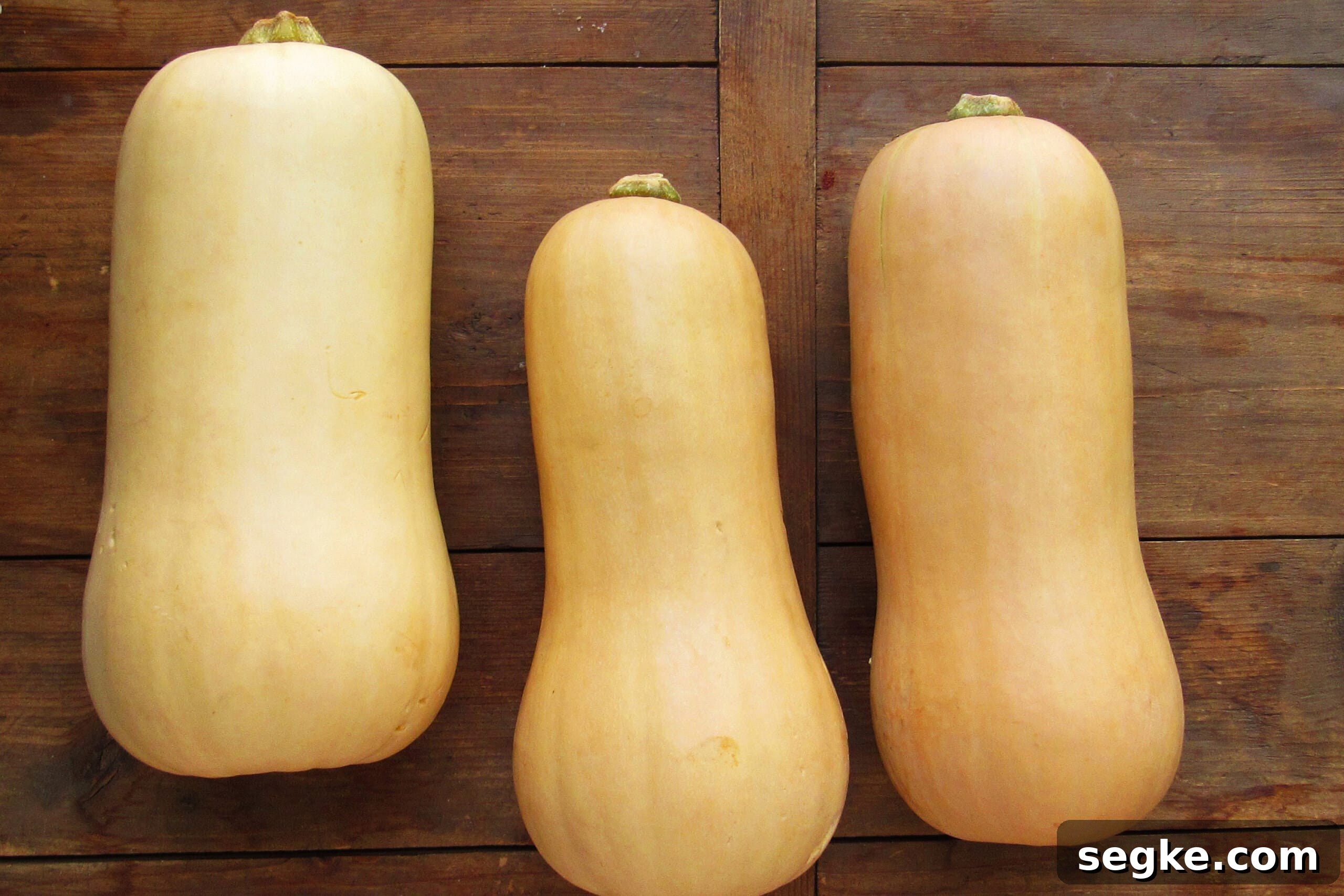
While peeled and cubed butternut squash is convenient, it often costs more per pound than a whole squash. Its tough, butterscotch-colored skin can make the squash seem intimidating, but with a few straightforward steps you can confidently turn it into cubes or slices for soups, roasts, casseroles and more.
Butternut squash is easy to prepare and very versatile. Learning how to peel and cut a whole squash will save money and give you a fresher result for dishes like roasted butternut squash soup, maple-roasted squash, and butternut squash casserole.
- How to Pick a Butternut Squash
- How to Peel and Cube Butternut Squash
- Storing Cut Butternut Squash
- FAQs
- More Fresh Produce Cooking Tips
- 12 Butternut Squash Recipes!
Tips
Some winter squashes, like acorn squash, have very ridged skins and are easier to cook in their skins. Roast or bake them whole and scoop the cooked flesh out afterward. For a firm butternut squash that’s hard to peel, pierce the skin in several places with a fork and microwave the whole squash for 2–3 minutes. That softens the skin just enough to make peeling and cutting easier and safer.
How to Pick a Butternut Squash
Choose a squash that feels heavy for its size with matte, evenly colored tan skin — too shiny often means it was harvested underripe. The stem should be dry and intact, and the squash should have no soft spots or cuts. A longer neck is advantageous because the neck is solid flesh without seeds, so you’ll get more tidy, symmetrical cubes.
How to Peel and Cube Butternut Squash
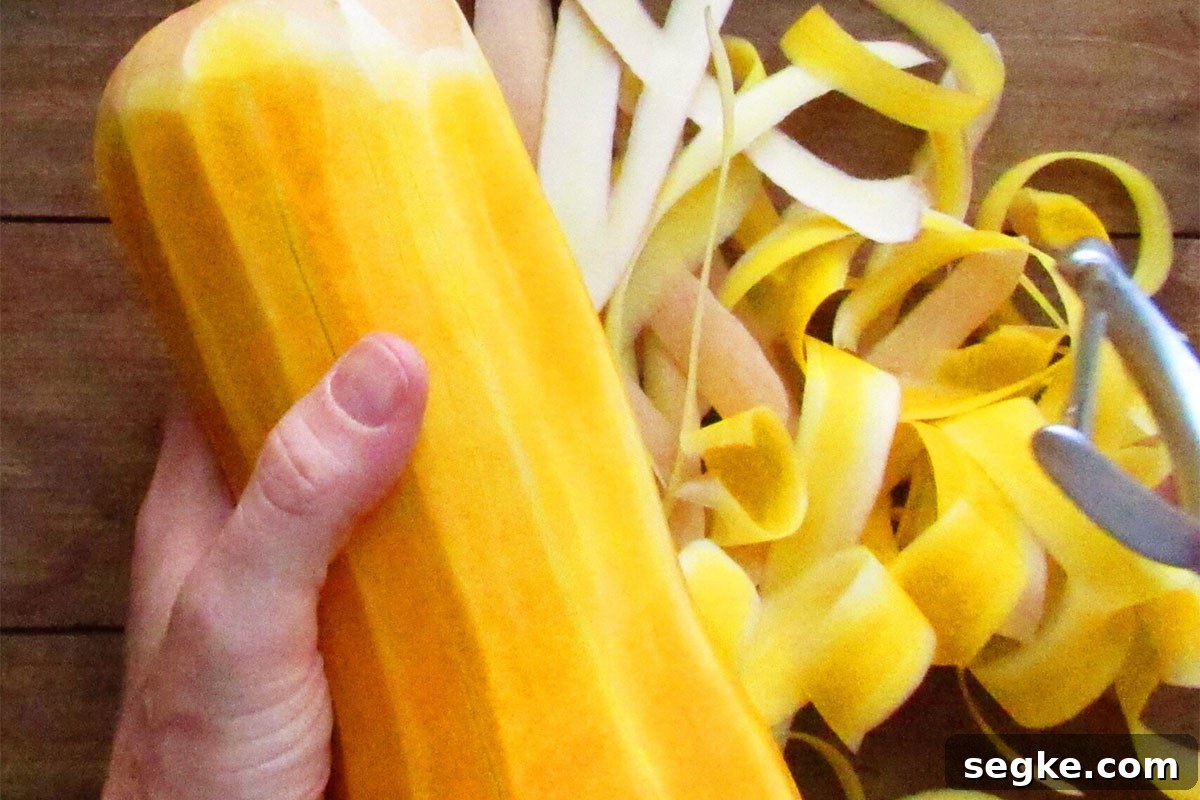
- Peel the squash: Use a sturdy vegetable peeler (an extra-wide peeler is especially helpful). The skin is thick, and you may see a muted tan or greenish layer beneath before you reach the bright orange flesh. Continue peeling until you reach the orange flesh; you can also use a paring knife if needed.
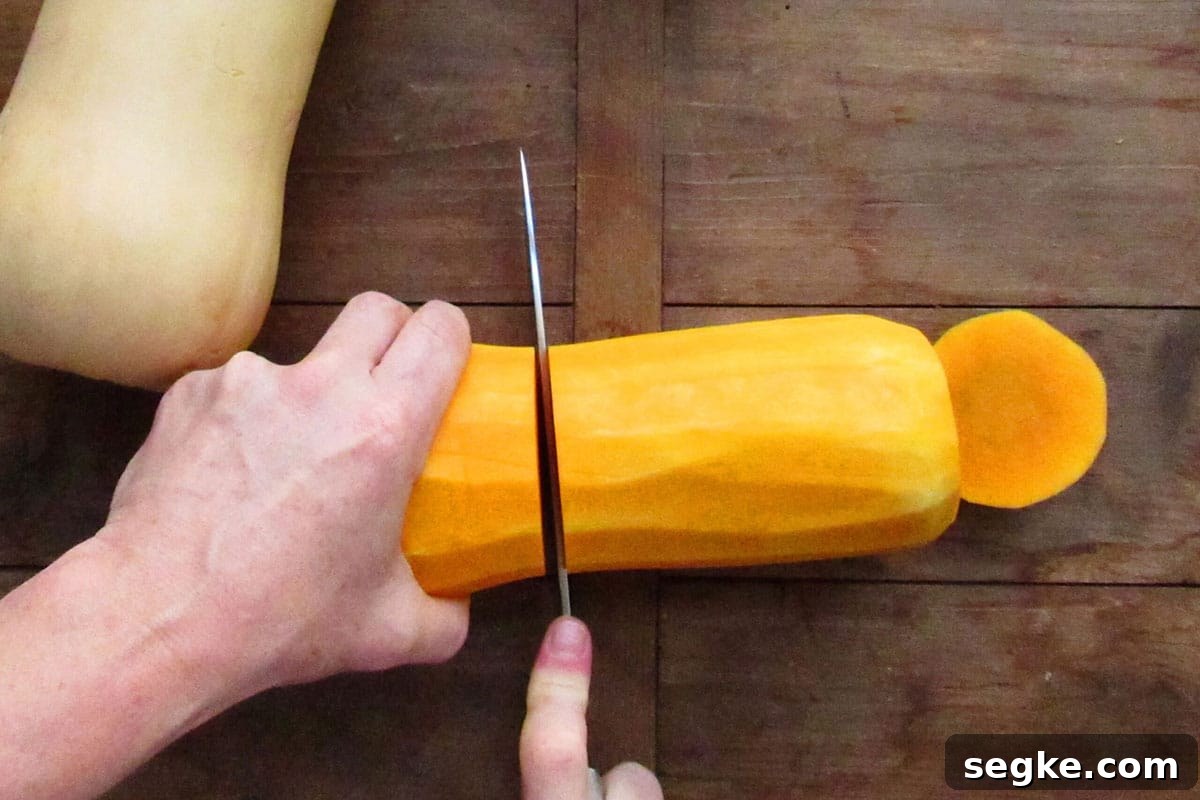
- Slice off the top: With a large, heavy knife on a secure cutting board, cut off the very top of the squash. Then slice the squash crosswise at the point where the long neck meets the bulbous bottom.
- Halve the neck: Take the long cylindrical neck piece and cut it lengthwise into two halves from top to bottom.
- Halve the bulb: Cut the bulbous bottom piece in half from top to bottom so each piece exposes the seed cavity.
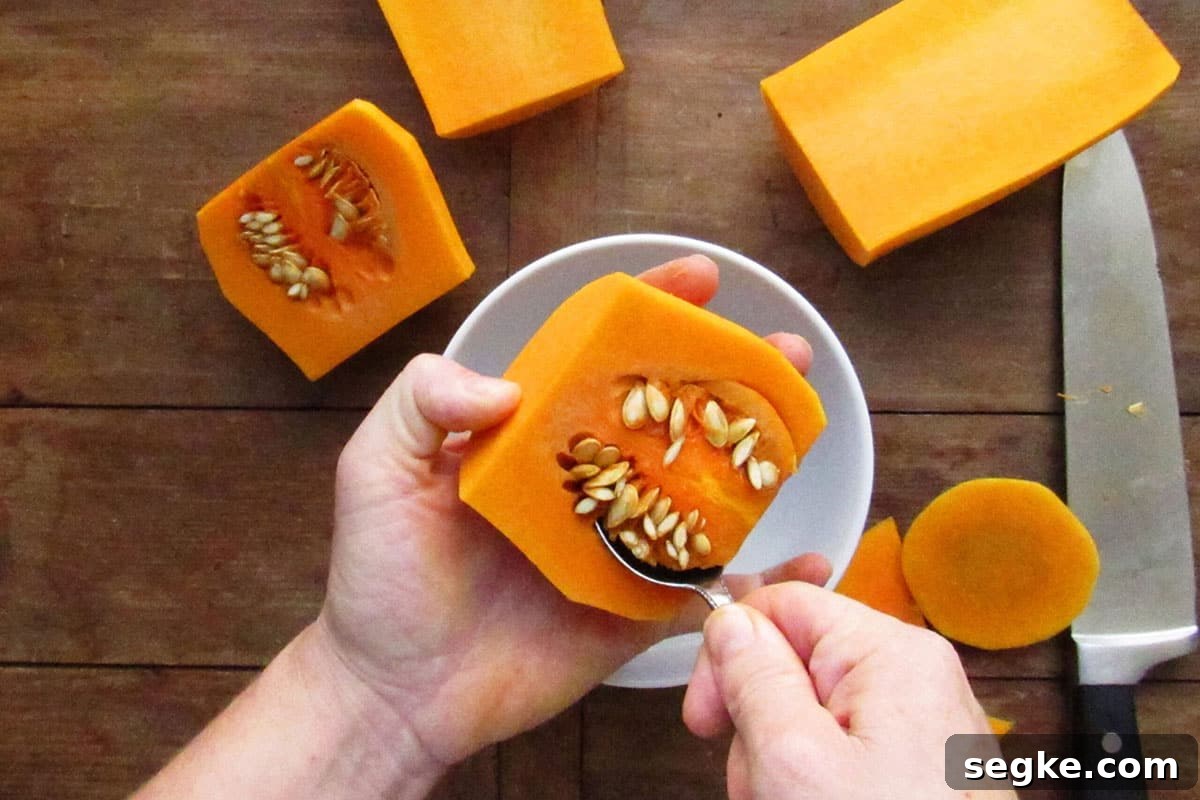
- Remove seeds: Trim any hard stem edge from the bottom halves and use a spoon to scoop out the seeds and strings, much like cleaning a pumpkin.
- Cut into strips: For the neck halves, lay the flat side down and slice into 1-inch-thick planks (adjust thickness to your preference). Then cut those planks into 1-inch-thick strips.
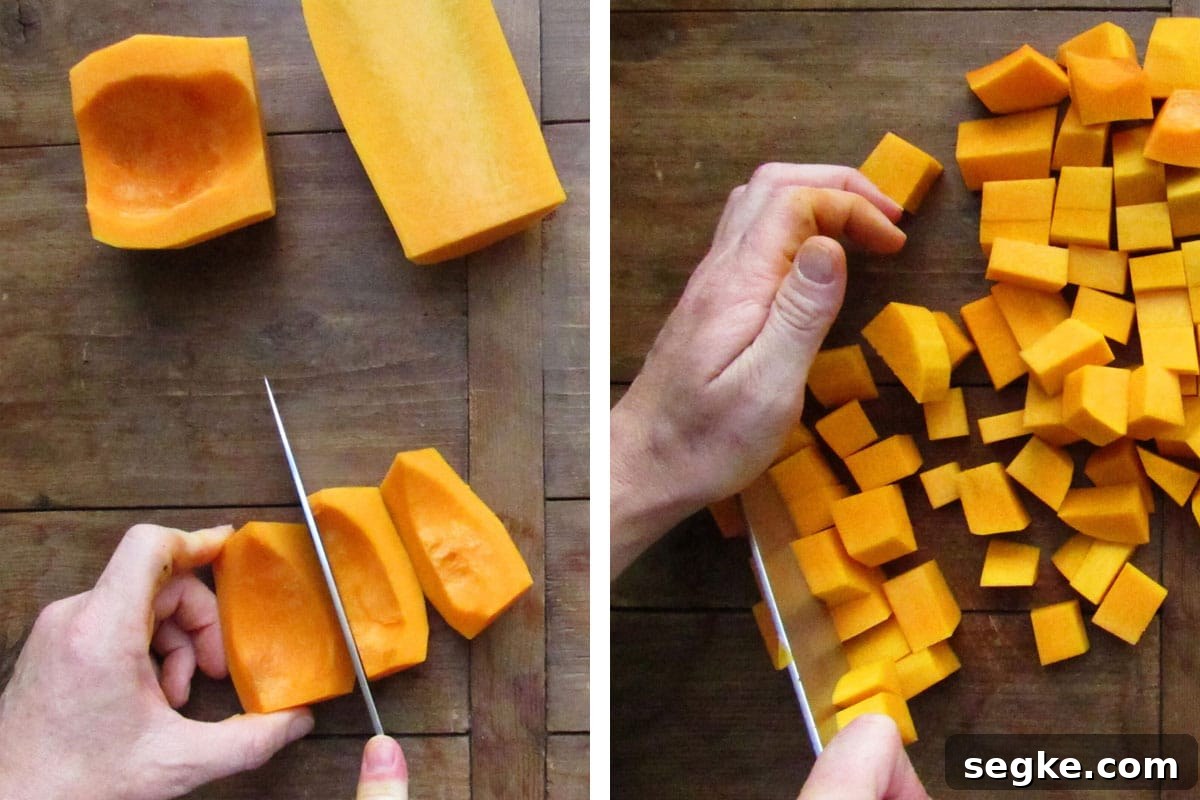
- Cube the strips: Slice the strips crosswise to create 1-inch square cubes.
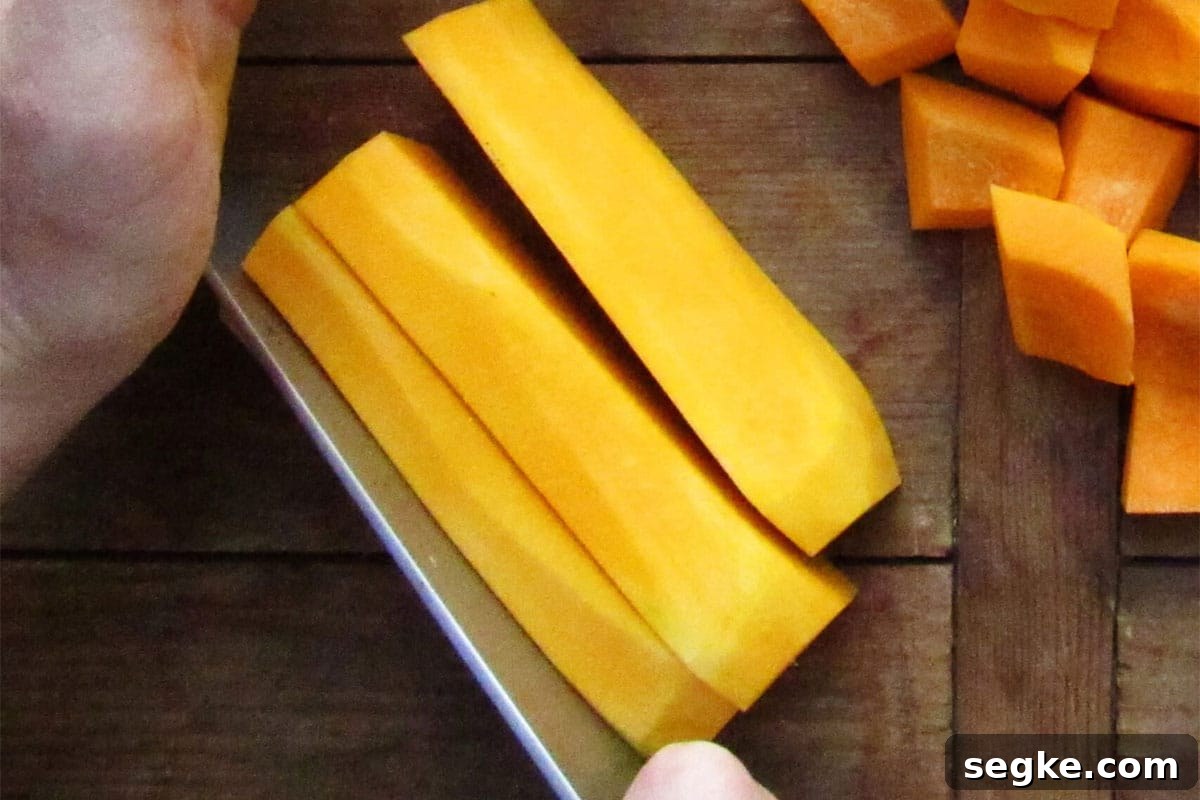
- Cut the bulb pieces: Slice the bottom halves into 1-inch strips and then cut crosswise into pieces. The cubes from the bulb may be less uniform than those from the neck — that’s perfectly fine.
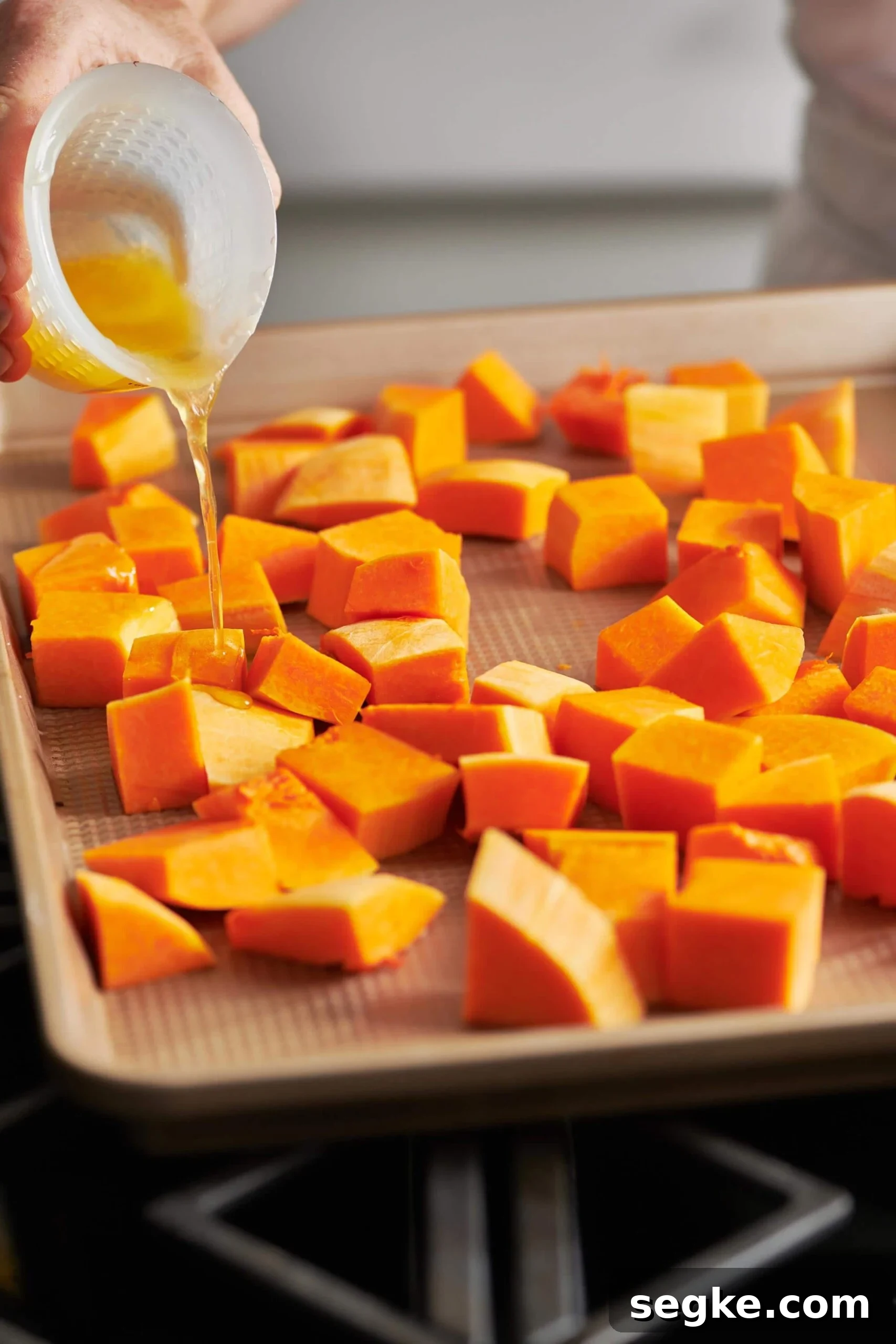
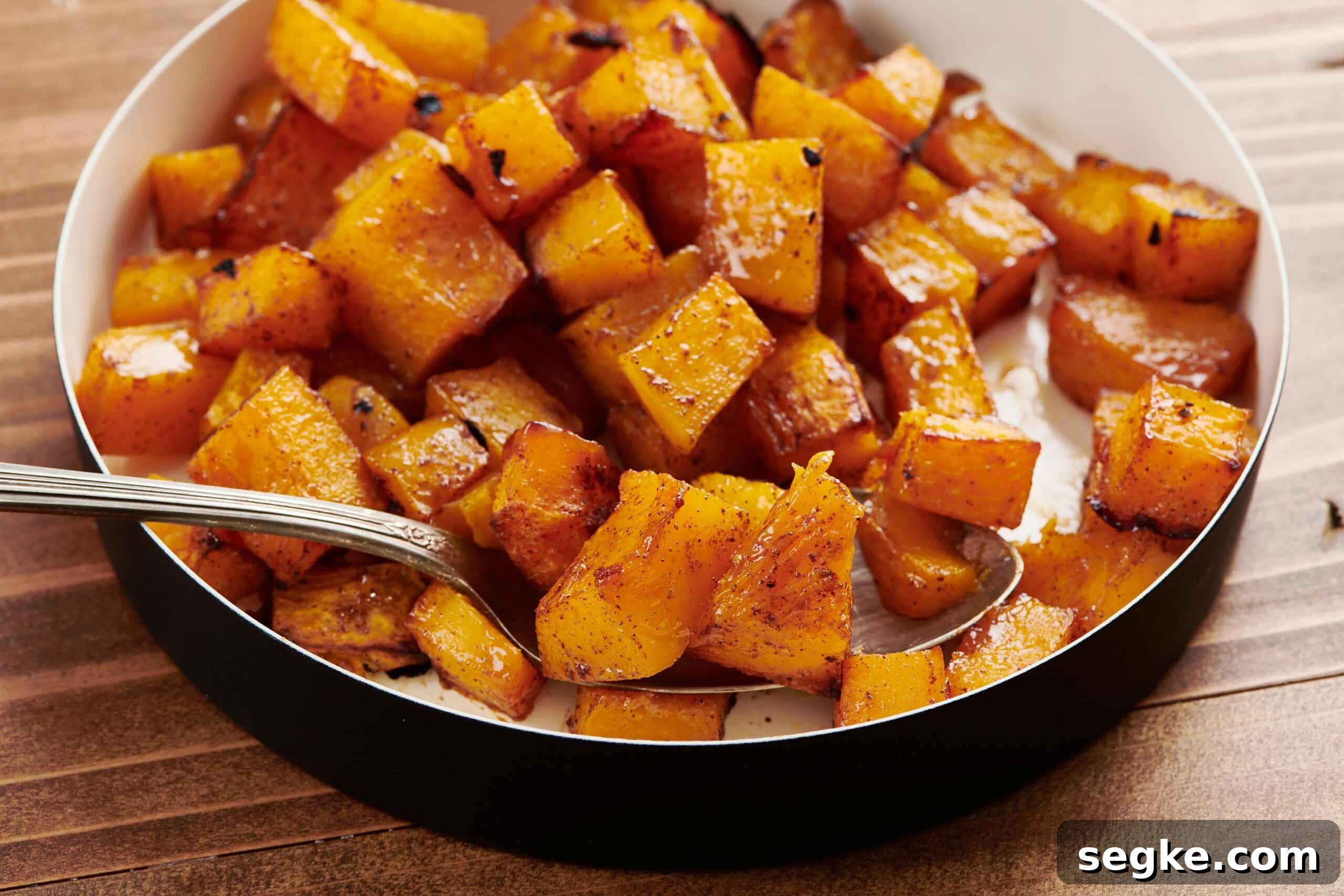
- Ready to cook: Cubed squash can be roasted in the oven, sautéed and finished with a little liquid to steam through, or added to simmering broth and pureed into soup.
Storing Cut Butternut Squash
Raw cubed squash keeps in an airtight container in the refrigerator for up to 5 days, making it great for meal prep. To freeze, spread raw cubes on a baking sheet and freeze until solid, then transfer to freezer bags for up to 6 months. Frozen cubes can go straight into a roasting pan or a pot of soup.
FAQs
If the squash is very small and extremely fresh you can leave the skin on, but for cubing it’s usually best to peel it. The skin of mature butternut squash can stay tough and chewy when cooked. An exception is roasting the squash in halves: the skin then acts as a serving vessel and you scoop the cooked flesh out.
Rinse and dry the seeds, season them, and roast them just like pumpkin seeds for a crunchy snack.
More Fresh Produce Cooking Tips
Once you’re comfortable with butternut squash, try similar guides for other produce — learning basic prep techniques expands what you can cook and saves time.
12 Butternut Squash Recipes!
Use your prepared squash in these popular recipes and ideas.
Roasted Butternut Squash Soup
View Recipe
Roasted Butternut Squash
View Recipe
Roasted Butternut Squash and Fennel Soup
View Recipe
Butternut Squash Casserole
View Recipe
Moroccan Lamb and Butternut Squash Stew
View Recipe
Indian Butternut Squash-Carrot Soup
View Recipe
Maple-Roasted Butternut Squash
View Recipe
Butternut Squash and White Bean Stew
View Recipe
Roasted Butternut Squash with Creamy Sauce
View Recipe
Maple Butternut Squash Soup
View Recipe
Thanksgiving Salad
View Recipe
Vegan Butternut Squash and Apple Soup
View Recipe