
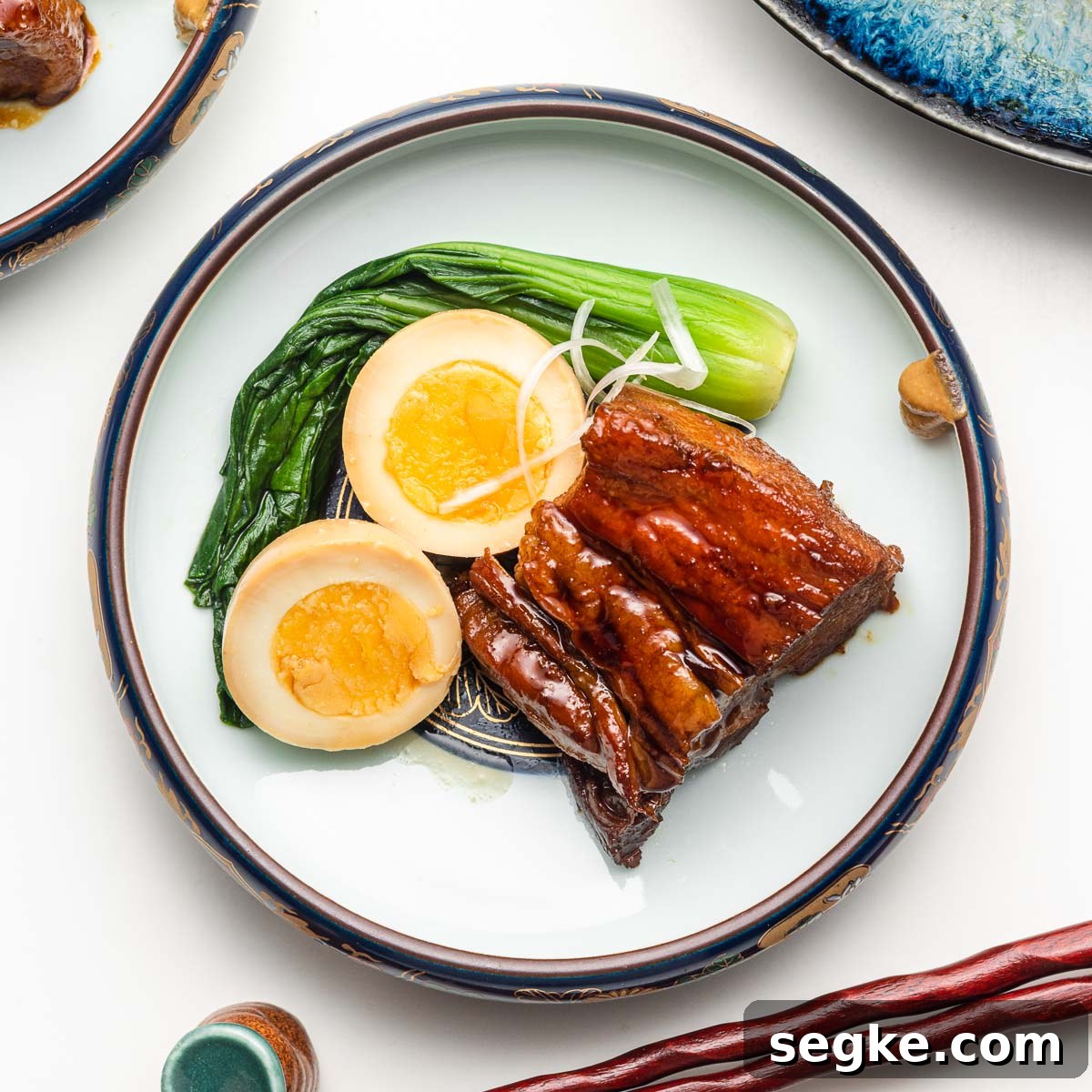
Kakuni (Japanese Braised Pork Belly) is a beloved comfort dish made by slowly braising pork belly until it becomes melt-in-your-mouth tender. Cooked in a savory-sweet broth of dashi, soy sauce, sake, and mirin, each bite delivers deep umami and rich, balanced flavor. This recipe keeps the technique straightforward while highlighting the small steps that make a big difference in texture and taste.
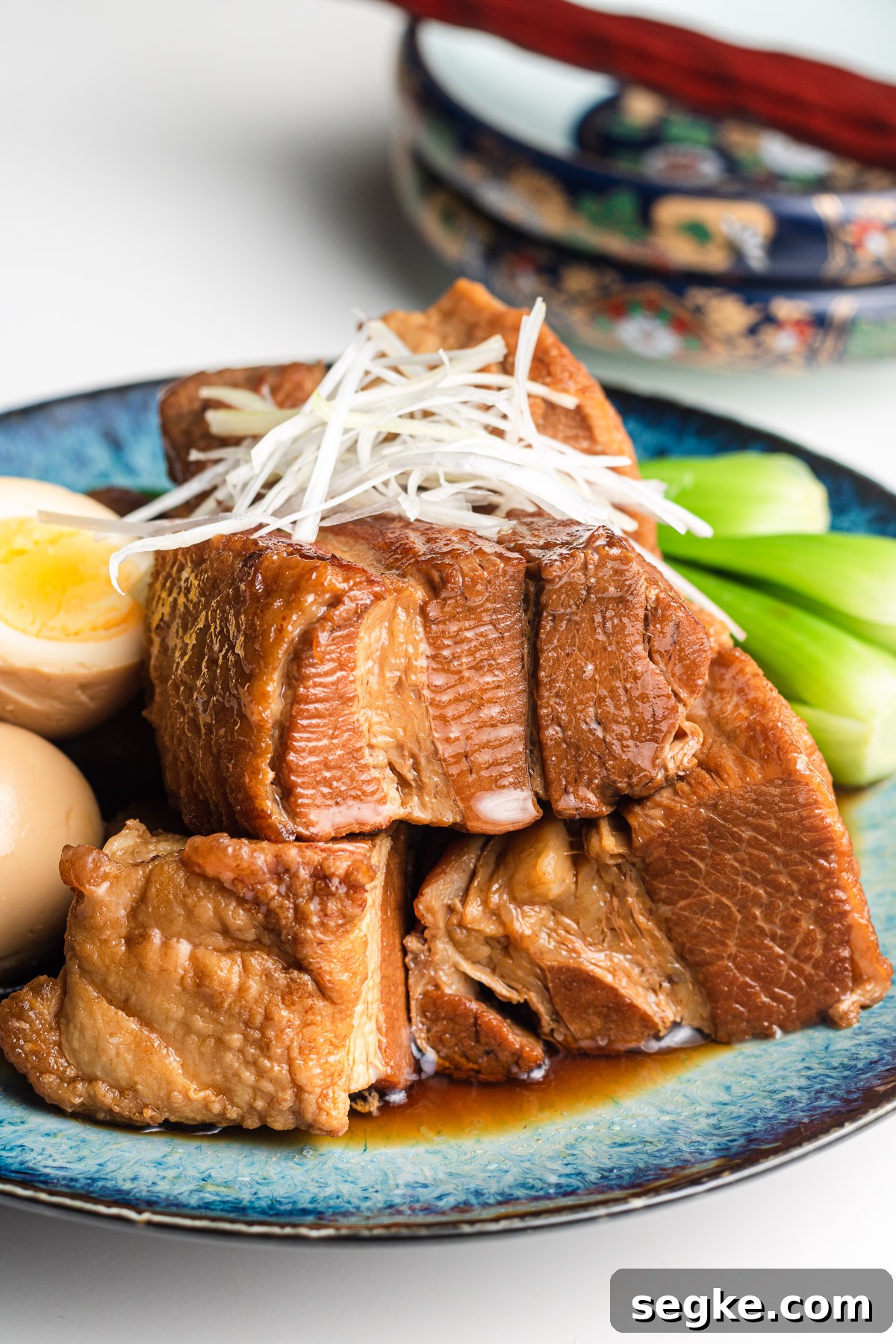
What is Kakuni?
Kakuni (角煮) literally means “square simmered,” referring to the thick, square pieces of pork belly that are gently braised until fork-tender. The classic flavor profile relies on dashi, soy sauce, sake, and mirin—ingredients that create a savory, slightly sweet, umami-rich broth. The magic of kakuni is its texture: the meat becomes exceptionally soft while maintaining distinct layers of fat and lean meat for a satisfying mouthfeel.
A Brief History
Kakuni likely traces its origins to Chinese red-braised pork (dong po rou), but it evolved into a uniquely Japanese dish over centuries of culinary exchange. It is particularly associated with Nagasaki and Kyushu, regions known for blending Japanese and Chinese influences. Regional variations exist across Japan and Okinawa, where similar braised pork recipes use local liquor and sugar, but kakuni remains a staple on izakaya menus and in home kitchens for its comforting flavor and versatility.
Why This Recipe
This version is refined to deliver consistently tender, well-seasoned pork belly with a balanced braising liquid. Key advantages:
- Seasoning ratios tied to cooked pork weight for predictable results.
- Low-and-slow simmering (often using rice water) for exceptional tenderness and cleaner broth.
- Freezer-friendly: make a batch and freeze portions for rice bowls, ramen, or quick meals.
- Versatile serving options: rice bowls, steamed buns, sandwiches, or noodle dishes.
- Deep umami achieved through layered seasonings and a dashi base.
Ingredients and Substitutions
You don’t need many ingredients to make great kakuni. Below are the essentials and a few substitution notes.
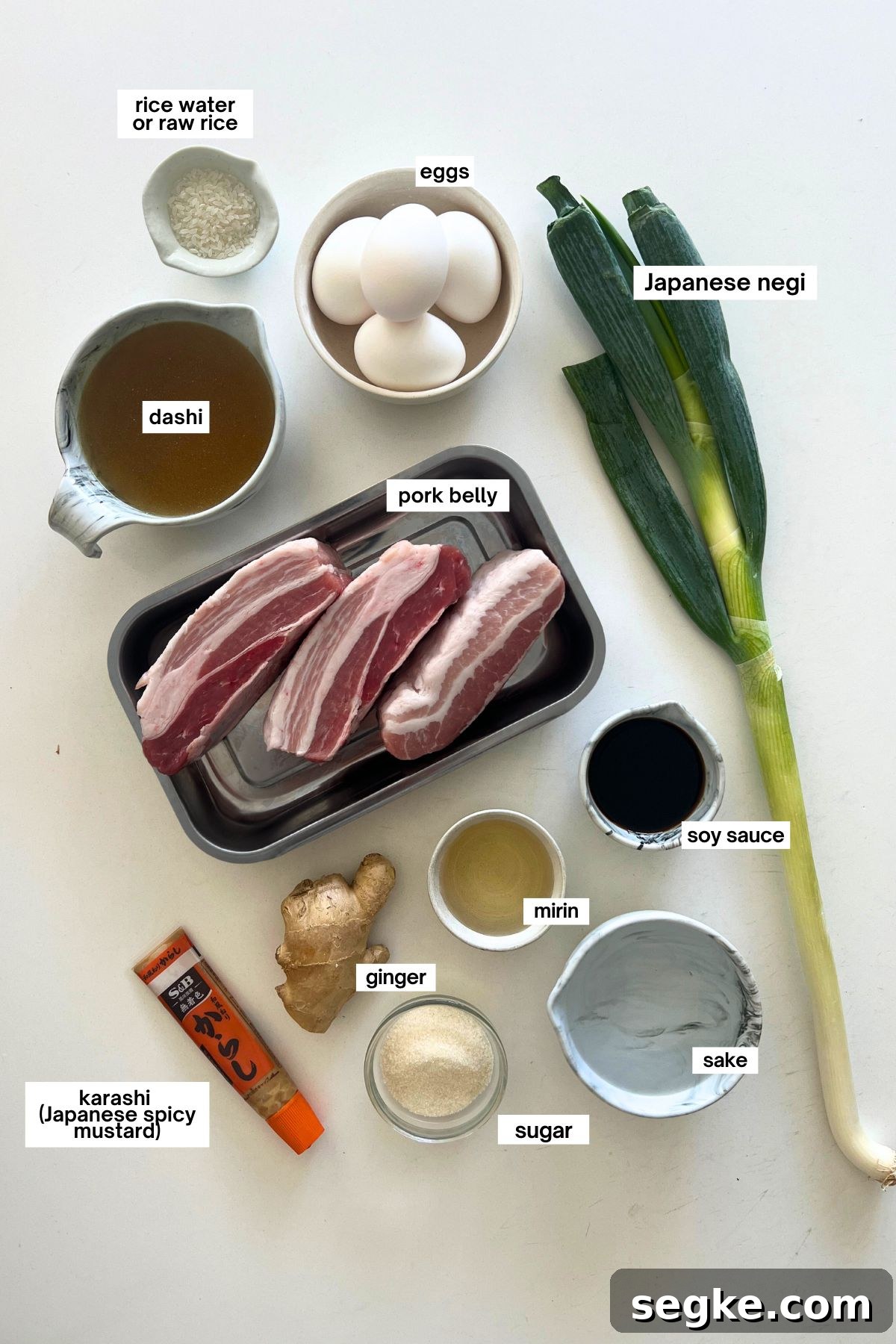
- Pork belly, skinless: 700–800 g recommended. Pork shoulder can be used but will be leaner.
- Ginger: a knob, sliced.
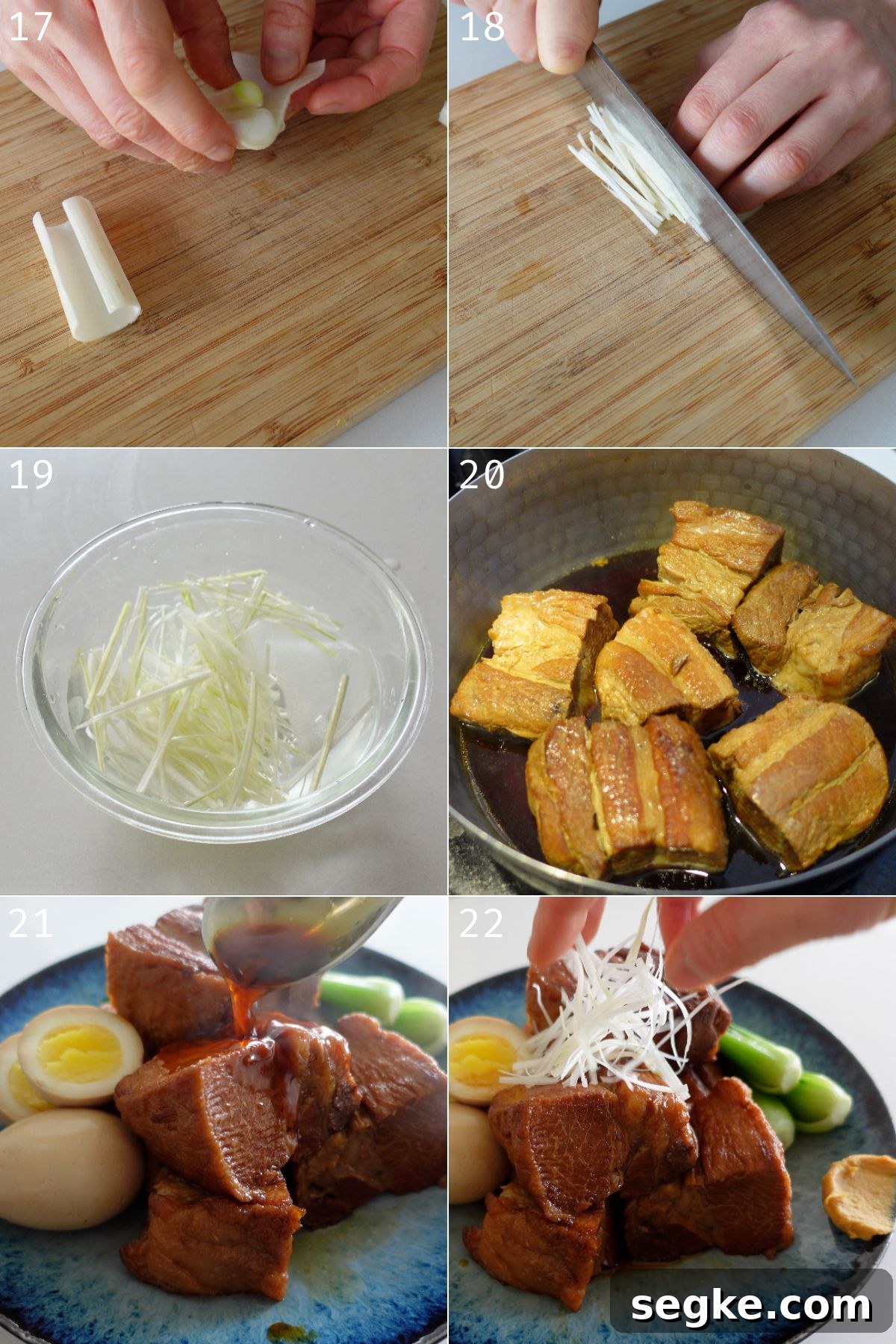
- Japanese negi (green onion): the green part for simmering, white part for garnish; scallions or leek can substitute.
- Rice water: from rinsing rice, used to tenderize and clarify; sake can be substituted if needed.
- Dashi: homemade or instant. If rice water isn’t used, you can braise in strained pork broth.
- Sake and mirin: for aroma and sweetness.
- Sugar and soy sauce: for caramelized depth and seasoning balance.
- Eggs (optional): soft- or hard-boiled, then marinated briefly in the braising liquid.
- Greens: komatsuna, bok choy, or any tender green vegetable for serving.
- Karashi (Japanese mustard): optional, for heat and contrast.
How to Make Authentic Kakuni
The authentic texture and flavor depend on slow cooking and staged seasoning. The main steps are:
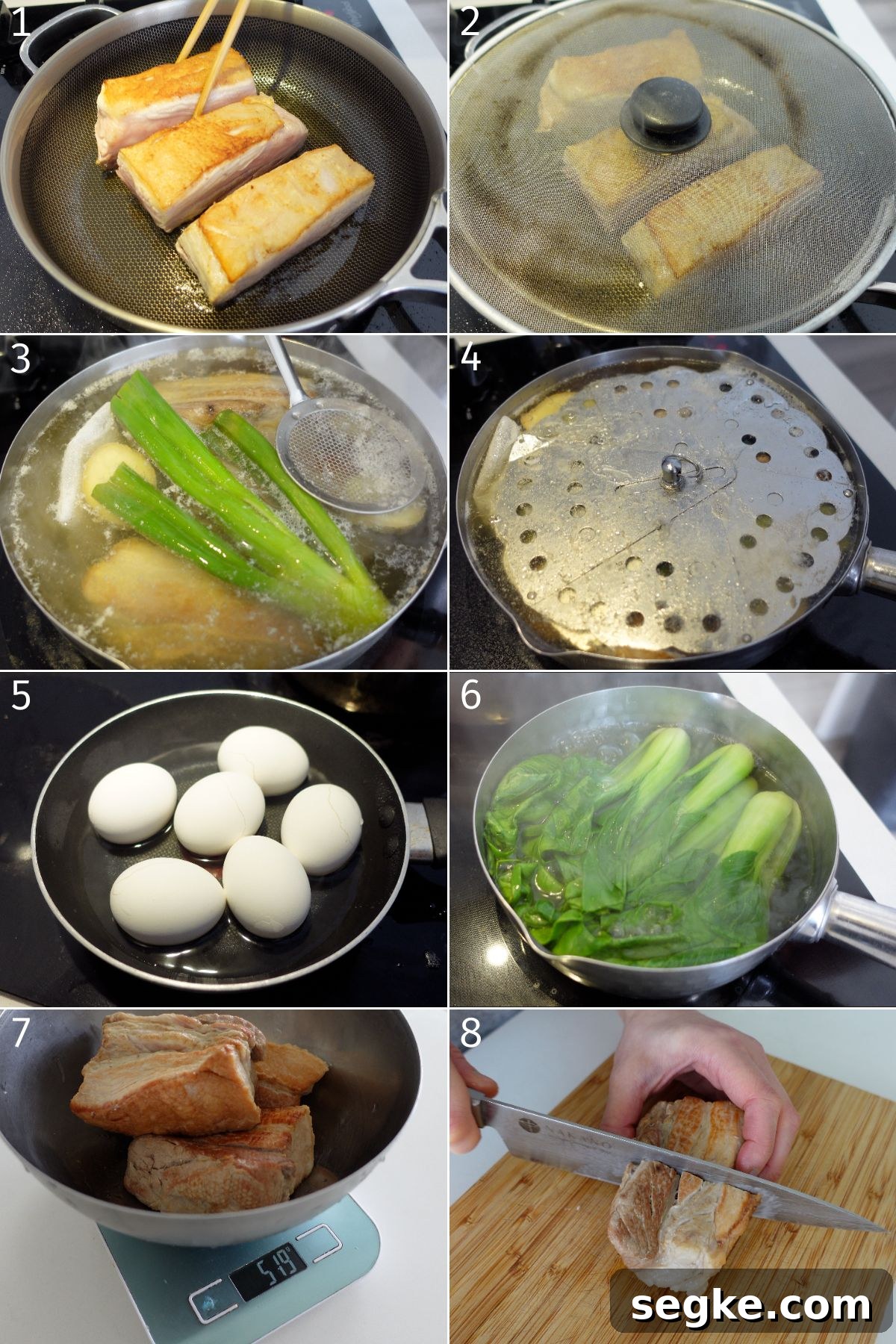
- Sear the pork: Brown all sides to render fat and build flavor.
- Simmer in rice water with aromatics: Add ginger and negi and simmer gently for 2–3 hours, skimming scum. Keep the pork in large chunks until the meat is tender but still intact.
- Weigh the cooked pork: Use the cooked weight to scale the seasonings for consistent flavor.
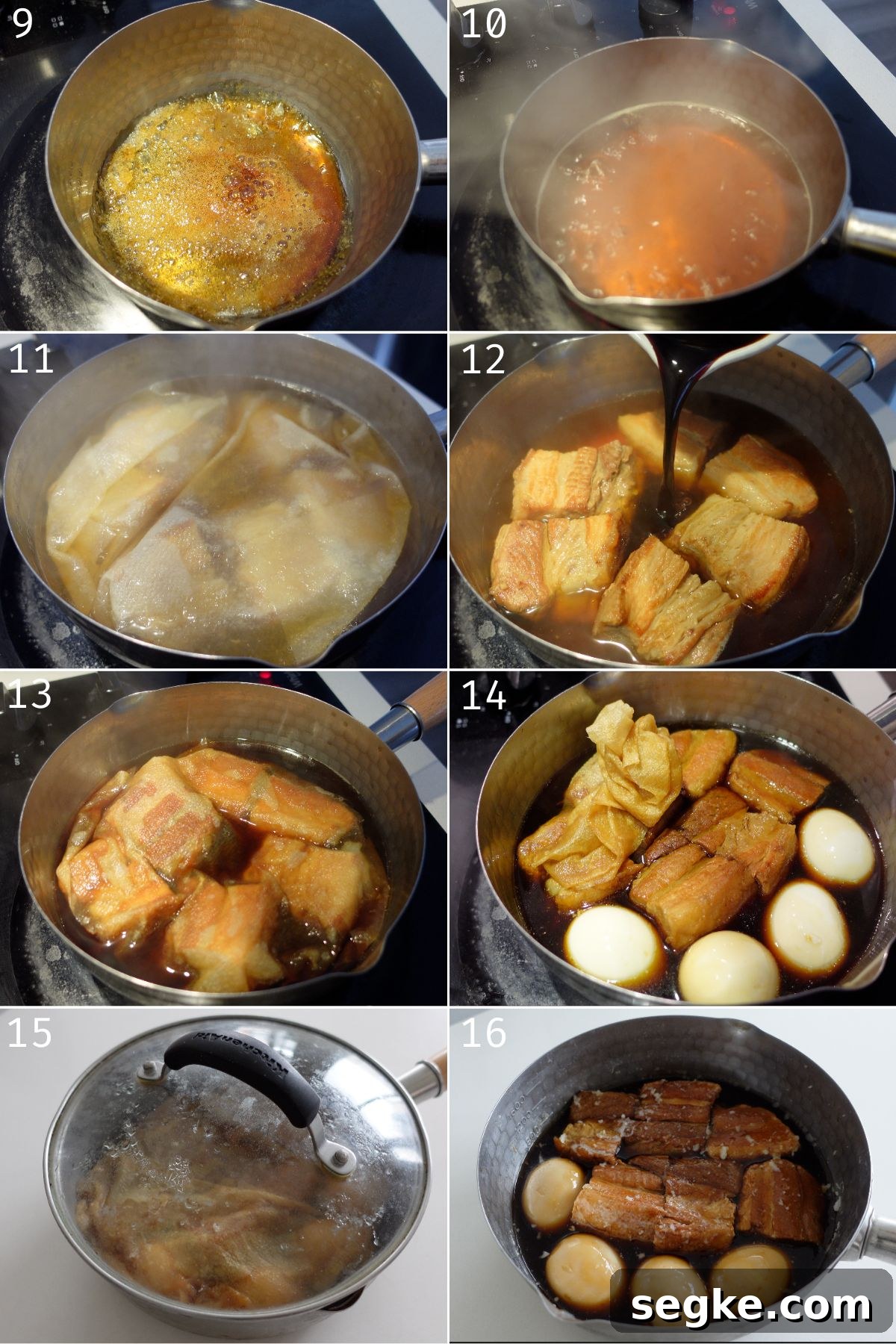
- Slice and braise in stages: Cut into chunks, caramelize a little sugar, add dashi, then mirin and sake, simmer, and finally add soy sauce to finish so the meat absorbs balanced seasoning.
- Rest overnight: Cool and refrigerate for the best depth of flavor, then gently reheat to serve.
Tips
- Sear well: A good sear improves color and flavor and removes excess fat.
- Low and slow: Maintain a gentle simmer; this breaks down connective tissue without drying the lean parts.
- Simmer whole at first: Keeping the pork in larger pieces prevents it from falling apart during the initial long simmer.
- Use rice water: It helps soften the meat and control scum. Alternatives like daikon or okara can also help tenderize.
- Layer seasoning: Follow the order of sugar, sake/mirin, then soy sauce to allow flavors to penetrate and caramelize properly.
- Rest overnight: Cooling and storing overnight deepens flavor and firms the meat for easy slicing.
Serving Suggestions
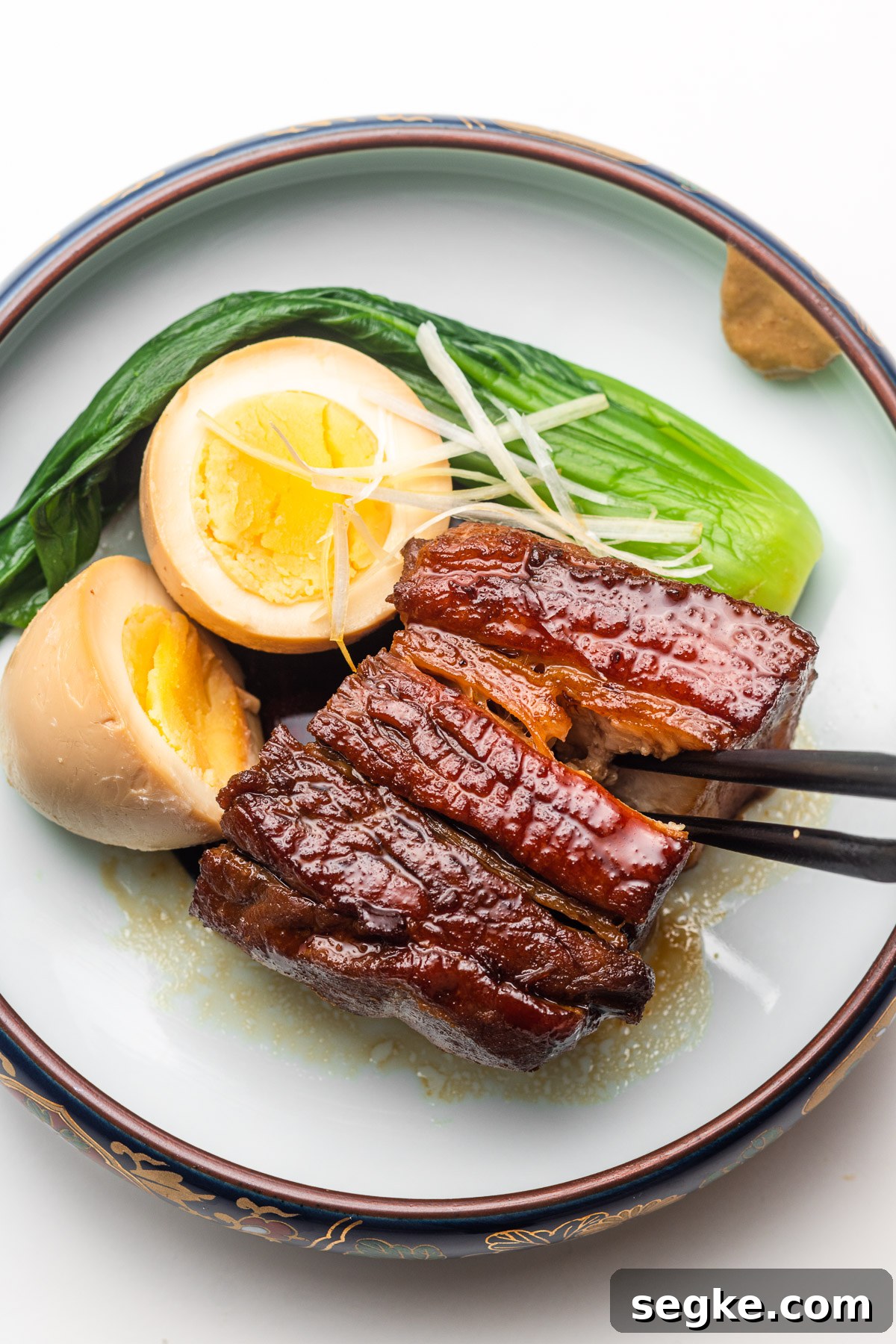
Kakuni is traditionally served with soft-boiled eggs and leafy greens. Additional serving ideas:
- Serve over steamed rice as a donburi, spooning extra braising liquid over the bowl.
- Use diced kakuni in fried rice for savory richness.
- Tuck slices into steamed buns or a sandwich for a fusion twist.
- Add to noodle bowls—ramen or udon—to enrich the broth and add texture.
- Serve alongside simple Japanese sides such as cucumber salad or sesame-dressed spinach.
How to Store Leftovers
- Refrigerate: Store cooled kakuni in an airtight container for 3–4 days.
- Freeze: Place pork and braising liquid in freezer-safe bags, flatten, and freeze for up to one month.
- Reheat: Thaw overnight in the refrigerator. Warm the braising liquid first, then gently heat the pork to avoid overcooking.
Recipe FAQ
Can I use a different cut of pork? Yes. Pork shoulder works well and is a common substitute; it will be leaner than belly.
Can I use another protein? Chicken thighs or firm tofu can be adapted to this braising method for lighter or vegetarian versions.
How long should pork belly cook to be tender? Simmer gently for 2–3 hours, or until easily pierced with a fork. Some cooks prefer finishing and resting overnight for even deeper tenderness.
Can I speed this up with a pressure cooker? Yes. Cook under high pressure for about 20–25 minutes, then finish braising the sauce as directed.
Kakuni (Japanese Braised Pork Belly)
Author: Lisa Kitahara
Total Time: 4 hours 15 minutes
Yield: 4 servings
Nutrition (per serving)
- Calories: 585
- Protein: 32 g
- Fat: 38 g
- Sodium: 1240 mg
- Sugar: 13 g
Enjoy making this kakuni recipe. If you try it, feel free to share your experience and photos on social media—tag @Okonomikitchen to show your results. Happy cooking!