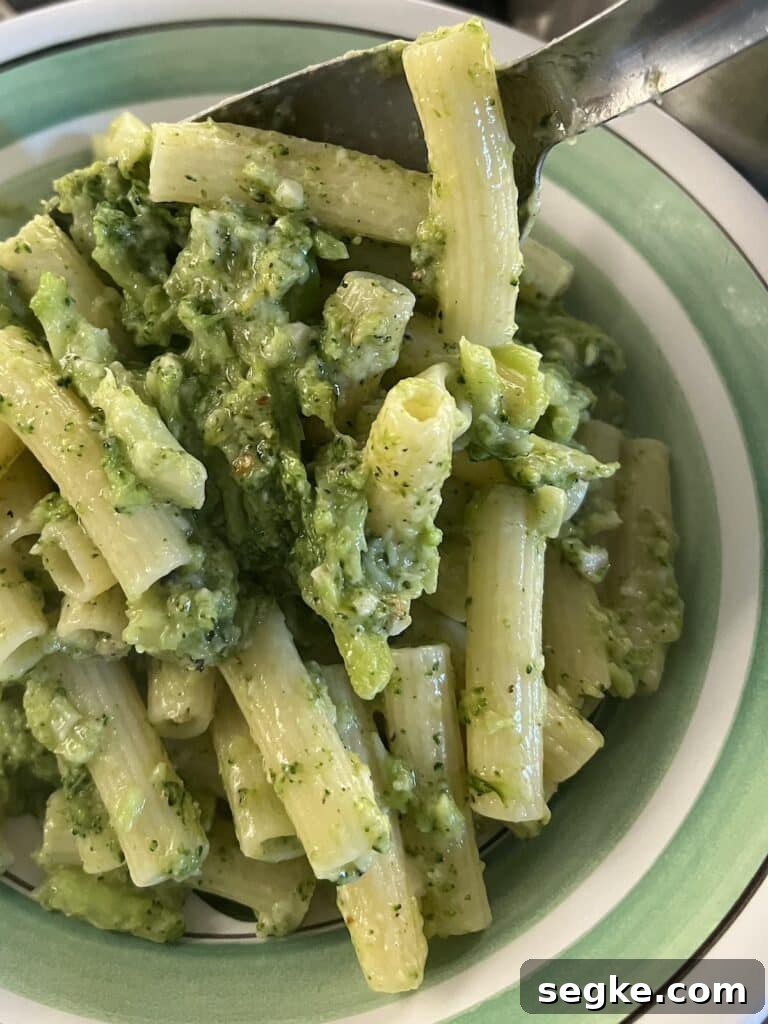
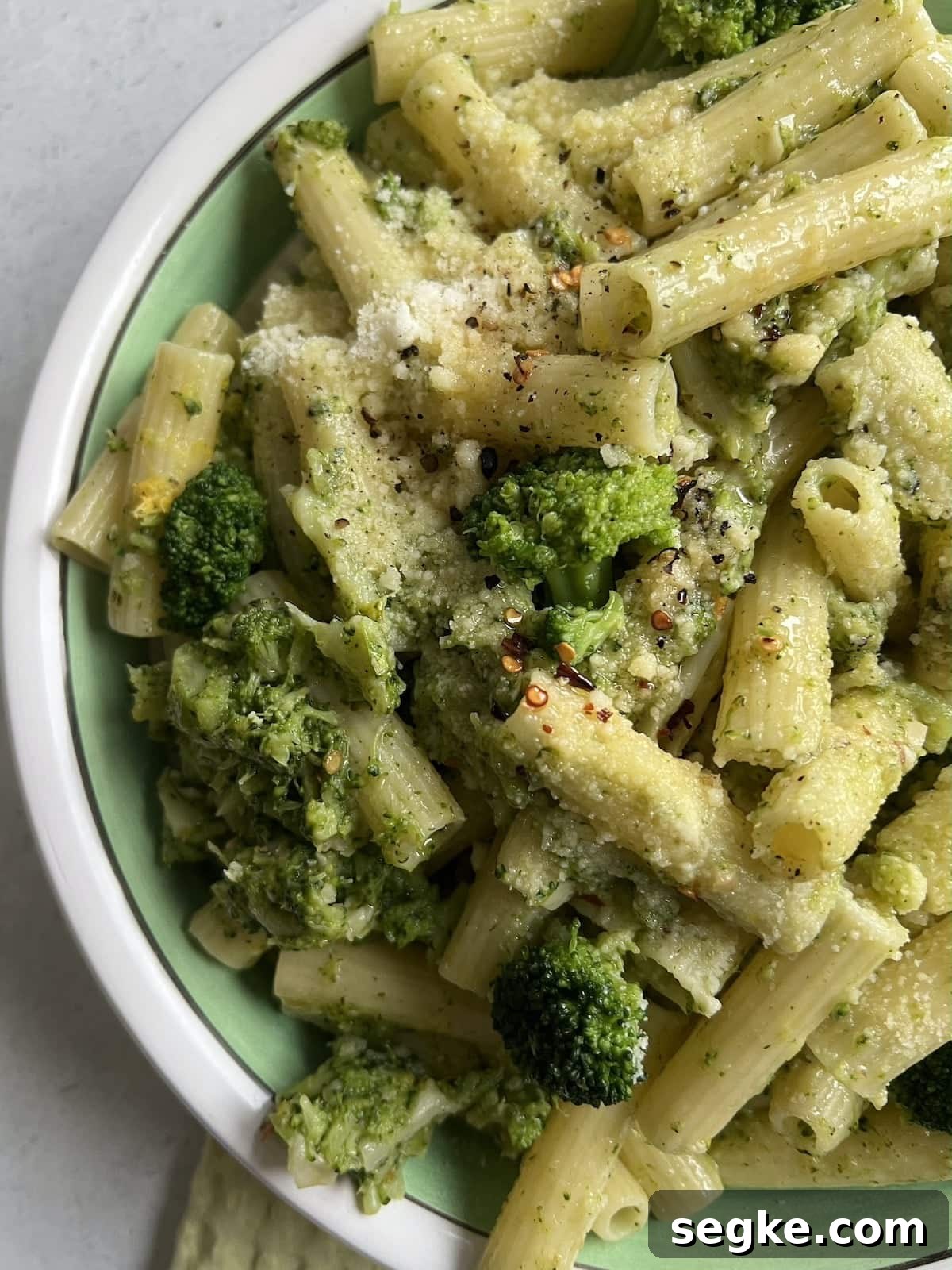
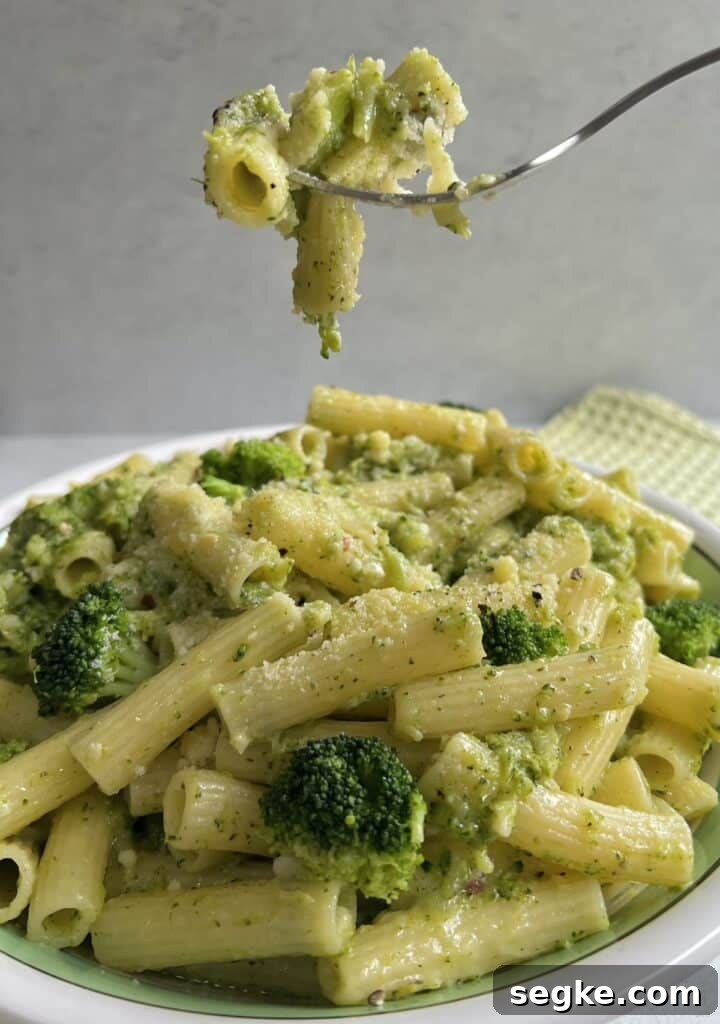
Italian Broccoli Pasta is pure comfort food and can be ready in under 30 minutes using simple pantry ingredients. Tender broccoli is cooked until very soft, smashed with plenty of garlic and extra-virgin olive oil, then tossed with pasta, tangy Pecorino Romano and bright lemon zest. The result is a velvety, deconstructed-broccoli-pesto-style sauce that clings to every forkful.
This dish is more than the sum of its parts: the broccoli and pasta meld into one cohesive, creamy preparation rather than remaining two separate components.
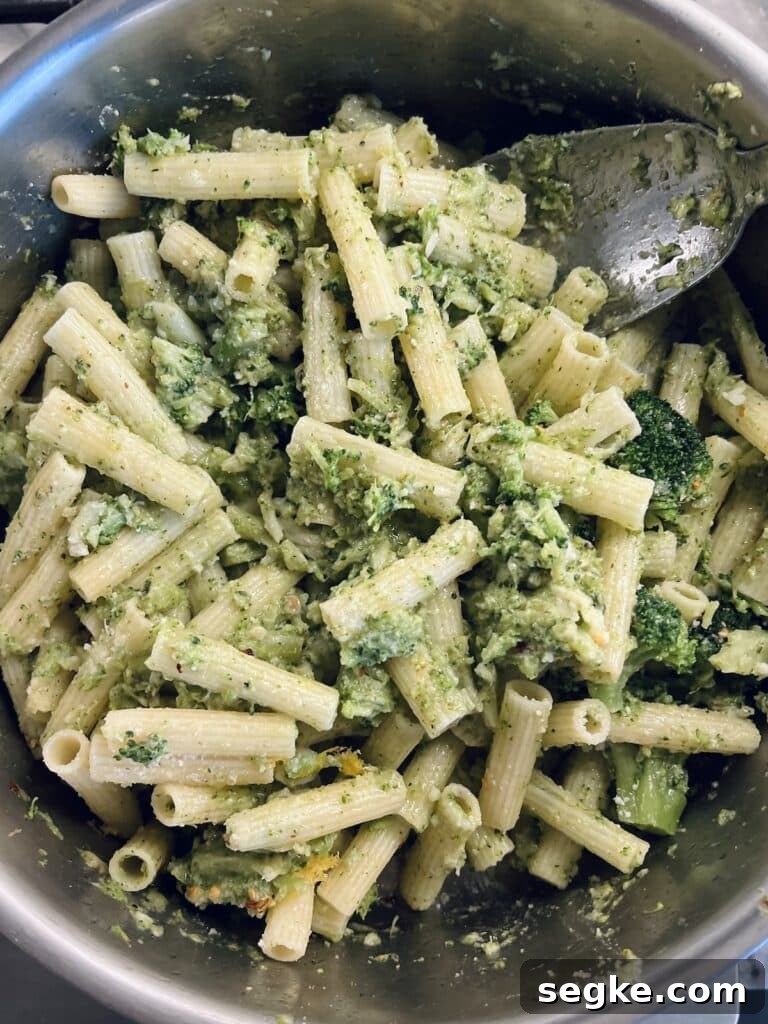
Instead of leaving florets whole, the broccoli is intentionally cooked until soft and then smashed so it can coat the pasta. When mixed with hot pasta and Pecorino, the mixture emulsifies into a silky sauce similar in technique to cacio e pepe.
What Inspired This Recipe
This pasta was a beloved family favorite. I inherited the recipe from my mother and cook it whenever I want a satisfying, homey meal. Over the years I began finishing it with a little lemon zest for brightness — a small touch that lifts the earthy broccoli and sharp cheese.
Why This Recipe Works
- Quick and easy: Minimal ingredients and under 30 minutes to the table — perfect for weeknights or casual entertaining.
- Simple technique: If you can boil water and sauté garlic, you can make this. The key step is softening and smashing the broccoli for that sauce-like texture.
- Big flavor: The combination of garlic, olive oil, Pecorino and lemon transforms humble broccoli into a dish even picky eaters enjoy.
This version is creamy and satisfying — give it a try and see why it’s so popular.
Ingredients for Italian Broccoli Pasta
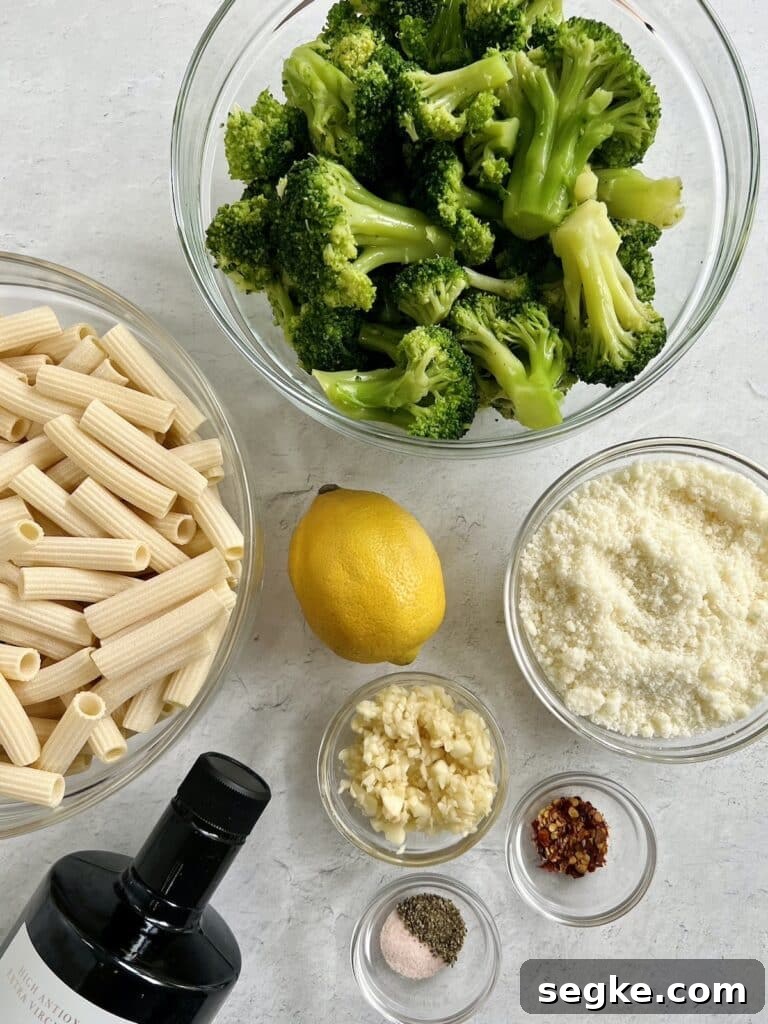
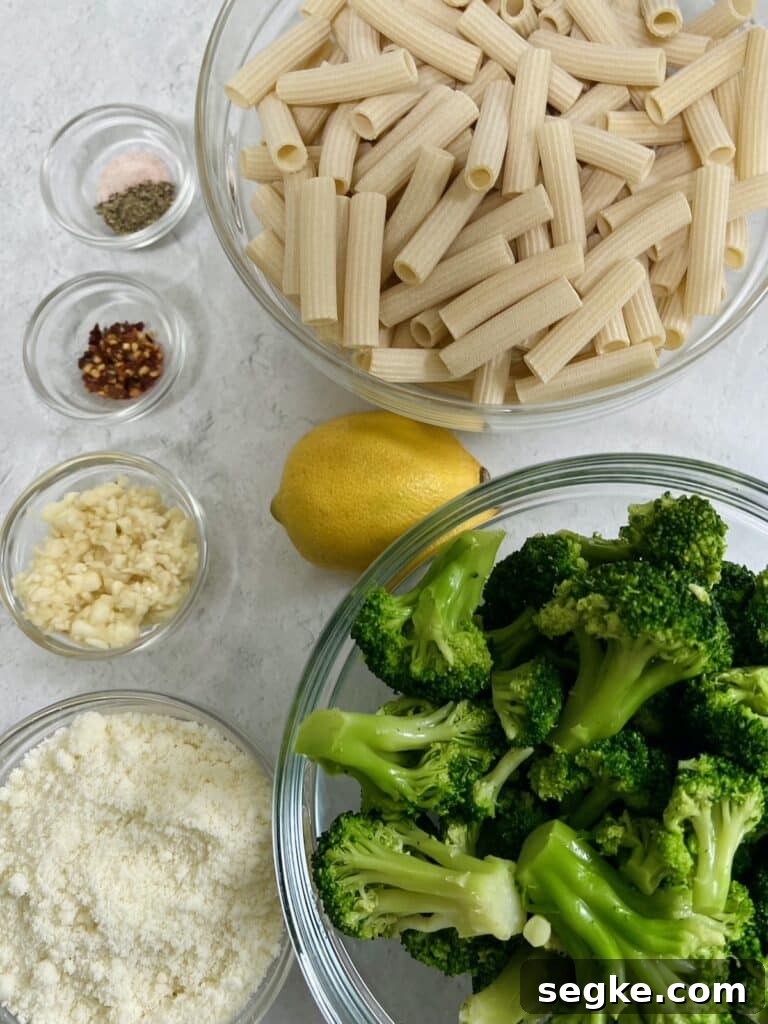
You likely have everything you need. These ingredients yield a balanced, flavorful pasta:
- Broccoli: Use about twice the weight of broccoli to dry pasta (for 1 lb pasta, use 2 lb broccoli). Frozen broccoli works great — it’s convenient and softens quickly — but fresh broccoli can be used if chopped into small pieces.
- Garlic: Use generous amounts; it flavors the oil that becomes the base of the sauce.
- Extra-virgin olive oil: For sautéing the garlic and finishing the dish. A good quality oil makes a noticeable difference.
- Pecorino Romano: Sharp, salty, and essential for the emulsified, creamy finish. If needed, Parmesan can be substituted, but Pecorino is preferred.
- Lemon zest: Adds freshness and brightness; optional but recommended.
- Pasta: Any shape works. Classic short shapes like rigatoni or ziti or longer shapes like bucatini and spaghetti are excellent choices.
Italian Broccoli Pasta — Step-by-Step (Pro Tips Included)
Main steps to make pasta con broccoli:
- Prep ingredients and bring a large pot of water to a boil. In a large sauté pan over medium-low heat, warm the olive oil, add the garlic and a pinch of crushed red pepper, and cook gently until the garlic is fragrant and starts to color. Pro tip: watch the garlic closely so it doesn’t burn.
- When the water boils, add salt, then the broccoli. Stir and cook the broccoli for 4–5 minutes until very soft and easily pierced with a fork. Pro tip: intentionally cook the broccoli until it’s soft enough to smash — this is what creates the sauce-like texture.
- Use a strainer or spider to transfer the cooked broccoli to the pan with the garlic. If the broccoli needs more softening, add a splash of water to the pan and cover briefly to steam it further.
- Add the pasta to the boiling water and cook it about two minutes shy of the package al dente time. Reserve at least 1 cup of starchy pasta water before draining.
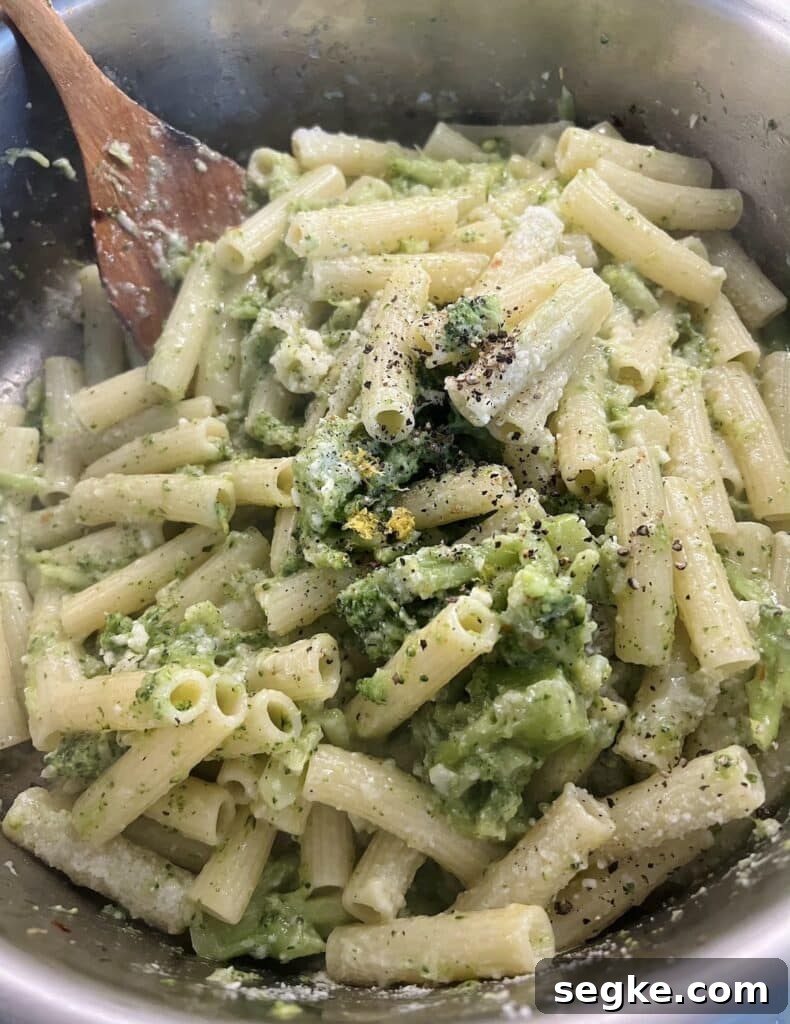
- While the pasta cooks, mash the broccoli in the pan with a potato masher or large fork until mostly broken down, leaving a few small chunks. Season with salt and black pepper.
- Transfer the pasta to the pan with the broccoli along with about ½ cup of the reserved pasta water and the lemon zest. Toss and allow the pasta to finish cooking in the pan so it absorbs the flavors; add additional pasta water if needed to loosen the sauce. Pro tip: the starchy pasta water is essential to bind and emulsify the sauce.
- Turn off the heat and fold in the grated Pecorino Romano until it melts into the pasta and broccoli, creating a creamy coating. Finish with an extra drizzle of olive oil and a little more lemon zest if desired. Serve immediately.
Frequently Asked Questions
Yes. Peel the stem and chop the head into small pieces. Fresh broccoli may take slightly longer to soften than frozen.
No. Cook the broccoli in the pasta water before adding the pasta; then remove it and finish the pasta in the same water for simplicity and to capture flavor.
For very large volumes, blanch the broccoli separately until soft, mash it, then sauté with garlic. Handling large quantities separately makes it easier to manage.
Store in an airtight container in the refrigerator for up to 5 days. Reheat gently in a skillet over low heat with a splash of water to loosen the sauce.
Variations and Substitutions
Ideas to customize the recipe:
- Cauliflower: Substitute cauliflower florets using the same technique for a milder, nutty variation.
- Anchovies: Add a couple of anchovy fillets with the garlic to deepen the savory, umami flavor.
- Protein: Add shrimp, crab, chicken or Italian sausage to make the dish heartier.
- Cheese swap: Pecorino is ideal, but Parmesan can be used if needed.
- Spicy: Increase crushed red pepper or stir in Calabrian chile paste for heat.
- Vegan: Omit the cheese or use nutritional yeast or a vegan grated cheese alternative.
Kitchen Tools & Cookware Needed
Essential tools for this recipe:
- Large pot for boiling pasta
- Large sauté pan
- Colander or spider strainer for removing broccoli
- Potato masher or large fork to smash broccoli
- Measuring spoons, a grater for the cheese, and serving bowl or platter