
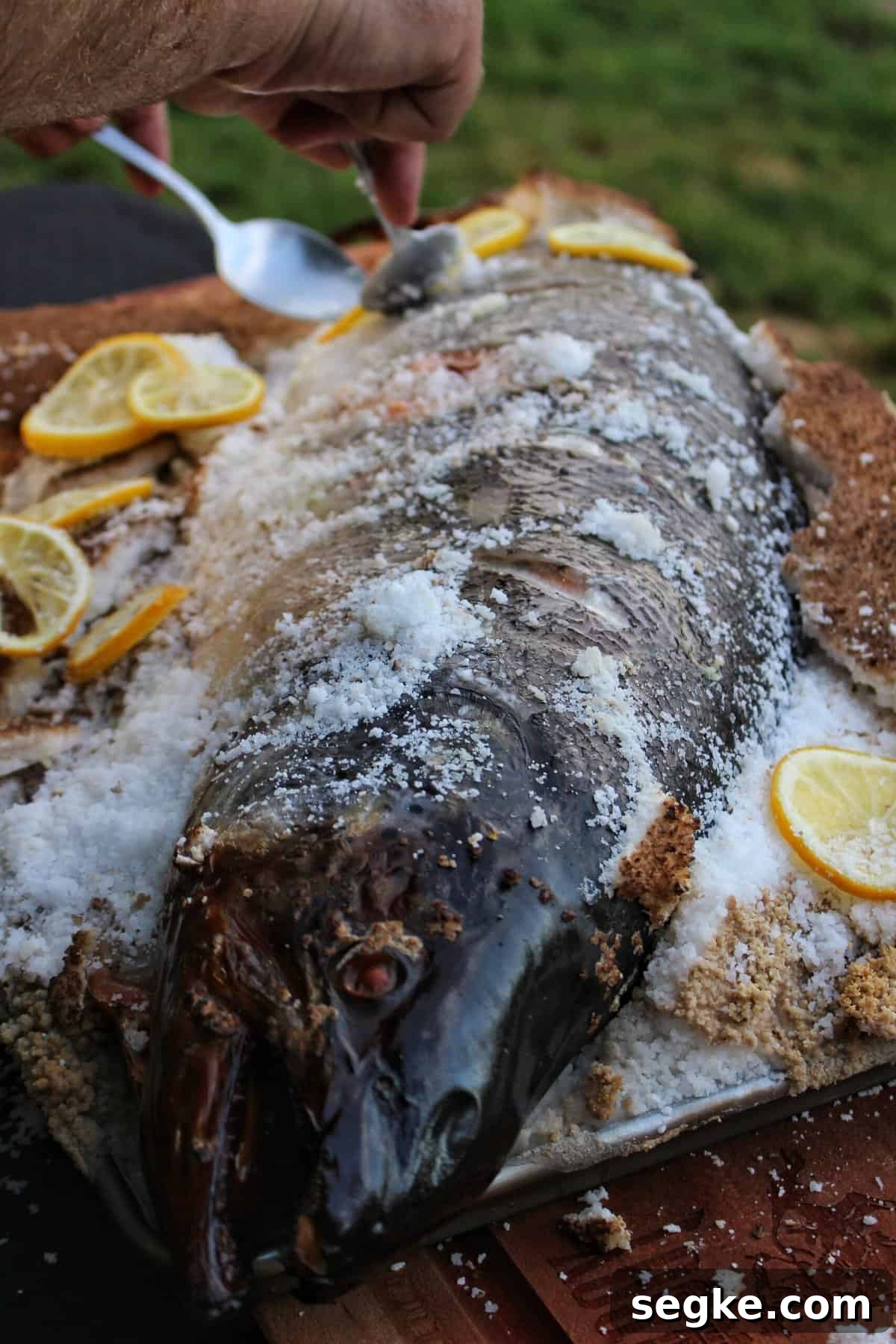
The big 4th of July celebrations are right around the corner, and if you want a showstopping dish that wows the crowd, this Salt Baked Salmon with Cream Sauce is a perfect choice. Cooked over Cowboy Charcoal, the fish is encased in a salt crust to lock in moisture, smoked for about an hour at 400°F, and finished with a rich cream sauce. It’s an impressive recipe that serves a crowd. Below I answer the most common questions I get about making a salt-baked salmon.
Sponsored by Cowboy Charcoal
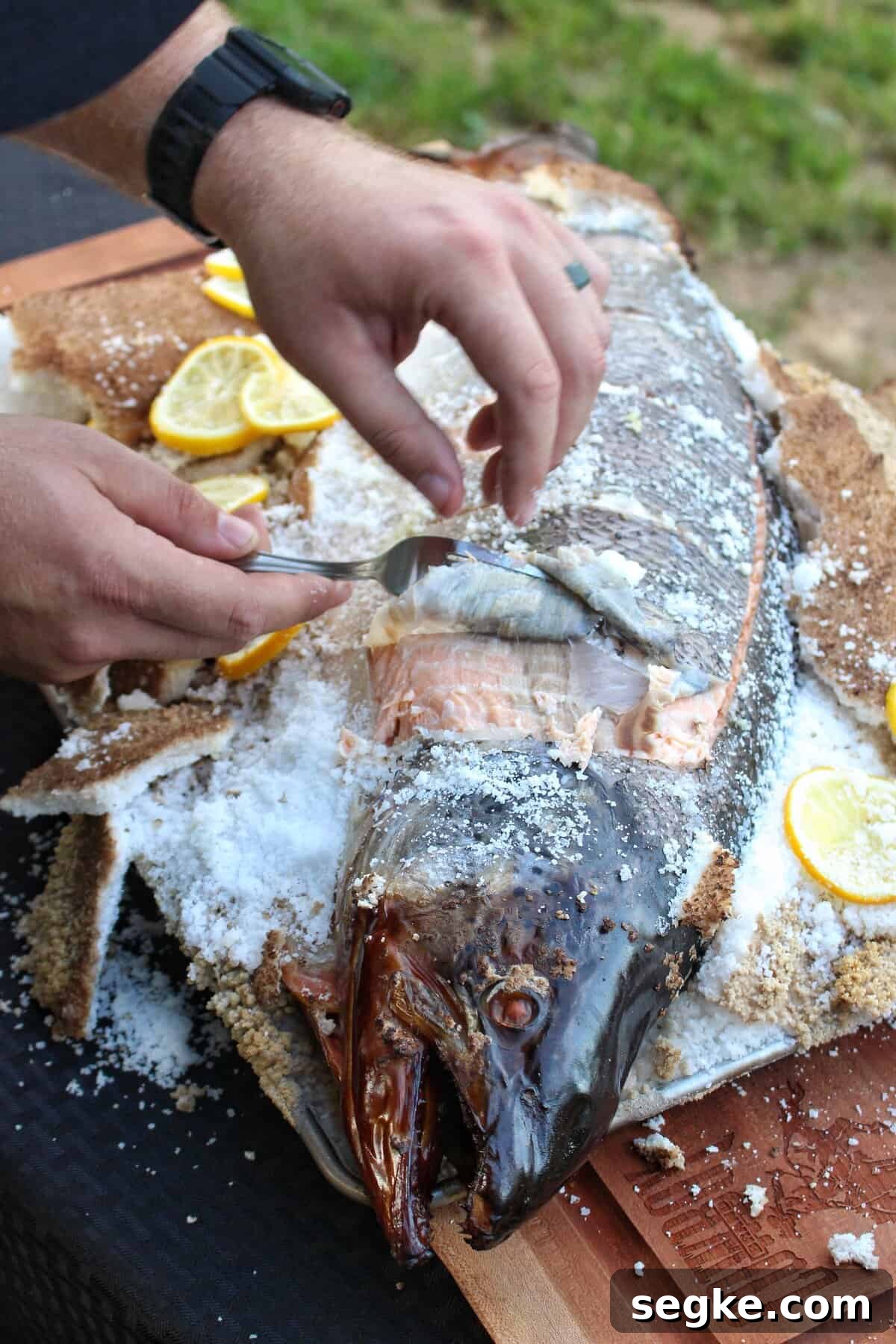
Table of Contents
- Few Answers to your Questions:
- 1. How does Salt Baked Salmon Work?
- 2. Will the Salmon be overly salty?
- 3. How will you know your Salt Baked salmon is done?
- 4. Why do you want good charcoal?
- More Salmon
- Time to Eat this Salt Baked Salmon
- Flavor X Fire & FOOD X Fire
- Salt Baked Salmon Recipe
Few Answers to your Questions:
1. How does Salt Baked Salmon Work?
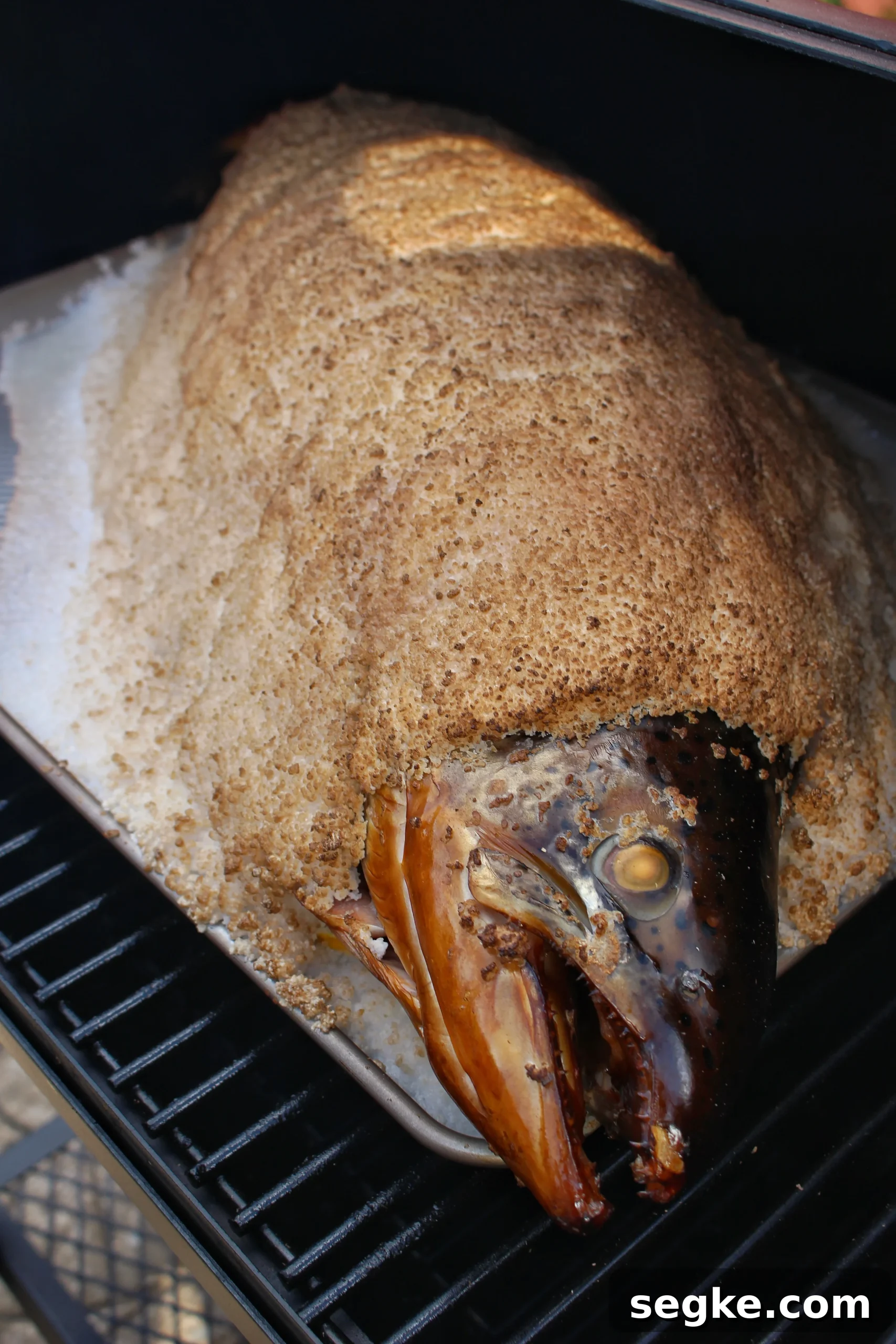
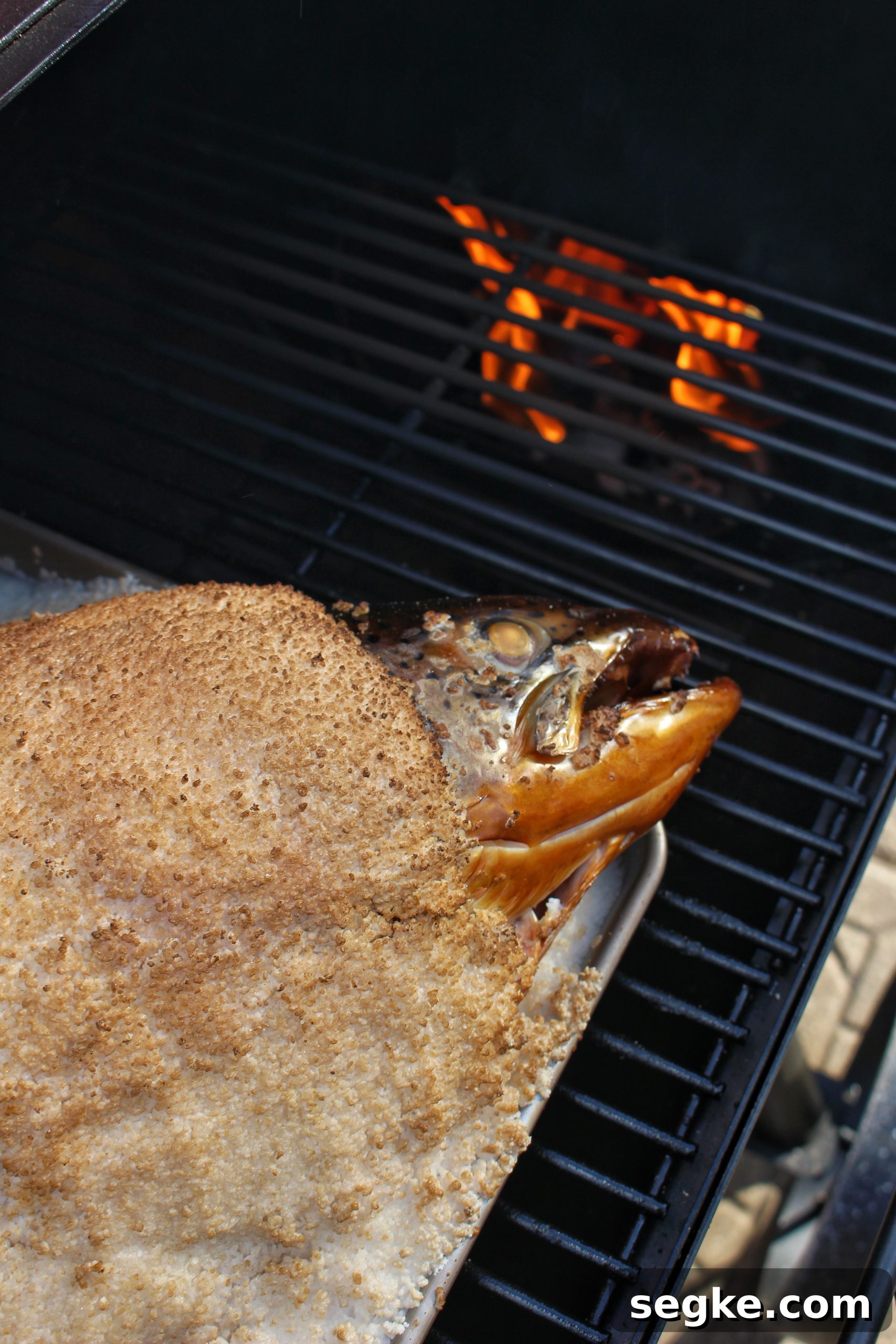
Salt creates a crust that traps moisture and concentrates flavor, acting like a sealed environment around the fish. When you bake salmon in a salt crust, the exterior forms a hard shell that prevents juices and aromatics from escaping. The result is exceptionally moist, evenly cooked fish with a clean, focused flavor profile. Salt baking is an elegant technique that highlights the natural texture and taste of the salmon without overdosing it on salt.
For more on how salt affects cooking, see the article Why Salt a Steak for background on how salt modifies flavor and texture.
2. Will the Salmon be overly salty?
No — when done properly, the salt crust does not make the salmon taste excessively salty. The salt primarily forms an external barrier and draws a small amount of moisture from the surface during cooking, but it does not penetrate deeply into the flesh. Leaving the skin intact and adding lemon slices between the salt and fish helps protect the meat from absorbing too much salt. The crust’s main job is to trap moisture and flavor rather than to salt the fish itself.
Additionally, the salt crust will absorb some of the released moisture as it bakes, then harden. That process minimizes salt transfer to the flesh. What you’ll be left with is a juicy, flavorful salmon that tastes balanced and fresh.
3. How will you know your Salt Baked salmon is done?
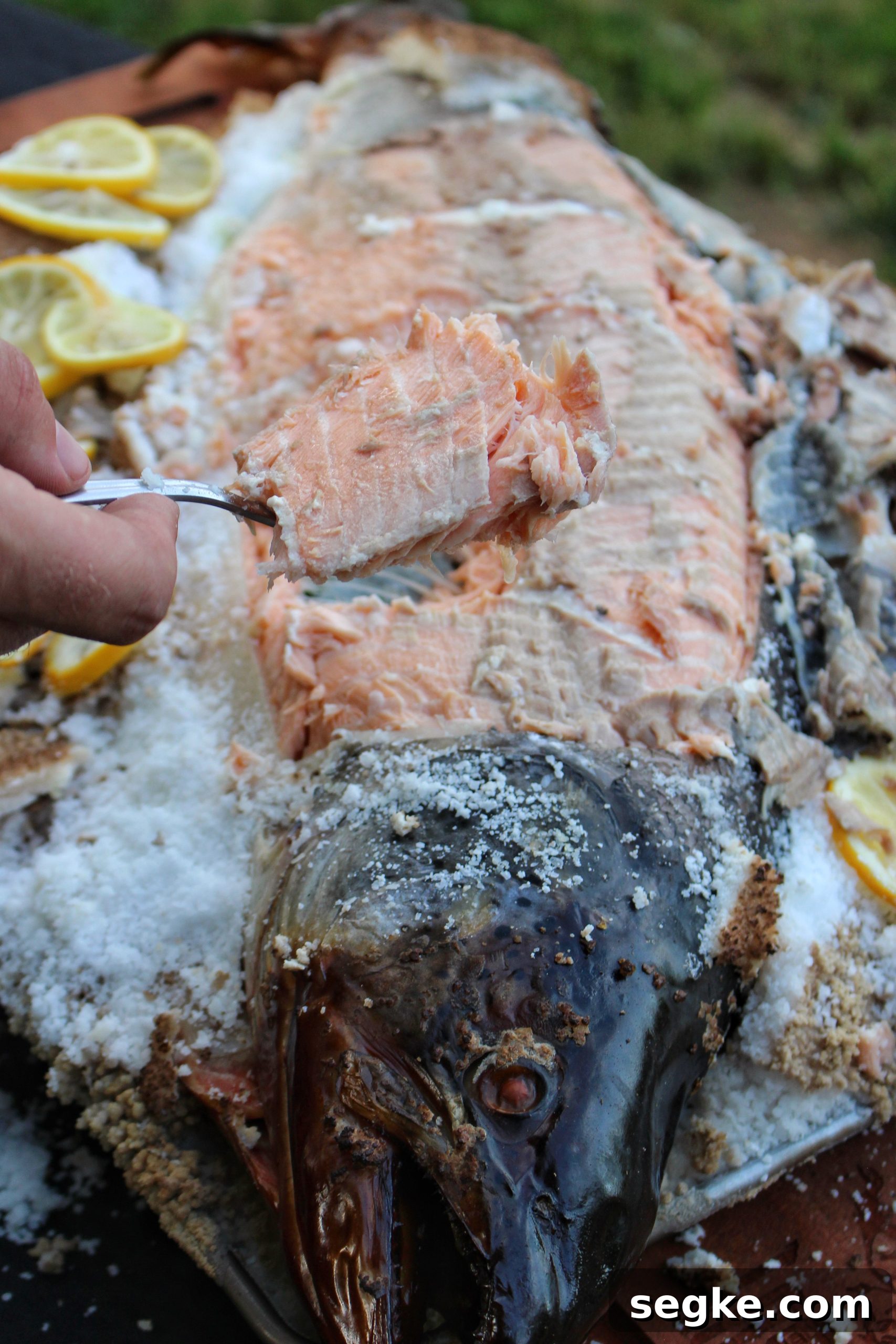
There are a couple of reliable ways to check doneness. Gently probe through the salt crust with a thermometer until it reaches the flesh; you’re aiming for an internal temperature of about 140°F. If you don’t have a thermometer handy, slide a metal skewer or a thin knife into the thickest part of the fish and pull it back out — it should feel warm to the touch. After resting for a few minutes, the salmon will finish cooking and remain moist and tender.
4. Why do you want good charcoal?
Consistent heat and a steady temperature are essential for a successful salt-baked salmon. This recipe cooks at a relatively high 400°F for about an hour, so using high-quality charcoal helps you maintain that heat without major temperature swings. I used two full chimneys of Cowboy Charcoal to keep the smoker steady and topped the coals with wood chunks for a subtle smoke note. Good charcoal makes temperature control easier and yields cleaner flavor.
More Salmon
Cast Iron Skillet Salmon
Panko Crusted Salmon
Smoked Salmon
Leaning Salmon with Roasted Garlic Aioli
Maple Cajun Salmon Pinwheels
Bourbon Bacon Pecan Salmon
Time to Eat this Salt Baked Salmon
Make this Salt Baked Salmon for your next gathering — it makes a dramatic centerpiece and serves many guests. Use Cowboy Charcoal to keep your smoker steady at 400°F and add a few wood chunks if you want a subtle smokiness. Invite friends and family: this recipe is built to feed a crowd and will leave everyone impressed.

Get The Cookbooks!
Flavor X Fire & FOOD X Fire
By Derek Wolf
These books explore the major components of flavor — salty, sour, sweet, bitter, and umami — while also addressing aroma, heat, and texture. They’re useful resources for anyone who wants to understand how to layer taste when cooking over fire.
Salt Baked Salmon
Pin Recipe
Print Recipe
Ingredients
Salmon & Salt:
- 1 whole Verlasso Salmon
- 144 oz of Kosher Salt
- 1.5 cups of Water
- 12 Lemons sliced
- 15-20 sprigs of Dill
- Olive Oil
- Chives for garnish
Cream Sauce:
- 1 Shallot finely diced
- ⅛ cup of White Wine Vinegar
- ⅛ cup of White Wine
- 6 tbsp of Butter
- ⅛ cup of Heavy Cream
Instructions
-
Remove the fins and score the skin on the salmon. Rub the outside with olive oil and lightly season the interior cavity and exterior with sea salt. In a bowl, combine the kosher salt and water until the texture resembles damp sand. Spread a layer of the salt mixture on a baking sheet and add a layer of lemon slices. Set the salmon on top of the lemons, stuff the cavity with additional lemon slices and dill sprigs, then cover the whole fish with more lemon slices and the remaining salt mixture until it is completely encased.
-
Using Cowboy Charcoal, light two chimneys of coals and preheat your smoker to a steady high heat around 400°F. Add a few wood chunks to the coals if you want a touch of smoke flavor.
-
Place the salt-encased salmon in the smoker and cook for about an hour, or until the internal temperature reaches approximately 140°F. Remove the fish and let it rest for 5–10 minutes.
-
While the salmon rests, use the remaining Cowboy Charcoal heat to gently simmer the shallot with white wine vinegar and white wine for 4–5 minutes. Add the butter and heavy cream, then reduce the heat and simmer for another 5–10 minutes until the sauce thickens slightly.
-
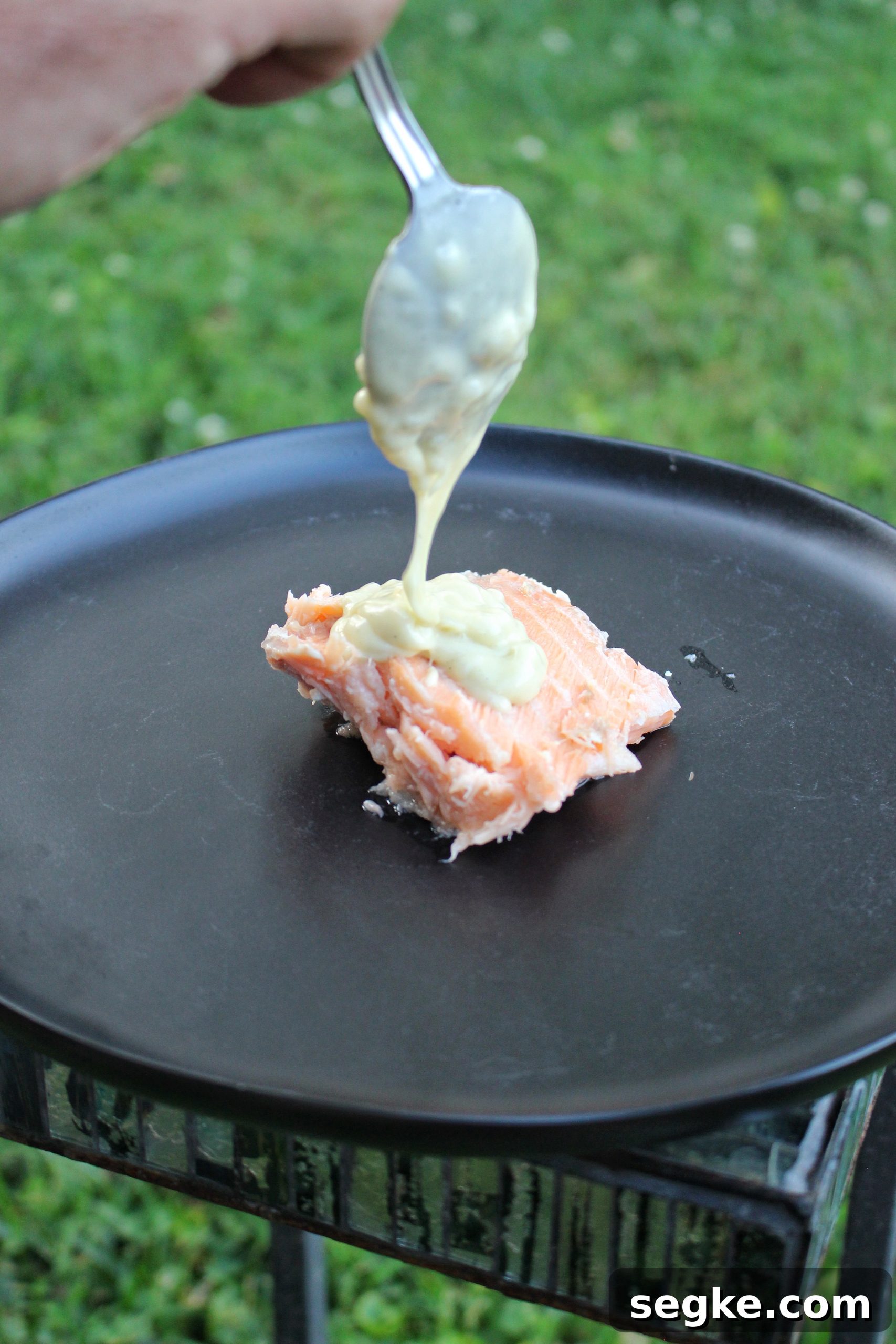
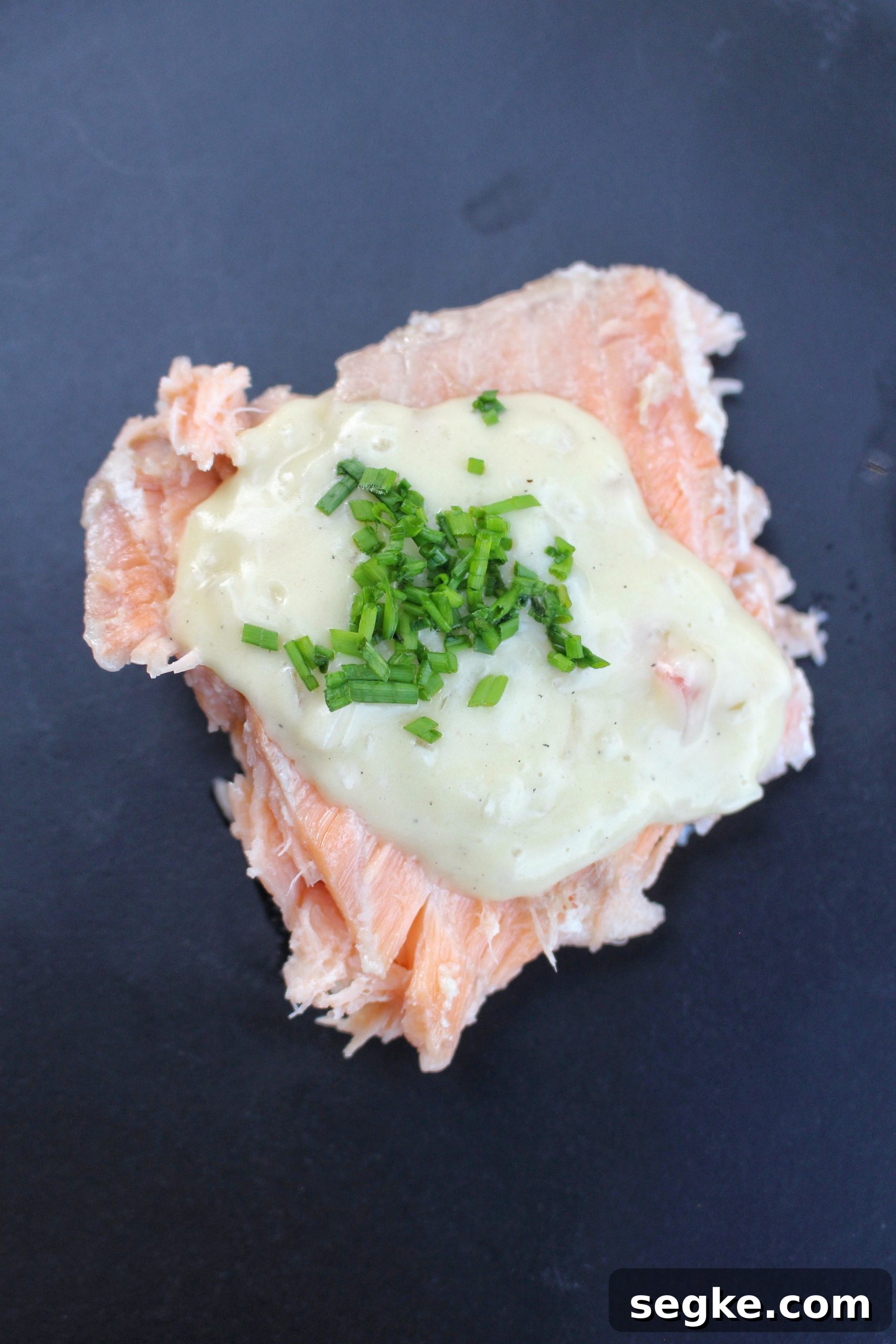
Break away the salt crust, peel back the skin, and portion the salmon into fillets. Spoon the cream sauce over the fish and finish with chopped chives. Serve and enjoy.