
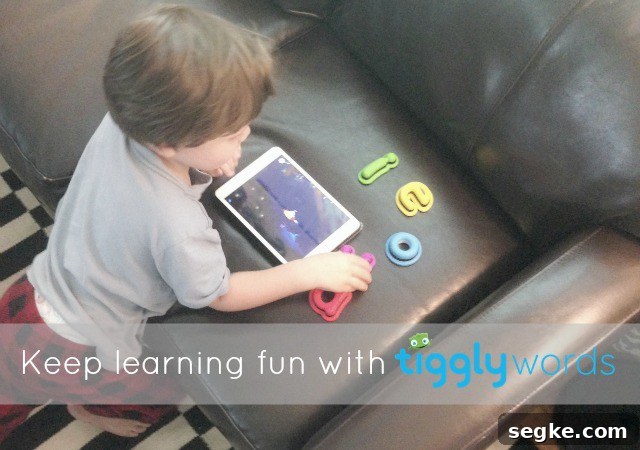
Summer is here, and at my house it has been in full swing for a couple of weeks. Our days are filled with swim lessons, camps, picnics and playdates, but there’s still downtime—and both mom and dad have jobs that sometimes require focused attention. When we’re inside, I don’t mind letting my boys watch a movie or play a video game, but I prefer activities that sneak in learning while they’re having fun.
Recently we tried the Tiggly Words learning system and its companion iPad apps, and it has been a hit. We were already fans of Tiggly Shapes, so I was excited to see how the letter-based set would work with my kids. The Tiggly Words package includes sturdy, rubberized vowel pieces designed to interact with the apps, which makes letter recognition and early spelling more tactile and engaging.
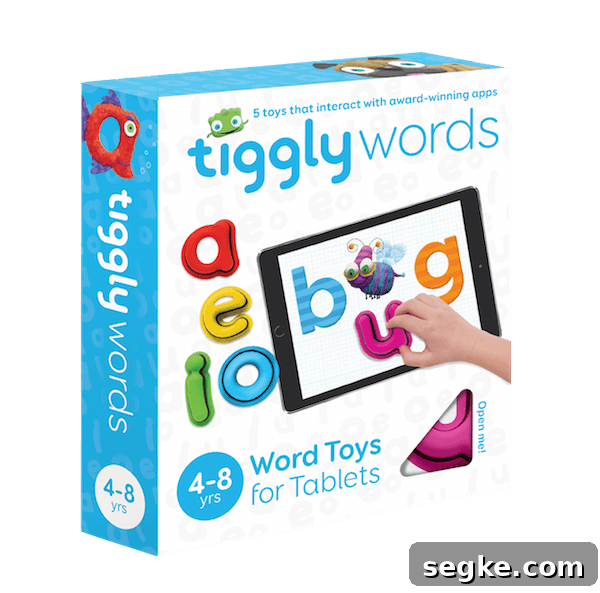
My boys are ideal ages for this set: Oscar is about to enter first grade, and Calvin will start Pre-K in the fall. The pieces are well made—rubbery and durable—so they work reliably with the iPad screen and survive the normal rough-and-tumble handling of preschoolers and early elementary kids.
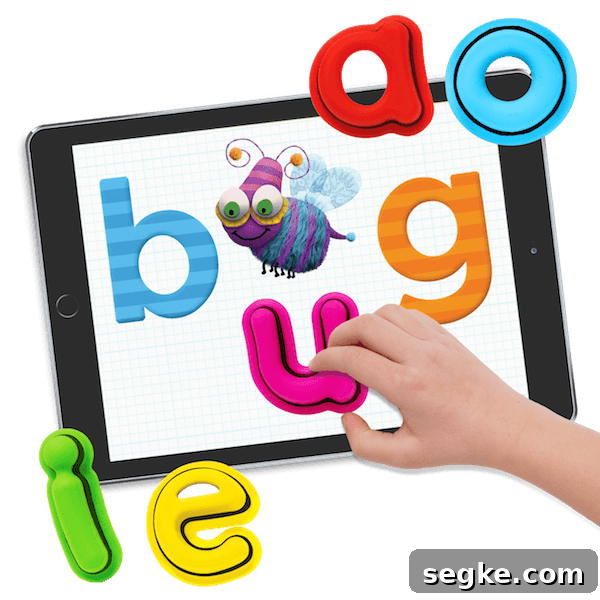
Tiggly Words currently offers three apps for iPad that focus on letter recognition, phonics and simple spelling. You can try each app without the physical letters if you prefer to test first, but having the tactile pieces keeps my children engaged longer and adds a hands-on dimension that pure screen play lacks. The interaction between the physical vowels and the on-screen prompts helps reinforce phonemic awareness in a playful way.
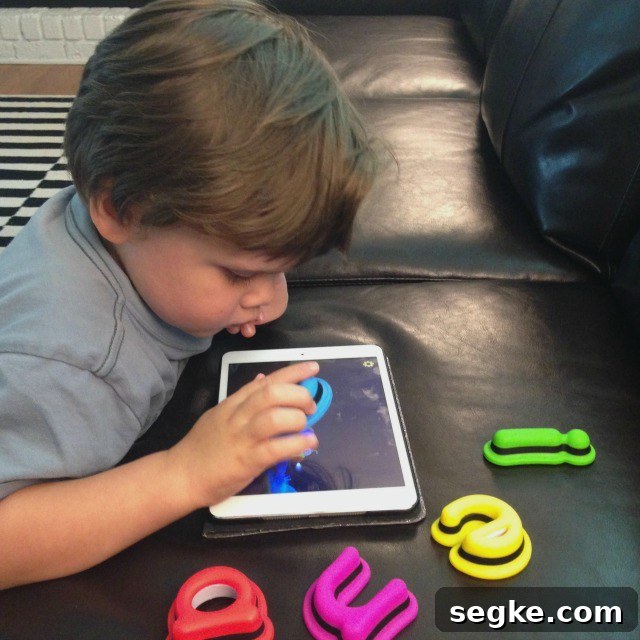
When Calvin first opened Tiggly Tales, he experimented by placing different vowels into the blank spots to see what pictures and words would appear. After just a few days he had already learned that adding “u” to “f_n” made the word FUN—and the app celebrates with an animated party. That quick reinforcement helped cement the spelling in his mind, and now he delights in three-letter words like bug, pug and cab. His favorite game is putting the pug in the cab for a silly on-screen ride.
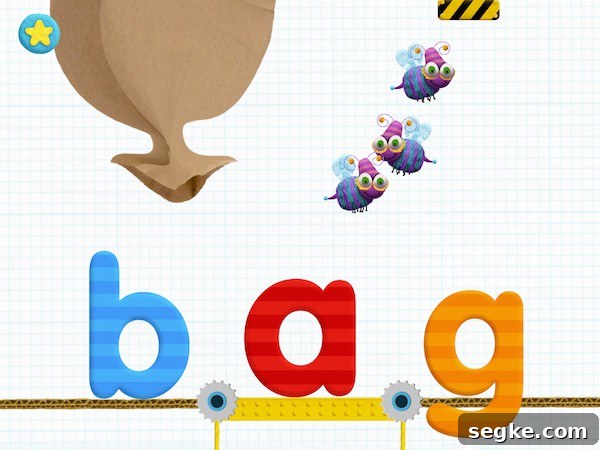
Oscar, who already knows many basic words, enjoys experimenting with different letter combinations and predicting what new words will appear. The other apps in the set—Tiggly Doctor and Submarine Spelling—introduce additional activities and challenges, offering varied approaches to phonics, spelling and vocabulary practice. Each app presents playful prompts and immediate feedback, which keeps learning positive and motivating for young children.
What stands out to me is that Tiggly’s approach to early literacy feels natural rather than forced. The games aren’t gimmicky; they genuinely encourage kids to explore letters, sounds and word formation because the experience is fun. My children often choose Tiggly apps over other games because they combine interaction, creativity and clear learning goals.
If you’re curious about the system, you can explore the apps in trial mode without the physical letters, and when you’re ready, the Tiggly Words kit pairs neatly with the apps for a tactile learning experience. The combination of hands-on play and screen-based instruction supports letter recognition, phonemic awareness and basic spelling—skills that matter for preschool and early elementary development.

I was given the above items for the purpose of this review. Opinions are my own. Post contains affiliate links. Thanks for reading!