
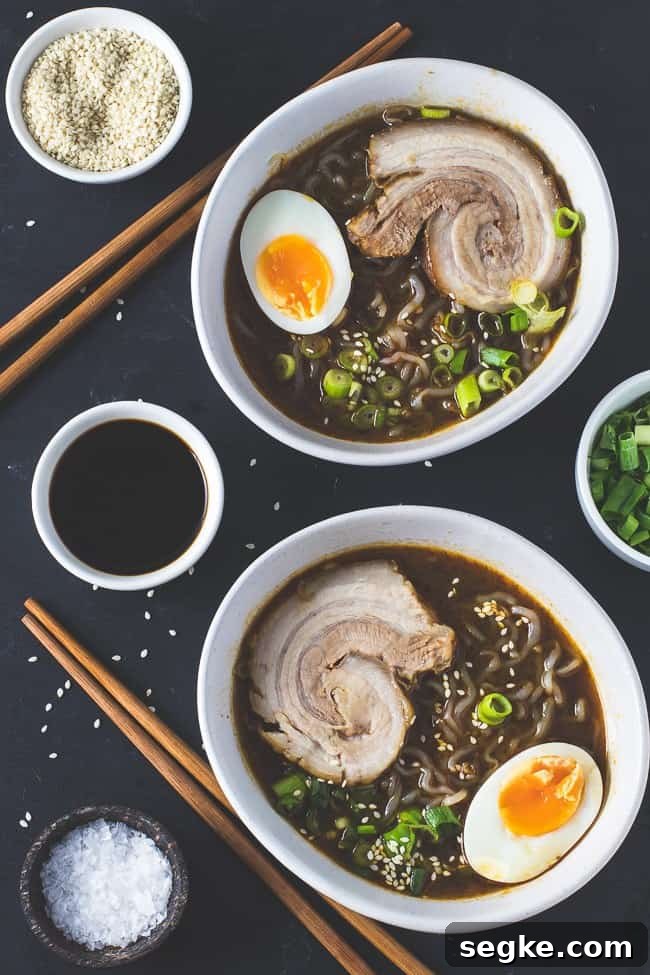
Japanese ramen is a comforting bowl of thinly sliced pork, konjac (miracle) noodles, and soft‑boiled eggs served in a rich, savory broth. Its roots go back many years and ramen has been refined over generations into the satisfying street‑food and restaurant staple enjoyed across Japan today.
I visited Japan a few years ago with my family and ate ramen in Tokyo, Sapporo and Niseko. Ramen is everywhere — affordable, warming and endlessly customizable — which makes it a perfect introduction to Japanese home‑style cooking for travelers and busy cooks alike.
We spent time in Tokyo, Sapporo and Niseko (pictured below)

Traditional ramen noodles are wheat‑based and relatively high in carbohydrates, so they don’t work well on a strict ketogenic diet. That’s where konjac or miracle noodles are useful: they contain almost no digestible carbs and provide a noodle‑like texture without the starch. Because they are low in calories and net carbs, konjac noodles are a popular choice for people following low‑carb and keto meal plans.
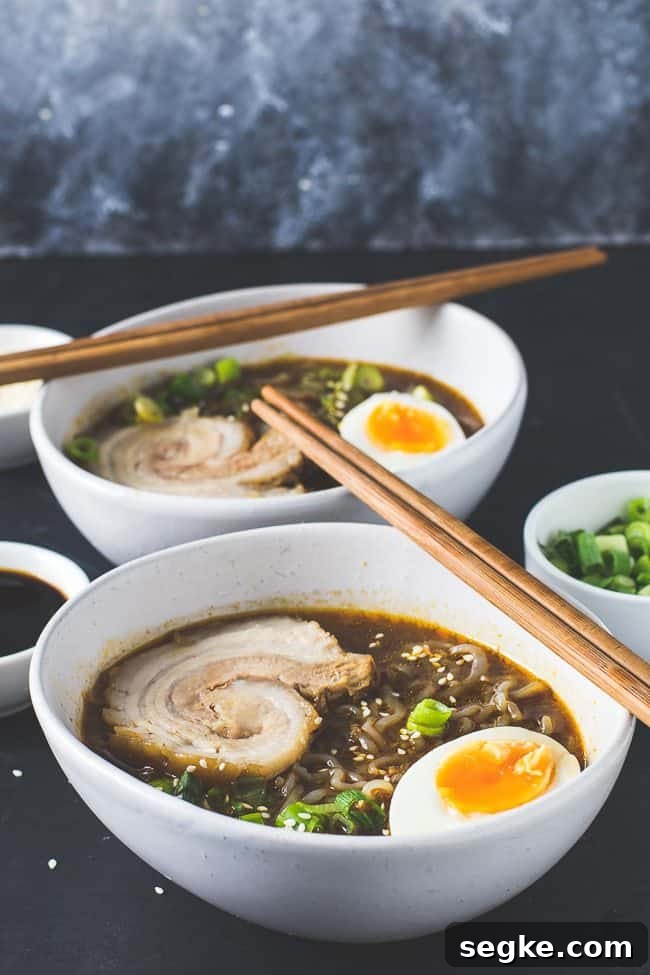
The rolled pork and soft‑set eggs are the most striking parts of this bowl, but it’s really the broth that makes it special. A salty, umami‑rich broth not only brings deep flavor but also helps maintain sodium levels if you are new to keto and want to reduce the chance of keto flu.
I cooked the rolled pork in a cast‑iron pot for a robust crust and even heat, but a Dutch oven, slow cooker or pressure cooker can work too. If you prefer not to roast, you can braise or slow‑cook the pork until tender, then slice and add to the bowls just before serving.
This recipe is built to be flexible: use konjac noodles for the keto swap, add extra greens for texture, or use a different cut of pork if you prefer. Below you’ll find a clear ingredient list and simple steps for broth, toppings and optional pork preparation.
How many calories in Keto Ramen?
This Keto Ramen recipe is designed to be a satisfying low‑carb meal while remaining portion‑controlled. Per serving, the recipe provides approximately 337 calories. The calorie content will vary slightly if you change the amounts, swap ingredients or use a different cut of meat.
How many carbs in Keto Ramen?
Carbohydrate content in this recipe is low: the nutrition panel below lists total carbohydrates and fiber. Konjac (miracle) noodles contribute almost no net carbs, so the bowl remains suitable for most keto meal plans. If you want an exact net carb number, subtract the fiber from the total carbohydrates listed in the nutrition facts.
I hope you enjoy this warming Keto Ramen as much as I did creating and testing it. It’s a great, comforting meal for colder evenings and a simple example of how traditional flavors can be adapted to a low‑carb lifestyle. Share this recipe with a friend who enjoys Japanese flavors or anyone looking for a keto‑friendly noodle soup.
Until next time.
Keto Ramen
Cook: 10 minutes
Total: 20 minutes
Ingredients
Broth
- 500 ml Chicken stock (approximately 17 fl oz)
- 2 Garlic cloves, smashed
- 2 tablespoons Liquid aminos or soy sauce (use a keto‑friendly alternative if desired)
- 1 tablespoon Worcestershire sauce
- 1 teaspoon grated ginger
- 1/2 teaspoon five spice
- 1/2 teaspoon chili powder
- 1 teaspoon erythritol (optional, balances acidity)
- 2 tablespoons sesame seed oil
Toppings
- 2 soft‑boiled eggs
- 1 packet konjac / miracle noodles
- 4 slices rolled pork (see optional pork method below)
- Optional: sliced green onions, nori strips, or wilted spinach
Optional Pork Ingredients
- 1/4 cup Liquid aminos (for marinating pork)
- 2 tablespoons rice wine vinegar
- 3 garlic cloves, crushed
- 300 g pork belly (about 10.5 oz)
- 1 cup water
- 2 teaspoons erythritol (optional)
- 2 wooden skewers (to hold rolled pork)
Instructions
- Combine the broth ingredients in a large saucepan. Bring to a gentle simmer and cook for about 10 minutes to allow the flavors to meld.
- Strain or skim if desired, then pour the hot broth into two bowls and keep warm.
If using konjac (miracle) noodles
- Rinse the noodles well and dry‑fry them in a skillet for about 8 minutes to remove excess moisture and improve texture. Divide between bowls and ladle over broth.
If using soft‑boiled eggs
- Bring a pot of water to a rolling boil. Gently lower eggs into the water and cook for 5 minutes for a slightly runny yolk.
- Transfer eggs to an ice bath for 2 minutes, peel, and halve. Place on top of the noodles and broth.
If preparing rolled pork
- Preheat the oven to 180°C (355°F).
- Combine the optional pork ingredients in a small Dutch oven or ovenproof pan. Roll the pork belly into a tight cylinder and secure with wooden skewers.
- Cook in the oven for about 40 minutes or until cooked through and well browned. Remove from the pan, let rest briefly, then slice into rounds and add to the bowls.
Need a Keto Shopping List?
Check the keto foods list and printable guides for ideas on pantry essentials and flavour pairings when planning low‑carb meals.
Do you know your macros?
Use a macro calculator or track with your preferred app to tailor portions and ensure this meal fits your daily targets.