
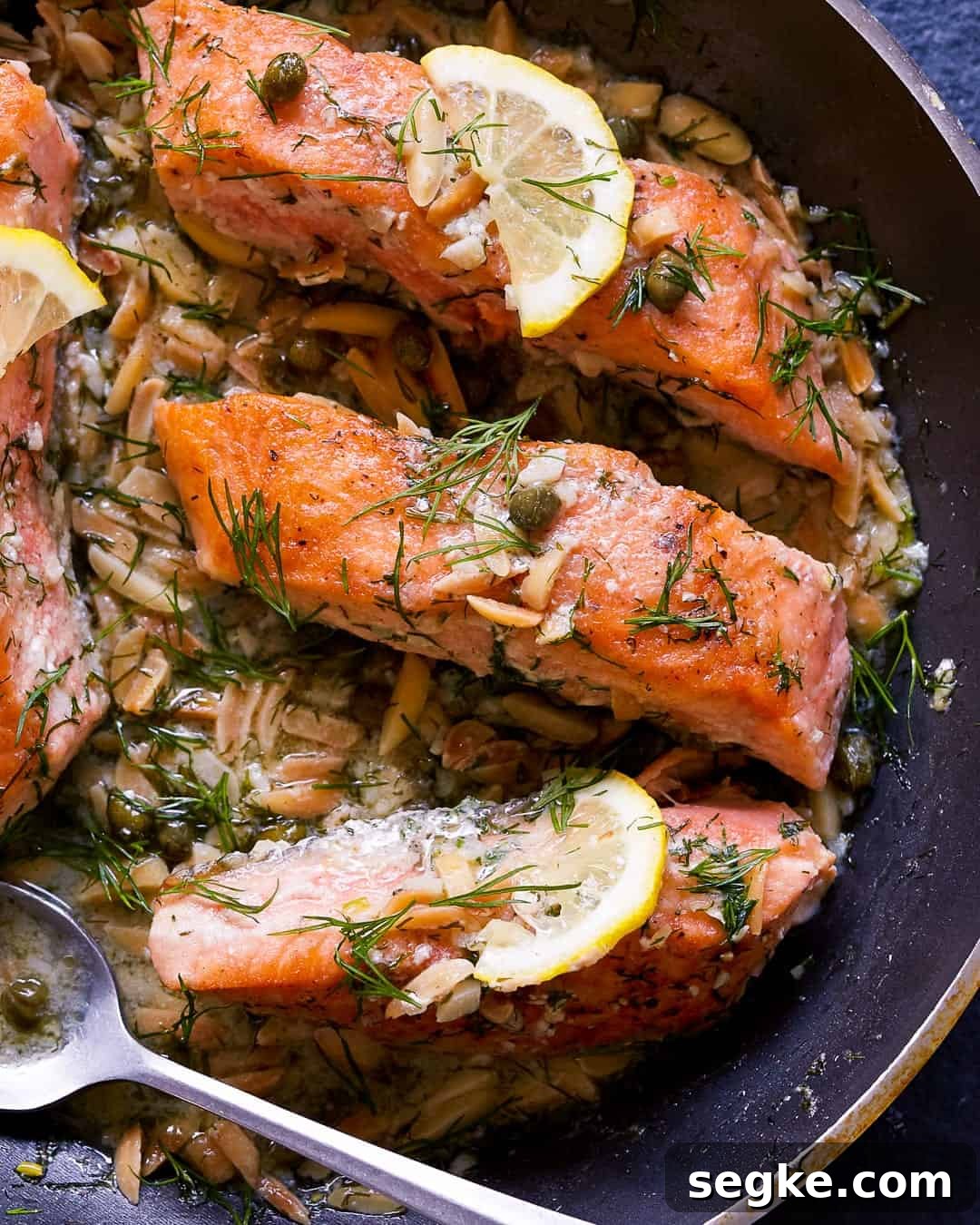
Pan-fried salmon fillets are finished with a bright almond-caper sauce in this quick, flavorful 15-minute dinner that fits Whole30 and Paleo menus. This one-pan recipe uses just a few pantry-friendly ingredients and makes an ideal weeknight main when paired with steamed vegetables or simple roasted potatoes like Half-Smashed Garlic and Dill Potatoes.
Use whichever salmon you prefer. Wild, fresh salmon yields the best flavor and texture, but a thawed frozen fillet works fine if you plan ahead. If using frozen fish, thaw it in the refrigerator and pat it very dry with paper towels before cooking. Frozen fillets hold a lot of surface moisture and removing that moisture is essential to developing a golden-brown, crispy crust.
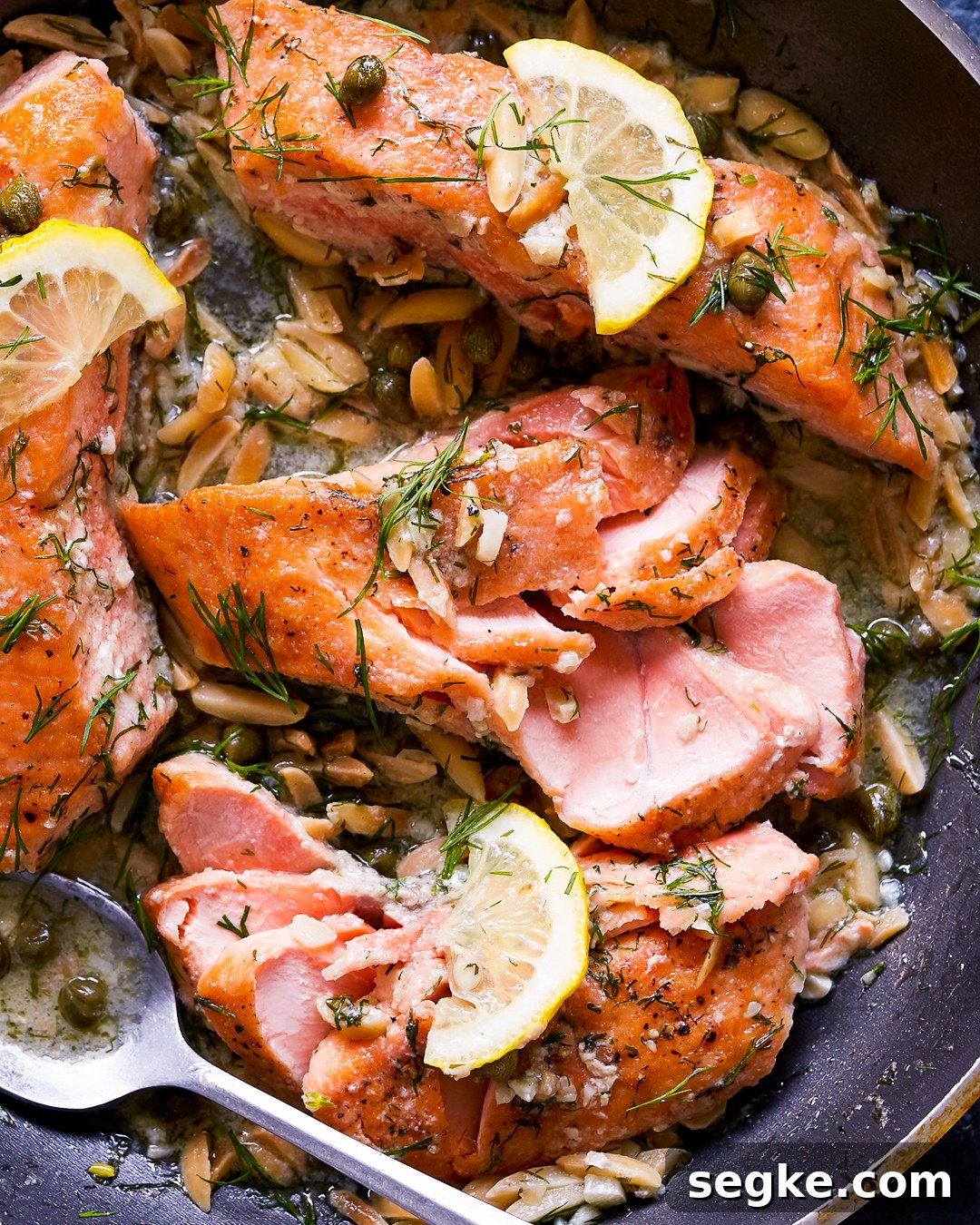
To encourage a nicely seared exterior, I lightly dredge the fillets in cassava flour before pan frying. Cassava flour is neutral in flavor and behaves well for dredging, but you can substitute almond flour or arrowroot starch if needed. Note that arrowroot can sometimes turn gummy if the protein is coated too far in advance, so plan your prep accordingly.
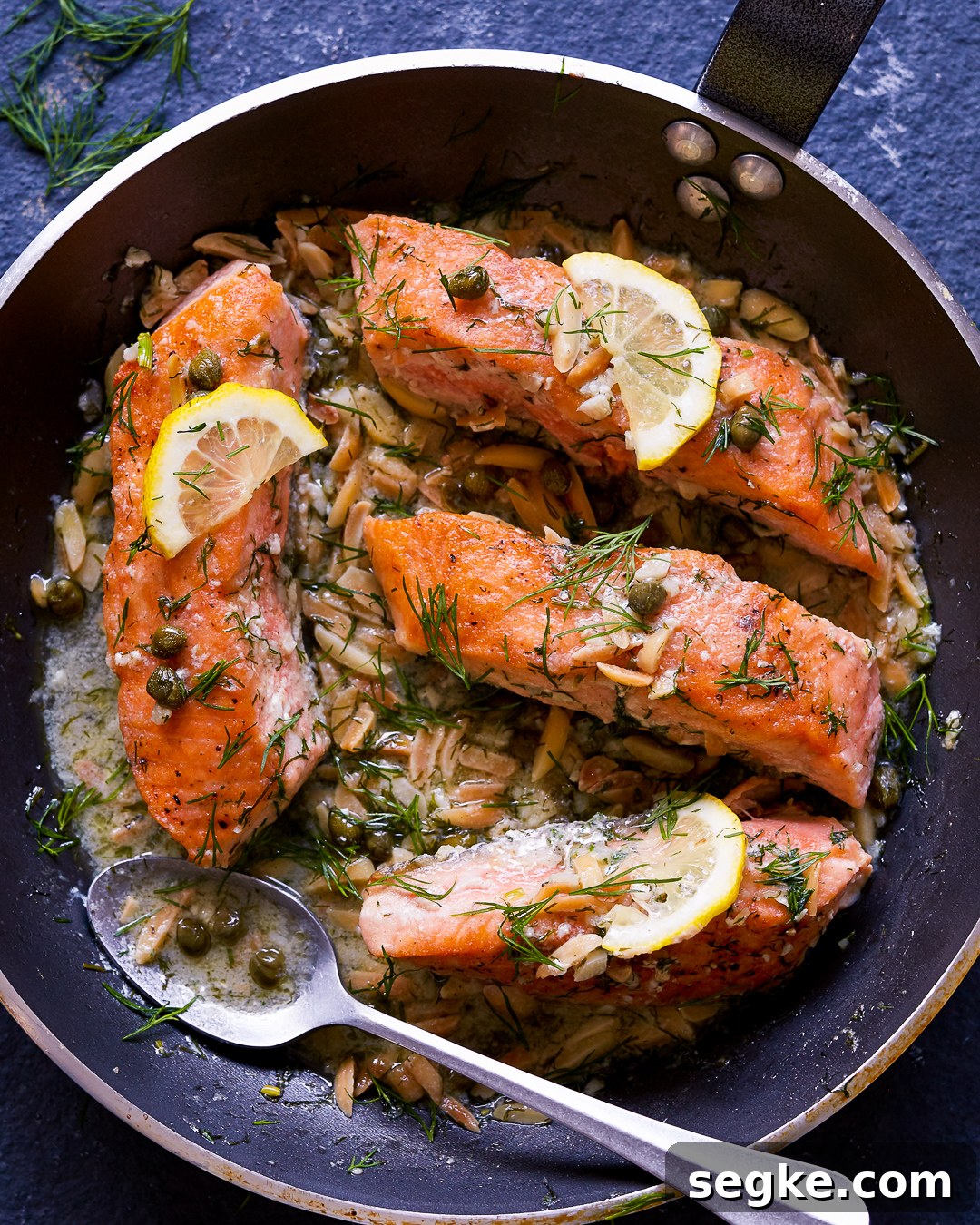
The almond-caper sauce blends two classic flavor ideas: piccata-style brightness and almondine crunch. Toasting the almonds briefly in the pan before adding the garlic unlocks a deeper nutty aroma and adds pleasant texture in the finished sauce. Use slivered or sliced blanched almonds for the best balance of crunch and tenderness.
For richness, the sauce can be finished with grass-fed butter or ghee. Butter yields a slightly thicker, creamier mouthfeel while ghee gives a nutty, clarified-butter flavor and stays Whole30-compliant where butter does not. Either choice works—select based on your dietary preference and the flavor profile you want.
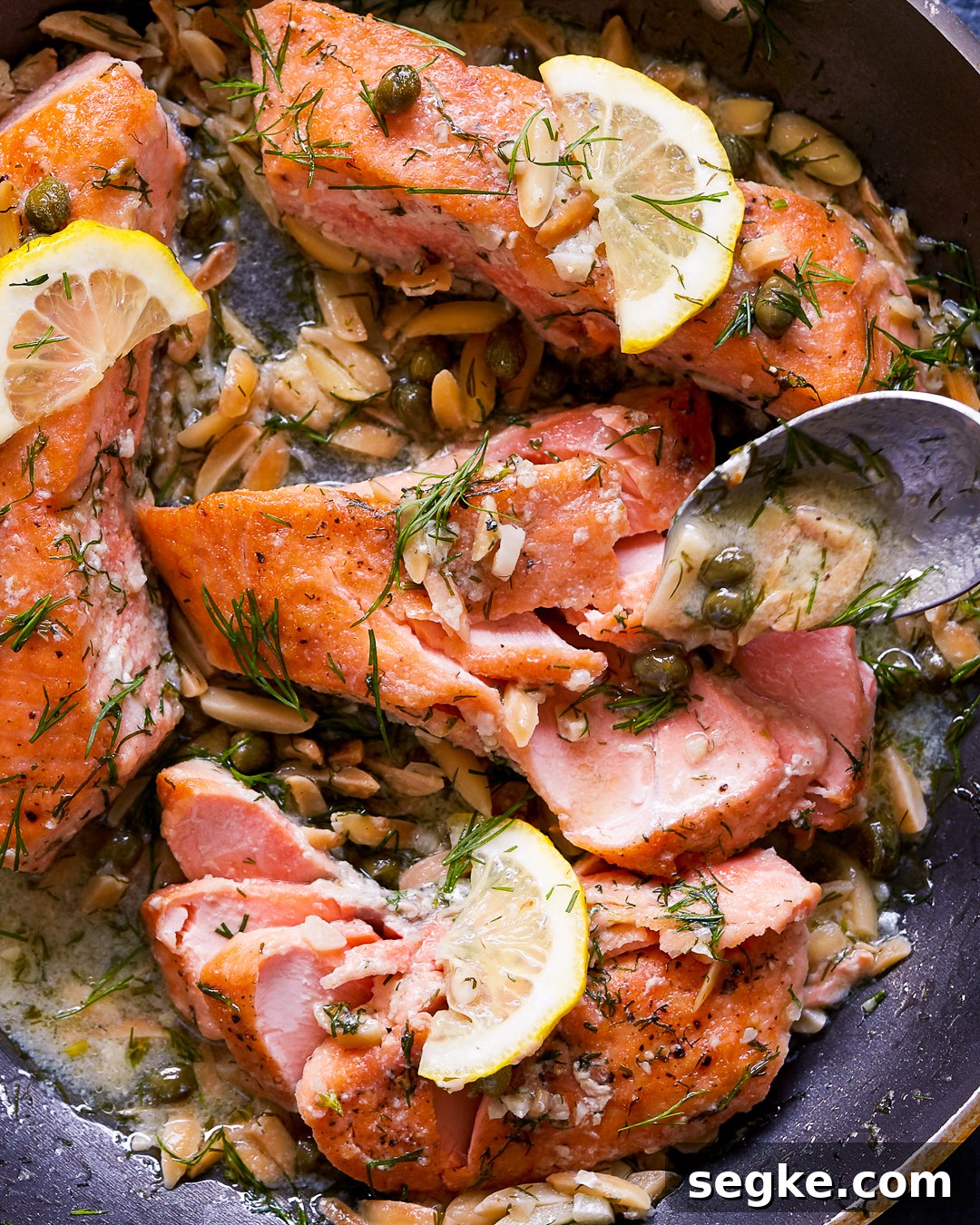
Salmon with Almond Caper Sauce
Pan-fried salmon fillets topped with a lemony almond-caper sauce—ready in about 20 minutes. This dish is Whole30- and Paleo-friendly when made with ghee.
Prep Time: 5 minutes • Cook Time: 15 minutes • Total Time: 20 minutes
Ingredients
- 3 tablespoons extra-virgin olive oil
- 6 fillets (4 ounces each) salmon
- Kosher salt and freshly cracked black pepper
- 1/4 cup cassava flour (or arrowroot starch or almond flour)
- 1/4 cup blanched almonds, slivered or sliced
- 2 cloves garlic, finely chopped
- 3/4 cup chicken stock (or vegetable stock for a pescatarian option)
- 1 tablespoon fresh lemon juice
- 1/4 cup capers, drained
- 1 tablespoon grass-fed butter or ghee
- 1 tablespoon fresh dill, finely chopped, plus 1 teaspoon for garnish
Instructions
- Heat the olive oil in a nonstick or heavy skillet over medium-high heat until shimmering.
- Season both sides of the salmon fillets with salt and pepper. Lightly dredge each fillet in cassava flour, shaking off any excess.
- Place the salmon in the hot oil, skin side down first if skin-on, and cook until the undersides are golden brown, about 3 to 4 minutes. Flip and cook the other side until golden and cooked to your preference, another 3 to 4 minutes. Transfer the fillets to a warm platter and set aside.
- Reduce the heat to medium-low. Add the almonds to the same skillet and stir frequently until they begin to turn golden, about 2 minutes. Add the garlic and cook for about 60 seconds until fragrant, taking care not to burn it.
- Pour in the chicken stock and simmer until reduced by roughly one-quarter in volume. Stir in the lemon juice and capers.
- Add the butter or ghee and stir until the sauce is emulsified and slightly thickened. Mix in the chopped dill and taste, adjusting salt and pepper as needed.
- Spoon the almond-caper sauce over the salmon fillets, sprinkle with the remaining teaspoon of dill, and serve immediately.
This recipe is a fast, elegant option when you want a restaurant-quality fish dinner with minimal fuss. The toasted almonds and capers deliver contrasting textures and bright, savory notes that complement the salmon without overpowering it. Serve alongside simple steamed greens, roasted vegetables, or buttery (or ghee-roasted) potatoes for a complete plate.
Tip: If you prefer extra crispness, pat the salmon completely dry and make sure the oil is hot before adding the fillets. If using frozen salmon, allow it to thaw fully in the refrigerator and dry it well to avoid steaming instead of searing.