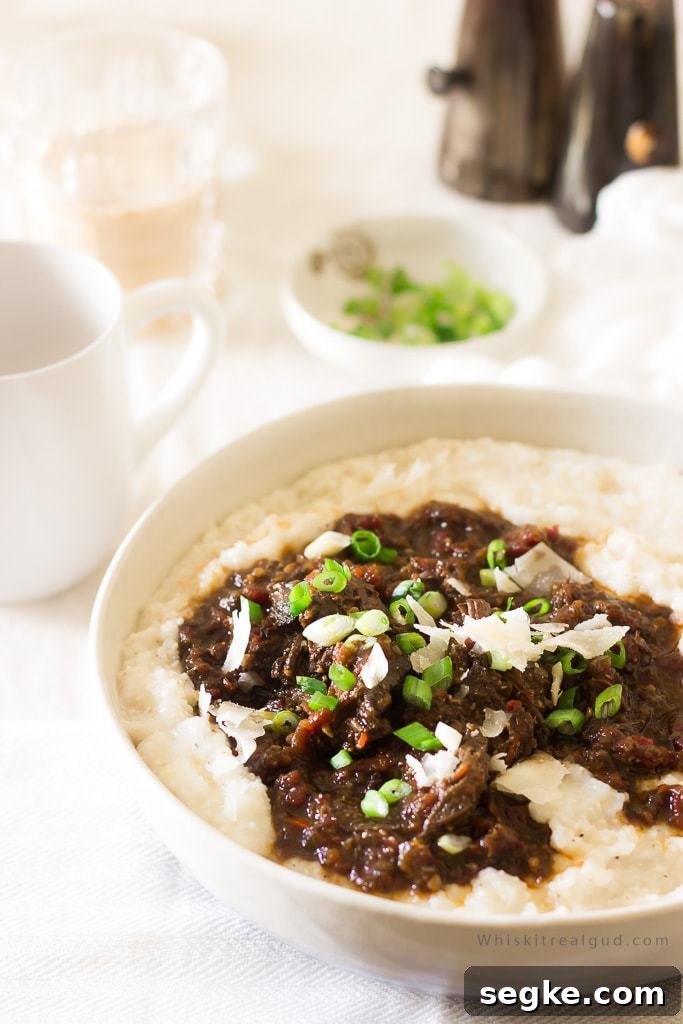
If you’ve never tried grillades and grits, imagine slow-simmered, fork-tender beef in a savory Creole gravy spooned over hot, buttery Parmesan grits. This is old-school Louisiana comfort food—simple, soulful, and unforgettable.
Grillades and grits arrive at the table with no pretense: rich meat slowly cooked until it melts in your mouth and a deeply flavored sauce that the grits soak up. There are no tricks—just technique and time.
What Are Grillades and Grits?
Grillades are a Creole specialty, traditionally made from thinly sliced meat that’s dredged in flour, browned, and then simmered in a tomato-tinged gravy with onions, celery, peppers, and seasonings. They are most often served over grits because the creamy corn base balances the sauce’s richness and soaks up every drop in a way rice cannot.
Best Meat for Grillades
Historically veal showed up in some versions, but today most home cooks use beef for its flavor and availability. Two good options:
- Beef round steak – leaner, more traditional, and cooks faster. It needs careful attention to avoid drying out; pounding thin helps.
- Beef short ribs – richer, more forgiving, and ideal if you want a deeper, naturally thickened sauce from the collagen released during a long simmer.
Both work. Short ribs offer more margin for error, while round steak makes a lighter, quicker version.
Why Browning the Meat Matters
Browning is essential. The caramelized crust on the meat adds a layer of savory complexity that becomes part of the gravy. If you skip good browning, the sauce will taste flat no matter how much seasoning you add. The same rule applies to the vegetables: soften and color them before moving on.
Roux or No Roux?
If you use round steak, a roux helps thicken the sauce and creates that classic Creole texture. If you use short ribs, the long simmer and the bones release enough collagen to thicken the gravy naturally, so you can skip the roux if you prefer. Both approaches are valid—what matters most is patience and low, steady heat.
Cooking Time
This is not a quick weeknight dish. Expect:
- Round steak: about 1 to 1½ hours simmering after browning.
- Short ribs: closer to 2 hours for the meat to become completely tender.
The meat is done when it pulls apart easily with a fork. If it resists, give it more time.
Why Grits, Not Rice
Grits soften acidity from tomatoes and hold onto the sauce without getting soggy. I recommend stone-ground grits cooked slowly with butter and a little Parmesan until creamy—not runny—so they can support the gravy and meat.
Make-Ahead and Storage
Grillades are one of those dishes that often tastes better the next day as flavors meld. Practical tips:
- Make the grillades a day ahead and reheat gently with a splash of broth to loosen the sauce.
- Store leftovers in the refrigerator up to 4 days.
- Freeze the beef and sauce (not the grits) in airtight containers for longer storage.
Final Thoughts
Grillades and grits are honest food. Take your time, taste as you go, and don’t rush the process. The payoff is deeply comforting, soulful food that rewards patience.
Grillades and Grits Two Ways
Author: April Boller Wright
Grillades and grits (pronounced gree-yahds) is a classic New Orleans brunch or dinner favorite: tender beef in a Creole-style gravy served over creamy Parmesan grits.
Prep Time: 10 mins
Cook Time: 1 hr 30 mins (varies by cut)
Total Time: 1 hr 40 mins
Servings: 4
Course: Breakfast, Brunch, Dinner
Cuisine: American, Creole, Southern
Ingredients
- 2 lbs beef chuck short ribs (bone-in) or beef round steak — if using round, pound thin and cut into 2–3″ pieces
- Vegetable oil, as needed (about 4–6 tbsp total)
- 1/2 cup all-purpose flour, divided
- 1/2 cup red onion, diced
- 1/2 cup diced celery
- 1/2 cup mini sweet peppers or diced bell pepper
- 2 tsp minced garlic
- 1 tbsp Cajun seasoning
- 1 tsp dried oregano
- 1 tsp onion powder
- Salt and black pepper, to taste
- 3 cups beef broth
- 2–3 thinly sliced green onions, for garnish (optional)
- Fresh parsley, for garnish (optional)
Parmesan Grits
- 1 cup stone-ground grits
- 3 cups water
- 1 cup whole milk
- 1 tsp salt
- 2 tbsp unsalted butter (add more if needed)
- 1/2 cup Parmesan cheese, plus extra for serving
- Black pepper, to taste
Instructions
- For round steak: pound thin and cut into pieces, then season with salt and pepper. Dredge the pieces in 1/4 cup of the flour, shaking off excess.
- Heat 2 tbsp vegetable oil in a large skillet over medium-high heat. Brown the meat about 2 minutes per side until well colored. Transfer to a plate.
- Add the onions, celery, and peppers to the pan. Cook about 3 minutes until softened, then add garlic and cook until fragrant. Remove vegetables and set aside.
- To make a roux (if using round steak or if you want a thicker sauce): add oil as needed so there is roughly 3 tbsp fat in the pan. Stir in the remaining 1/4 cup flour and cook, stirring constantly, until the roux turns a deep brown.
- Add the Cajun seasoning, oregano, onion powder, beef broth, and a splash of red wine if desired. Stir to combine and bring to a simmer, allowing the sauce to thicken slightly for about 10–15 minutes.
- Return the browned meat and sautéed vegetables to the skillet. Cover and simmer gently for 1–1½ hours (short ribs may need closer to 2 hours) until the meat is tender and pulls apart easily.
- Adjust seasoning after the sauce has reduced. If the sauce becomes too thick before the meat is tender, add more broth to maintain a loose simmer.
- Serve the grillades hot over buttered Parmesan grits and garnish with green onions and extra Parmesan if you like.
How to Make Parmesan Grits
- Bring the water, milk, and salt to a gentle boil in a saucepan.
- Slowly whisk in the grits.
- Reduce heat to low and simmer, stirring occasionally, for 20–25 minutes until creamy and smooth.
- Stir in butter, black pepper, and Parmesan. Taste and adjust seasoning. Keep warm until ready to plate.
Notes
Important Tips for Success
- Don’t rush the browning. Deep color equals flavor—take the time to properly brown the meat and vegetables.
- Keep the heat moderate. A gentle simmer prevents tough meat and a burnt roux.
- Stir the roux constantly. A few seconds of neglect can burn it; if it turns acrid, start over.
- Pound thin for round steak. Thin pieces cook more tenderly; thick cuts stay chewy.
- Check tenderness, not the clock. The dish is done when the meat easily pulls apart with a fork.
- Watch liquid level. Add broth as needed so the sauce simmers slowly and the meat becomes tender without drying out.
- Season at the end. The sauce concentrates as it reduces—adjust salt and pepper after cooking.
- Stone-ground grits need patience. If the grits taste grainy, keep cooking and stirring until creamy.
- Make the grits last. Grillades reheat well, but grits are best cooked right before serving.
- Short ribs are forgiving. If this is your first time making grillades, short ribs increase your chance of a perfect outcome.