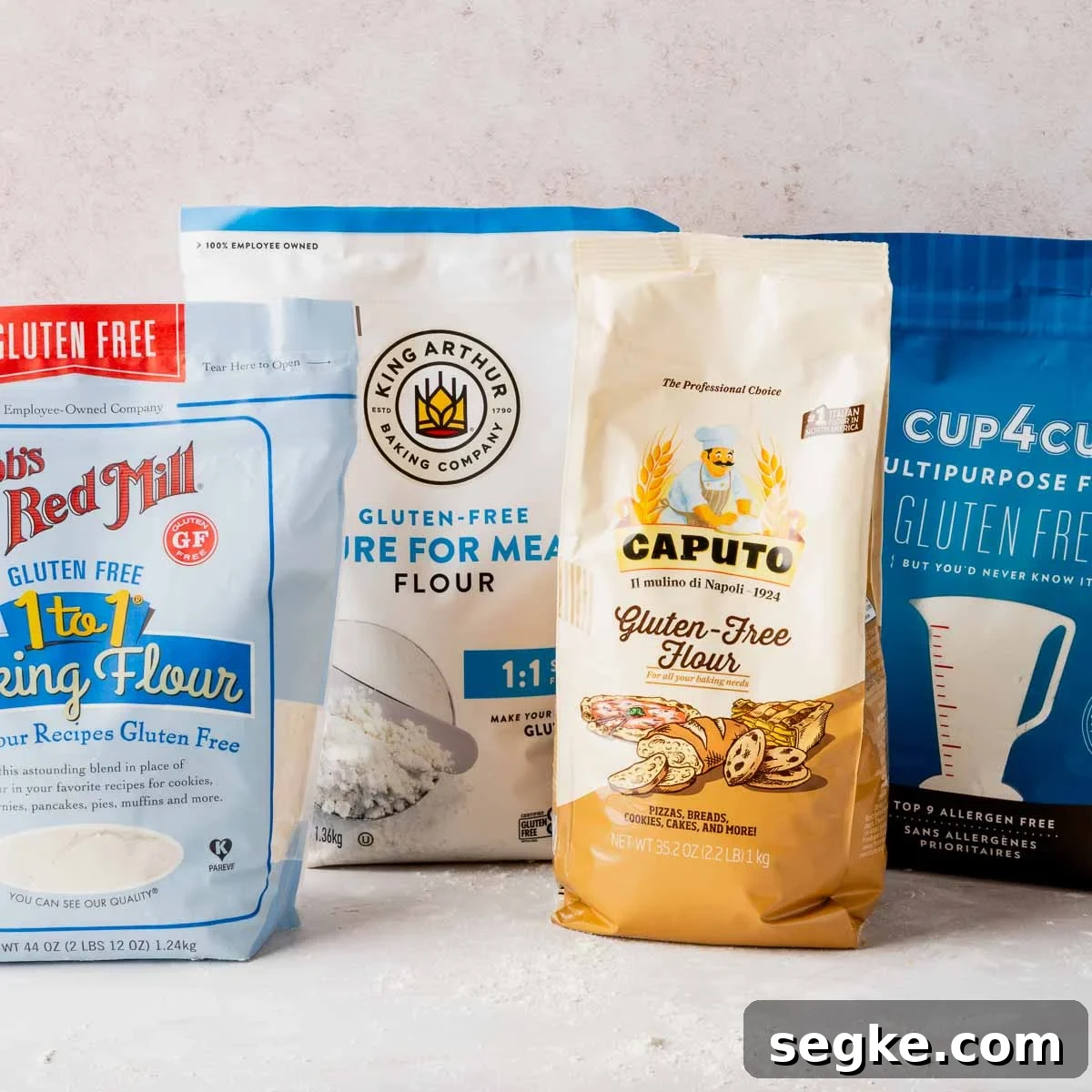
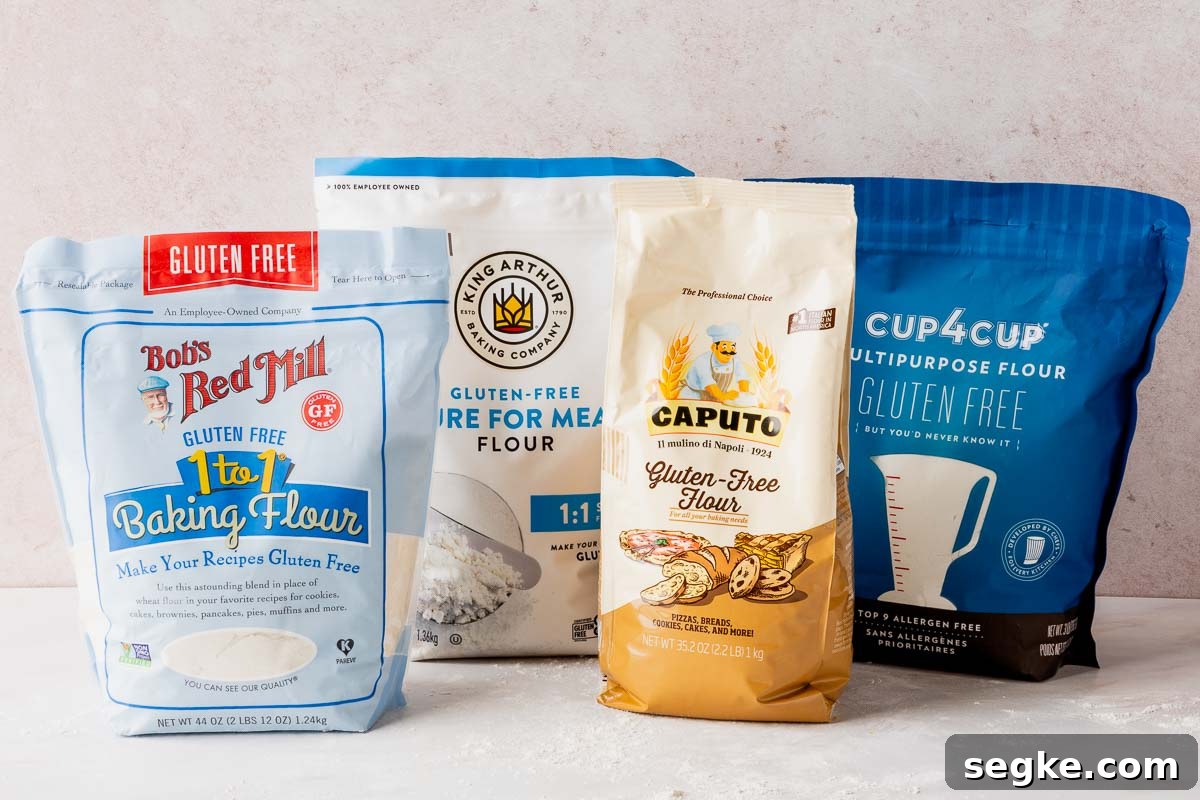
After developing hundreds of gluten-free recipes, I’ve come to rely on four specific gluten-free flour blends. In this post I’ll explain why there isn’t a single “best” gluten-free flour, share the blends I always keep stocked, and describe what I use each one for.
Why There Isn’t One “Best” Gluten-Free Flour
After years of gluten-free recipe development, one clear lesson stands out: there is no single best gluten-free flour. Different blends are formulated to perform in different applications. The blend that makes excellent cookies may not be the right choice for pizza or flaky pie crusts. Choosing the right flour depends on the texture and behavior you need for the specific recipe.
Over time I’ve tested many blends and learned to keep several varieties on hand so I can pick the one best suited to each bake. While it’s tempting to use a single all-purpose gluten-free flour in everything, doing so often requires compromises in texture, flavor, or rise.
Below are the gluten-free flour blends I always keep in my pantry and how I use them.
The Gluten-Free Flours I Always Keep in My Pantry
Best Gluten-Free Flour Blends for Everyday Baking
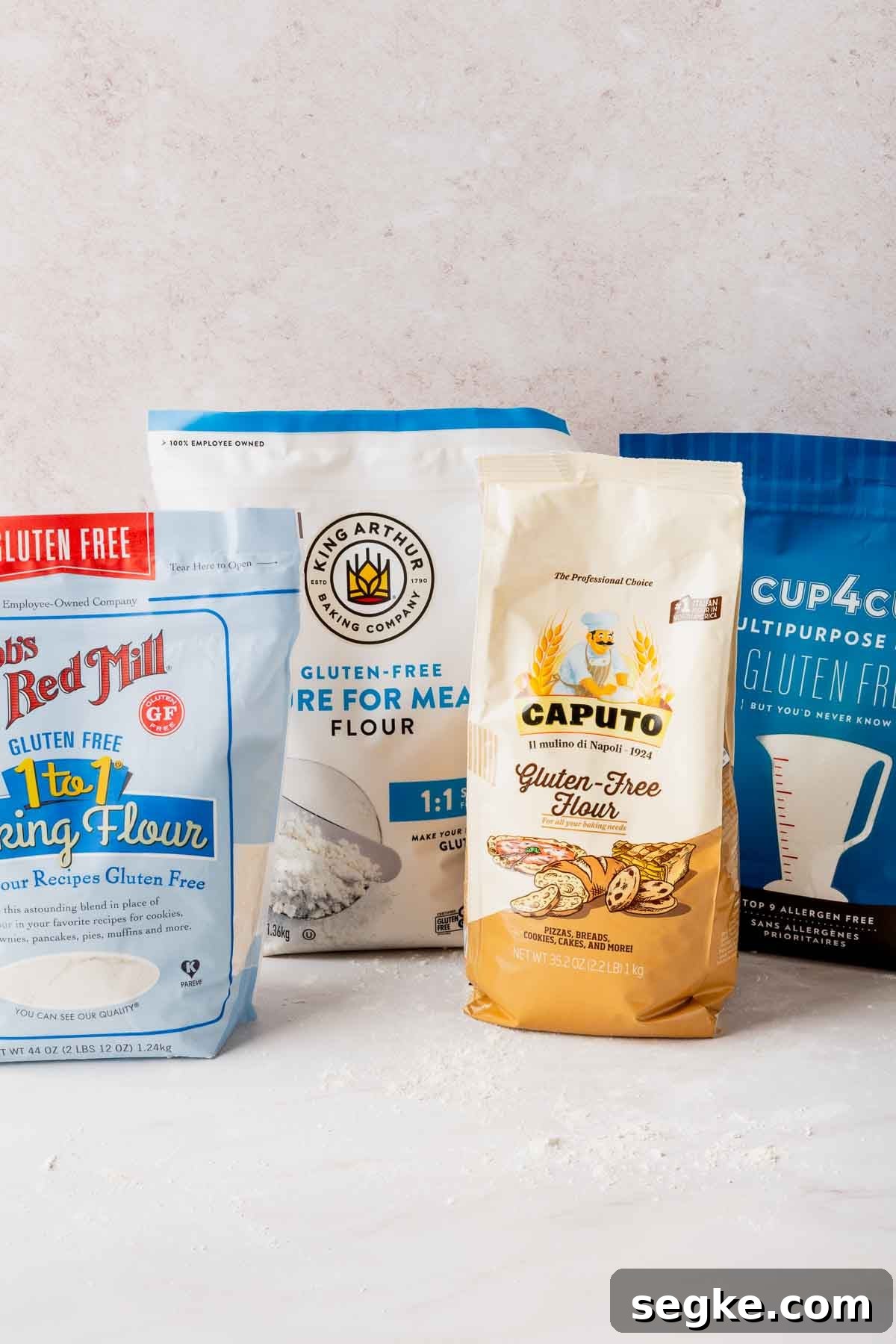
- Bob’s Red Mill 1-to-1 Baking Flour
- King Arthur Measure for Measure Flour
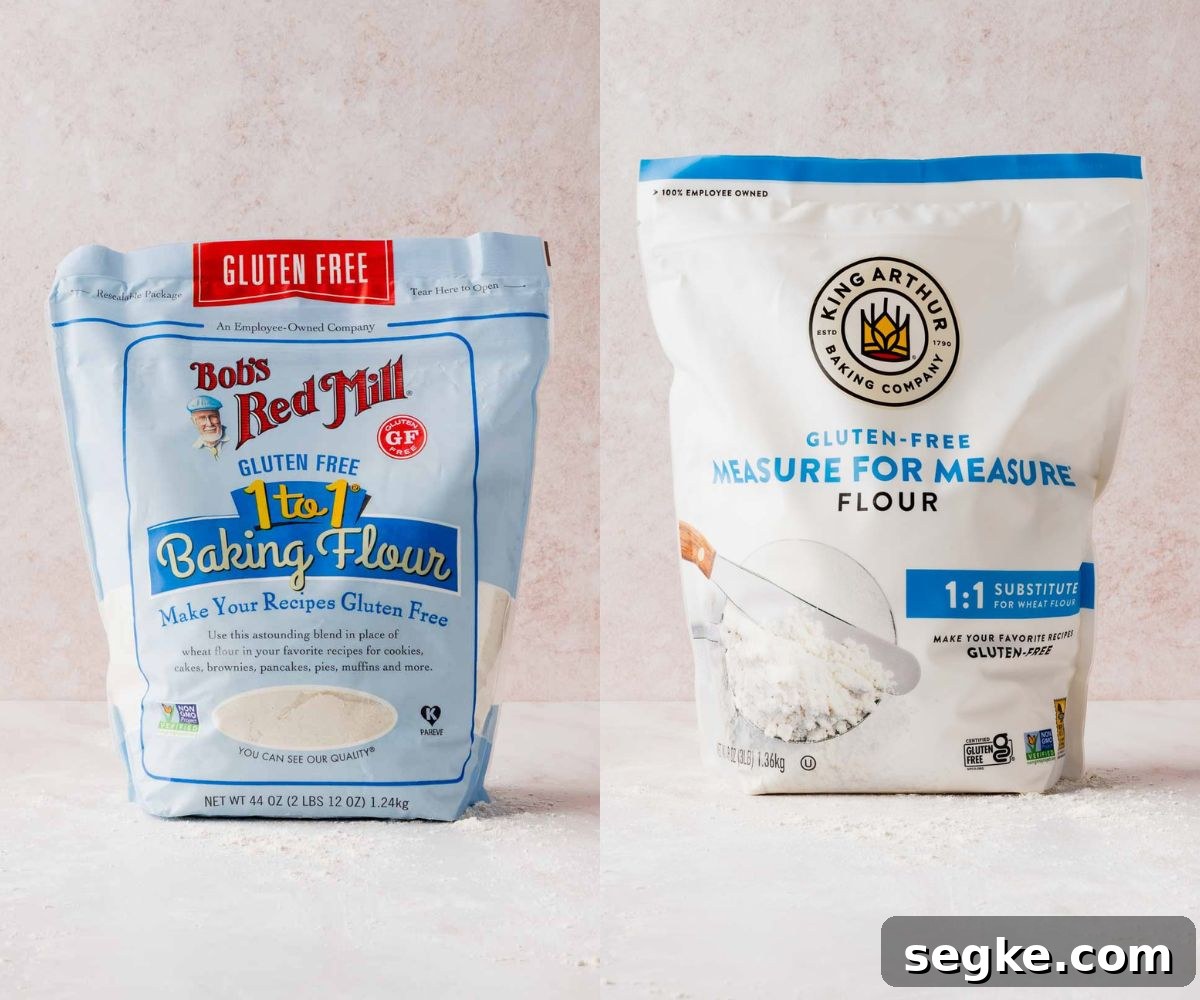
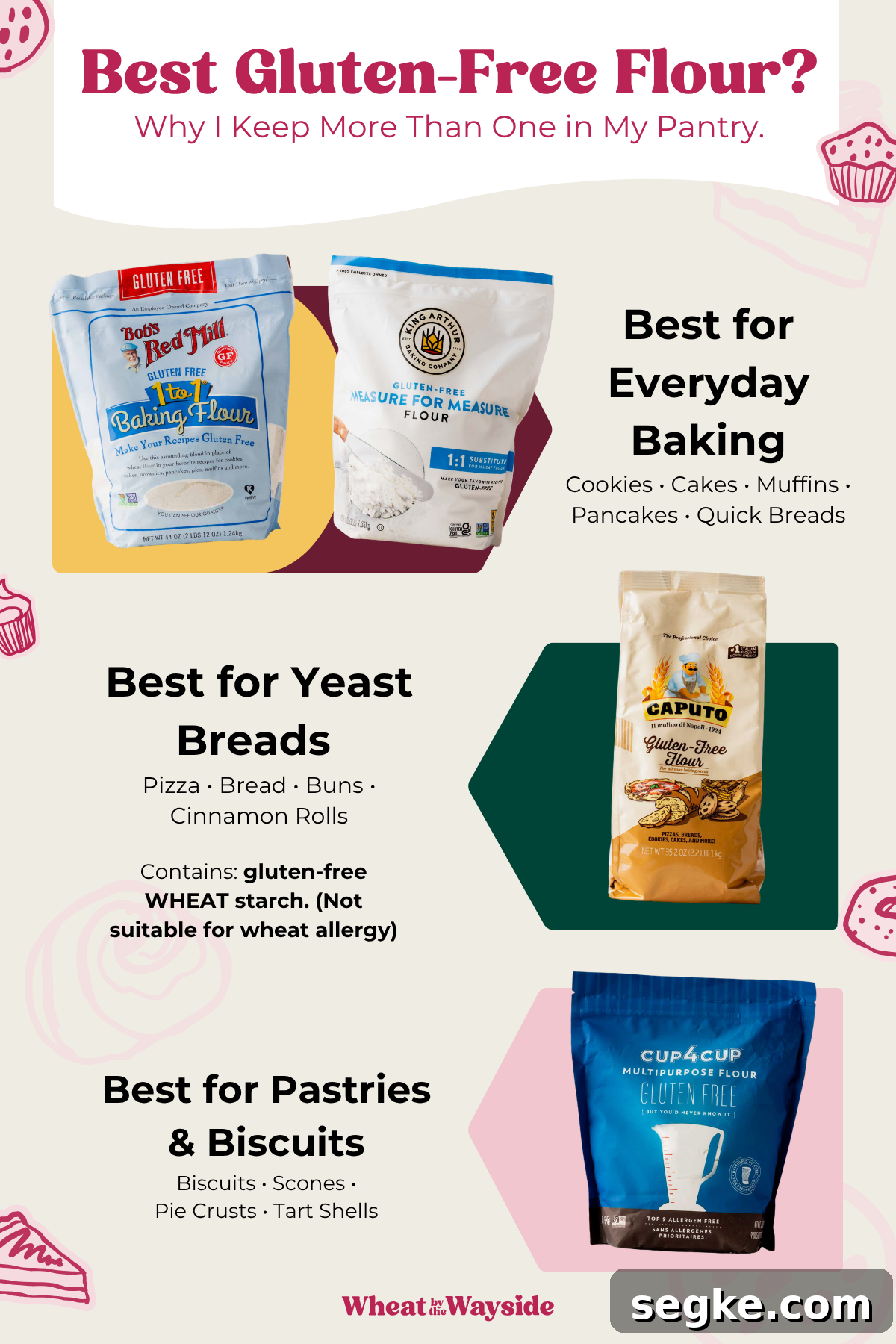
For everyday baking—cookies, cakes, muffins, pancakes, and quick breads—I usually reach for Bob’s Red Mill 1-to-1 or King Arthur Measure for Measure. Both are finely milled and have a neutral flavor, so they translate well in many recipes. Bob’s has a slight edge in my preference for flavor and texture, while King Arthur is a reliable, widely available option (and often sold in larger, cost-effective bags).
These blends are a great starting point if you’re building a gluten-free pantry from scratch. They’re formulated to mimic the behavior of all-purpose wheat flour closely enough that many traditional recipes convert well with only minor adjustments.
Recipes with Bob’s Red Mill 1 to 1
- Gluten-Free Brown Butter Blondies with Chocolate Chips
- Gluten-Free Peanut Butter Cookies
- Gluten-Free Blueberry Muffins with Streusel Topping
- Gluten-Free Belgian Waffles
Recipes with King Arthur Measure for Measure
- Gluten-Free Vanilla Cake with Chocolate Sour Cream Frosting
- Gluten-Free Banana Bread
- Gluten-Free Crumbl Sugar Cookies (Original Copycat Recipe!)
- Gluten-Free White Chocolate Raspberry Bundt Cake (Nothing Bundt Cakes Copycat)
Best Gluten-Free Flour for Yeast Breads
- Caputo Fioreglut
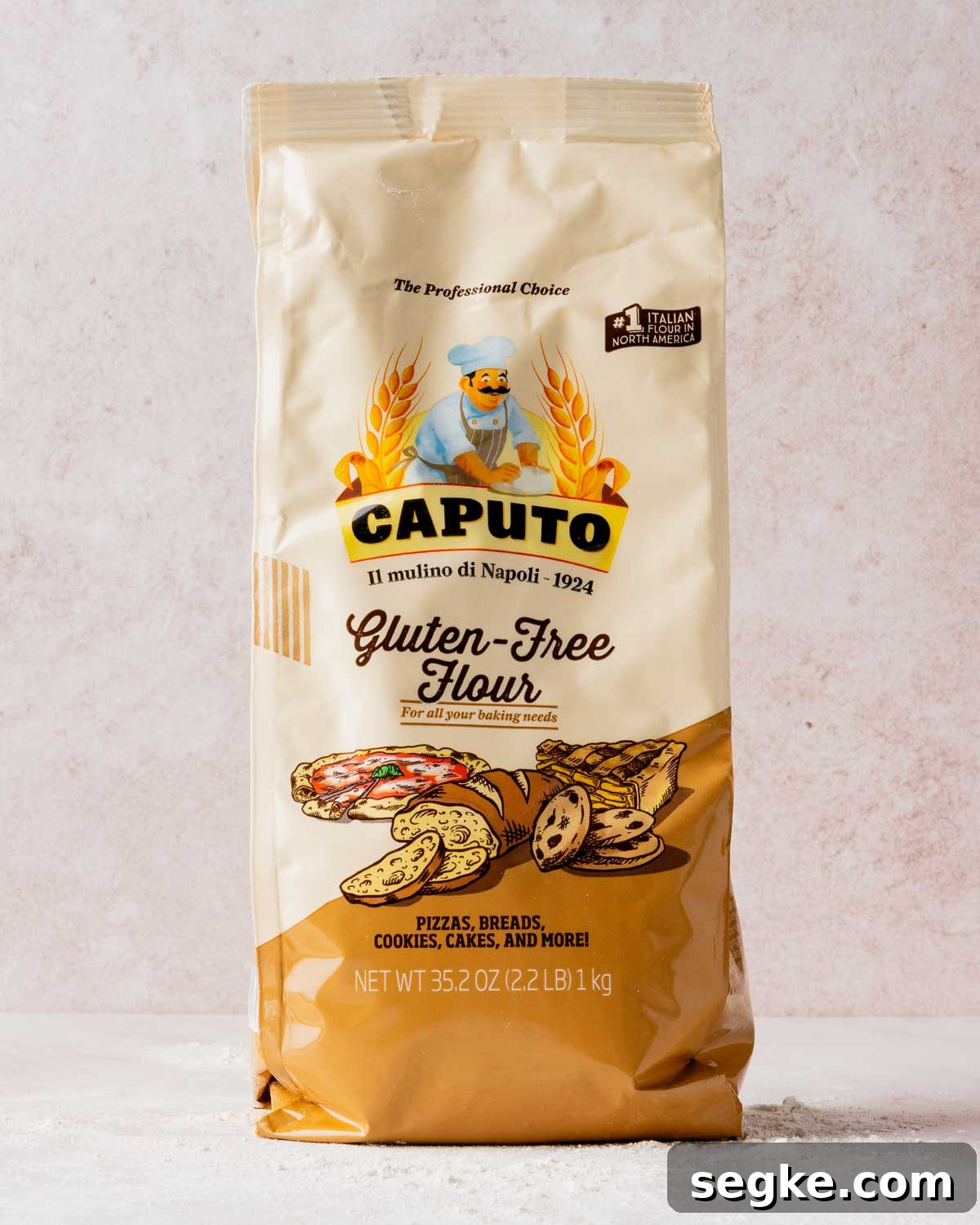
Yeast breads are one area where many gluten-free all-purpose blends fall short. Caputo Fioreglut behaves differently and produces much better results for breads and pizza crusts. Since discovering it I’ve developed dozens of yeast-based recipes with this flour because it yields soft buns, chewy pizza crust, and good sandwich loaves.
Fioreglut contains gluten-free wheat starch, which gives it a breadier structure. It’s considered safe for most people with celiac disease, but it is not suitable for those with a wheat allergy. Because its behavior and ingredient profile differ from typical 1-to-1 blends, I reserve it primarily for yeast breads and other recipes that benefit from its unique properties.
Recipes with Caputo Fioreglut
- Ooni Gluten-Free Pizza Dough with Caputo Fioreglut
- Gluten-Free Crescent Rolls
- Gluten-Free Pita Bread Recipe
- Gluten-Free Cinnamon Rolls with Caputo Fioreglut
Best Gluten-Free Flour for Pastry, Biscuits and Pie Crust
- Cup4Cup Multipurpose Flour
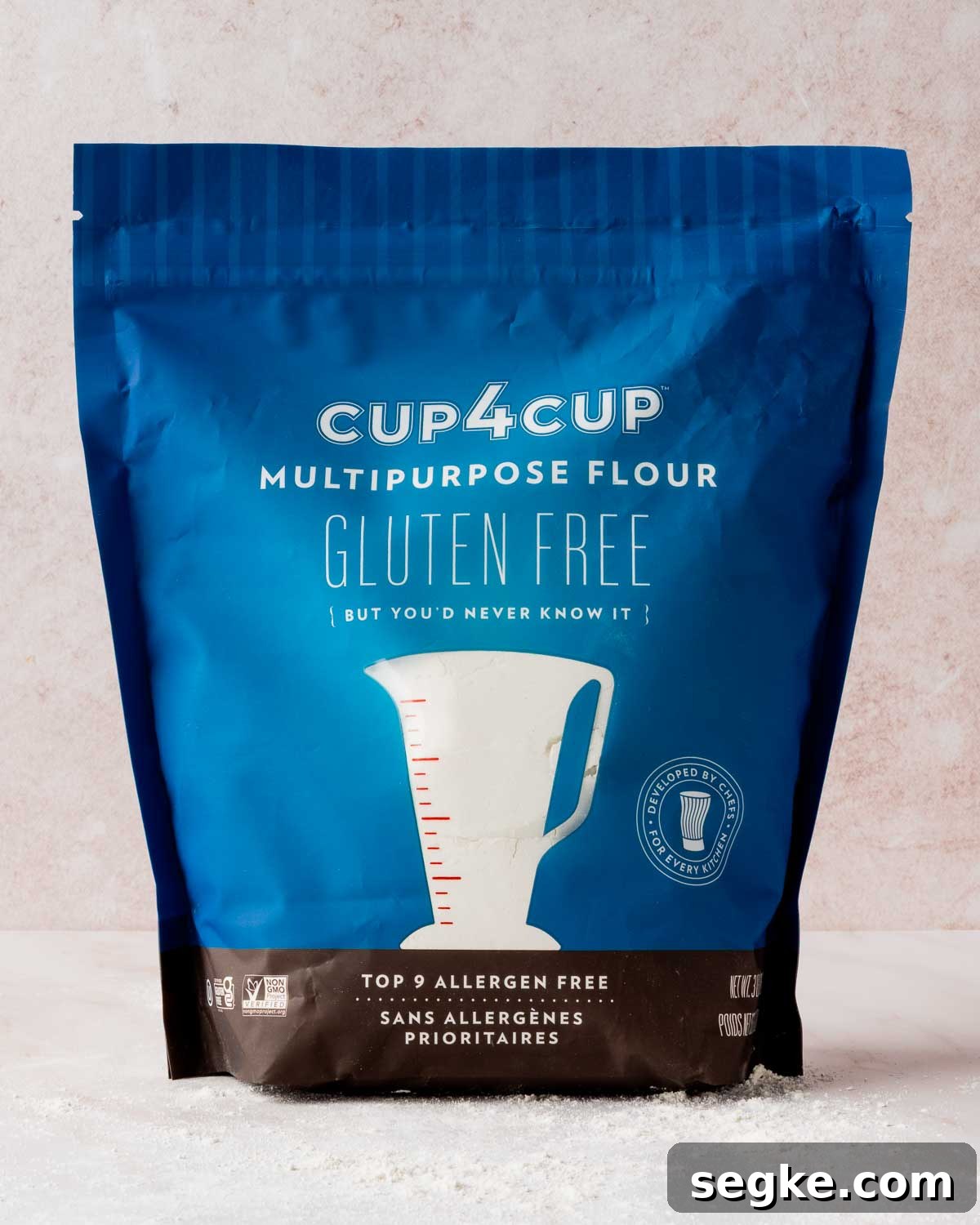
Cup4Cup is lighter and more starch-forward than many other blends, which can make batters feel thick or “gloopy.” That lightness is actually beneficial for delicate pastries, tender biscuits, and flaky pie crusts where you want a soft, melt-in-your-mouth texture. I still reach for Cup4Cup for those uses and for fresh pasta, where its lighter body works well.
Note: Cup4Cup’s formulation changed to remove milk powder, which altered its profile for some recipes. For those who preferred the original behavior, I developed a copycat version with milk powder, but the commercial blend remains one of my favorites for tender pastry work.
Recipes with Cup4Cup
- Gluten-free Pie Crust: Easy, Flaky, No-Fail Recipe!
- Gluten-Free Buttermilk Biscuits Recipe
- Easy Gluten-Free Cinnamon Raisin Biscuits with Icing
- Gluten-Free Apple Pie Biscuits (Small Batch Recipe)
Other Gluten-Free Flour Blends I’ve Tested
There are many blends on the market. Some work well in specific recipes, while others rarely earn a permanent spot in my pantry. A few examples:
- Better Batter: Often expensive and primarily available online. It tends to perform best in recipes tailored to its formulation.
- GF Jules: Another online-only option with a starch-forward profile similar to Cup4Cup; useful in some recipes but not universally necessary.
- Namaste: Once a go-to for me, I phased it out because I preferred other blends for flavor and texture.
- Pamela’s Artisan Blend: A strong performer in older recipes, but I now favor other blends for more consistent results.
- King Arthur Bread & Pizza Flours: Reasonably priced but, in my experience, not a replacement for Caputo Fioreglut when it comes to yeast breads.
- Pillsbury & Store Brands: Some feel grainy or offer limited value compared to widely available higher-quality brands.
If I Were Starting a Gluten-Free Pantry Today
Think about the recipes you want to make first. If you mainly want to bake cookies or quick breads, start with Bob’s Red Mill 1-to-1. Add King Arthur if you prefer larger, economical bags. If you plan to bake pizza or yeast breads, buy Caputo Fioreglut. For pie crusts, tarts, and biscuits, keep Cup4Cup on hand.
As you expand your baking, you can add single-grain flours like sorghum, brown rice, or tapioca starch when a recipe calls for them. Building your pantry gradually lets you buy only what you’ll use and avoids wasted ingredients.
Frequently Asked Questions
Can I substitute one gluten-free flour blend for another?
Sometimes. Bob’s Red Mill and King Arthur are often interchangeable for many bakes, but switching to a very different blend—like Fioreglut or a starch-heavy flour—can significantly change texture and rise. Use the flour a recipe calls for when possible, or expect to tweak liquids and binders.
Do gluten-free flour blends already contain xanthan gum?
Many do. Bob’s Red Mill 1-to-1, King Arthur Measure for Measure, and Cup4Cup all include xanthan gum. Always check the ingredient list before adding extra xanthan gum to a recipe.
How should I store gluten-free flour?
Store flour in an airtight container in a cool, dry place. If you bake infrequently, keeping flour in the refrigerator or freezer extends shelf life and prevents rancidity.
Does gluten-free flour go bad?
Yes. If flour smells off or unusually strong, it’s likely rancid and should be discarded.
Is Caputo Fioreglut safe for celiac disease?
Caputo Fioreglut contains gluten-free wheat starch that has been processed to meet the legal gluten-free threshold and is considered safe for most people with celiac disease. It is not appropriate for those with a wheat allergy.
Final Thoughts
There isn’t one perfect gluten-free flour for all baking. Over years of testing, I’ve found value in keeping a small collection of high-quality blends and choosing the one best suited to each recipe. For everyday baking I rely on Bob’s Red Mill 1-to-1 and King Arthur Measure for Measure. For delicate pastries and biscuits I use Cup4Cup, and for yeast breads I reach for Caputo Fioreglut.
Quality matters in gluten-free baking. High-quality blends give cleaner flavors and better textures, while lower-quality flours can leave odd flavors or gritty textures that make gluten-free baked goods obvious. Building a thoughtful pantry produces the most consistent and satisfying results.
– Katie