
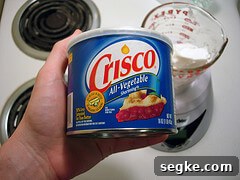
Kitchen Tip – Make it Easier to Use Shortening
Kathryn writes: I used to tuck a paper towel into my shortening container, but I’ve switched to using an open plastic sandwich bag instead. I put my hand inside the bag, reach into the shortening to take what I need, and then use the bag-covered hand to grease the pans. When I’m finished and still have my hand in the bag, I spread my fingers slightly into a claw shape and put the bag back into the shortening. This keeps the bag’s opening exposed and ready for next time. The plastic bag holds up better than a paper towel, and I’ve never needed more than one bag per container. I love your website—great tips that make me rethink how I do things in the kitchen.
-Kathryn
This is a great, practical kitchen tip. Using a plastic sandwich bag as a liner for shortening is simple, economical, and reduces mess when greasing pans. Below are a few clear reasons this method works well and some gentle suggestions to keep it clean and safe.
Why the plastic-bag technique is useful
First, it keeps your hands clean. Sliding a bag over your hand creates an easy, disposable glove that prevents shortening from coating your skin. Second, it makes greasing pans quicker and tidier: you can shape the bag-covered hand to reach corners and edges, then simply return the bag to the container without touching the shortening directly. Third, compared with paper towels, a sturdy sandwich bag resists tearing and stays in place better during use.
How to use the sandwich bag method effectively
1) Choose a durable, food-safe sandwich bag. Slide your hand into the open bag so the cuff rests near your wrist. 2) Reach into the shortening and scoop or press out the amount you need while your hand remains covered. 3) Use the bag-covered hand to spread shortening evenly over pans, baking dishes, or molds. 4) When finished, keep your hand in the bag, slightly splay your fingers to form a small opening, and tuck the bag back into the shortening container so the top stays accessible for the next use.
Tips to keep in mind
– Replace the bag if it becomes torn, greasy on the outside, or contaminated with raw batter or food particles. A fresh bag keeps things hygienic. – Consider folding the bag’s open end inward or tucking it under the container rim to reduce exposure to air and help the bag stay in place. – For long-term storage use the original shortening container lid to protect the contents; the bag liner is mainly for convenience during regular baking sessions. – If you prefer, use resealable bags for a tighter closure, but note they can be harder to work with when inserting and removing your hand.
Advantages over other methods
Compared with paper towels, a plastic sandwich bag is more durable and less likely to disintegrate or leave fibers in the shortening. Compared with bare hands, it keeps your skin free of grease and speeds up cleanup. And compared with dedicated disposable liners sold for tubs, sandwich bags are inexpensive, widely available, and easy to replace as needed.
Thank you, Kathryn, for sharing this tip. It’s a small change that can make routine baking and pan preparation cleaner and more convenient. If you try it, you may find — as many home cooks do — that this little habit saves time and reduces mess without altering how your recipes turn out.
Great idea! Thanks!
-Tawra