
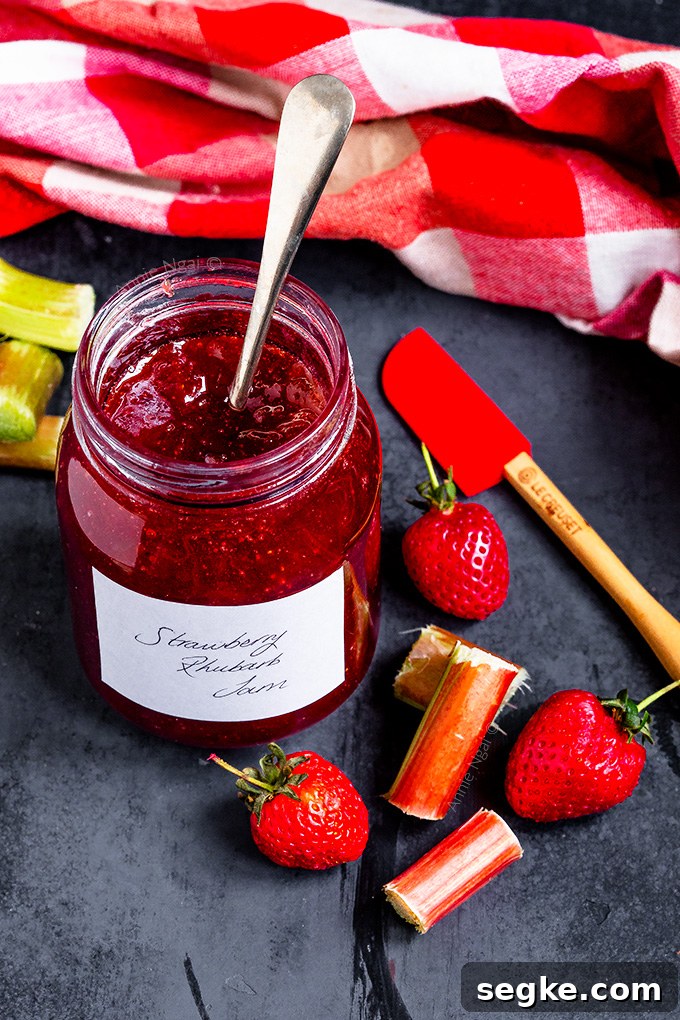
This Strawberry Rhubarb Jam is simple to make and tastes sublime. Using seasonal rhubarb with strawberries creates a jam that is sweet with a gentle tartness — perfect on toast, scones or stirred into porridge.
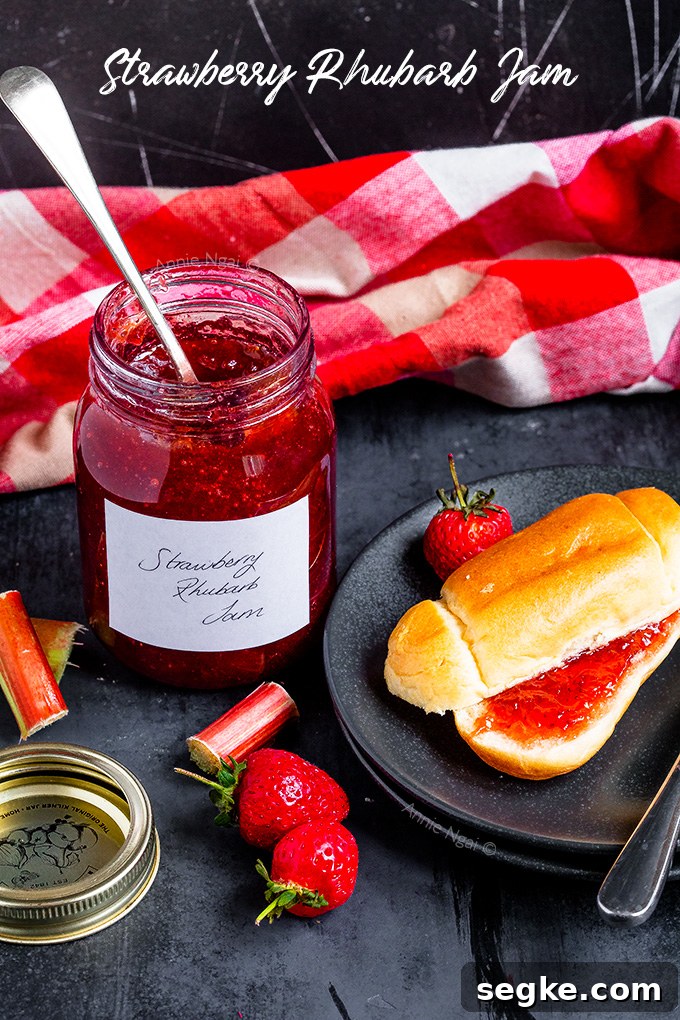
I’m sharing a small-batch recipe for Strawberry Rhubarb Jam today — just enough to fill one jar. Small batches are great when you don’t want lots of jars sitting around, and they’re perfect for testing flavour balances between sweet strawberries and tart rhubarb.
A brief personal update: I’ve had a busy few weeks with medical appointments and testing, which left me less able to spend time in the kitchen. My wrist has been troublesome, making hands-on tasks difficult, but it’s improving enough that I could get back to simple cooking projects like this jam. I always try to share what’s happening with my health because many readers are navigating chronic conditions too, and it can help others recognise symptoms or find support.
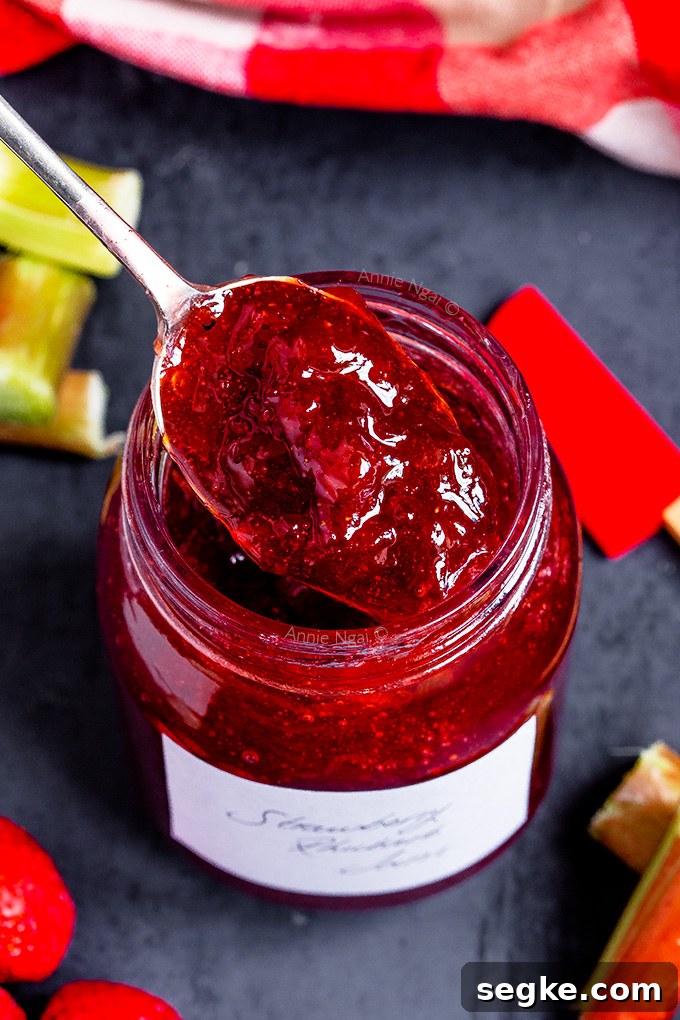
Strawberry Rhubarb Jam — Small Batch
This small-batch recipe makes approximately one 8oz jar (about 250ml) of jam. It’s easy to double if you want more. The balance of rhubarb and strawberries gives a pleasantly tangy sweetness that works well across breakfasts and baked treats.
Ingredients
- 1/2 lb (225g) diced rhubarb
- 1/2 lb (225g) diced strawberries
- 1 lb (450g) caster (superfine) sugar
- Pinch of salt
- 1 tsp vanilla extract
- 1 tbsp lemon juice
Instructions
- Place the diced rhubarb, strawberries, sugar and a pinch of salt into a deep, medium-sized saucepan. Stir well so the fruit is evenly coated with sugar. Leave the mixture to sit for 20 minutes; this allows the fruit to macerate and release juices.
- Attach a candy thermometer to the saucepan if you have one. Place the pan over medium heat. As the sugar dissolves and the mixture turns liquid, stir in the vanilla extract and lemon juice.
- Bring the mixture to a rolling boil, stirring constantly to prevent sticking and burning. Reduce and simmer, maintaining a steady boil, until the mixture thickens and the temperature reaches 220°F (105°C). This usually takes 20–30 minutes. Around 210°F (98°C) you will notice the mixture gaining resistance on the spoon — keep stirring until it reaches 220°F (105°C).
- To test the set without a thermometer: place a spoonful of jam on a chilled plate and let it cool briefly. If the surface wrinkles and does not run back when you push it with your finger, or if the jam coats the spoon and runs slowly, it’s ready. If it runs quickly like water, continue boiling a few more minutes and test again.
- Remove the pan from the heat and let the jam cool for about 15 minutes. This helps reduce the chance of cracking glass when filling jars.
- Carefully transfer the jam into a sterilised jar, leaving about a 1/4 inch (6 mm) headspace at the top. Screw the lid on and allow the jar to cool completely before labeling and storing.
Preparing and Sterilising Jars
While the jam cooks, wash your jar and lid in hot soapy water. Leave them wet and place them upside down on a baking tray. Sterilise in an oven preheated to 120°C / 250°F for 15–20 minutes. Remove carefully and fill while both jar and jam are still hot to help create a good seal.
Storage
Store sealed jars in a cool, dark place for up to 6 months. Once opened, keep the jam refrigerated and use within one month. Always use a clean spoon to avoid introducing contaminants into the jar.
Tips and Notes
- If you don’t have a candy thermometer, rely on the chilled plate test and visual cues: the fruit should be broken down, the mixture reduced and glossy, and it should coat the back of a spoon.
- Adjust sweetness by experimenting with slightly less sugar if you prefer more tartness — keep in mind sugar helps set the jam and preserve it.
- Rhubarb varies in tartness through the season; tasting the macerated fruit before cooking helps you judge whether to adjust sugar or lemon.
- This jam is excellent on toast, scones, stirred into yoghurt or porridge, and as a filling for pastries.
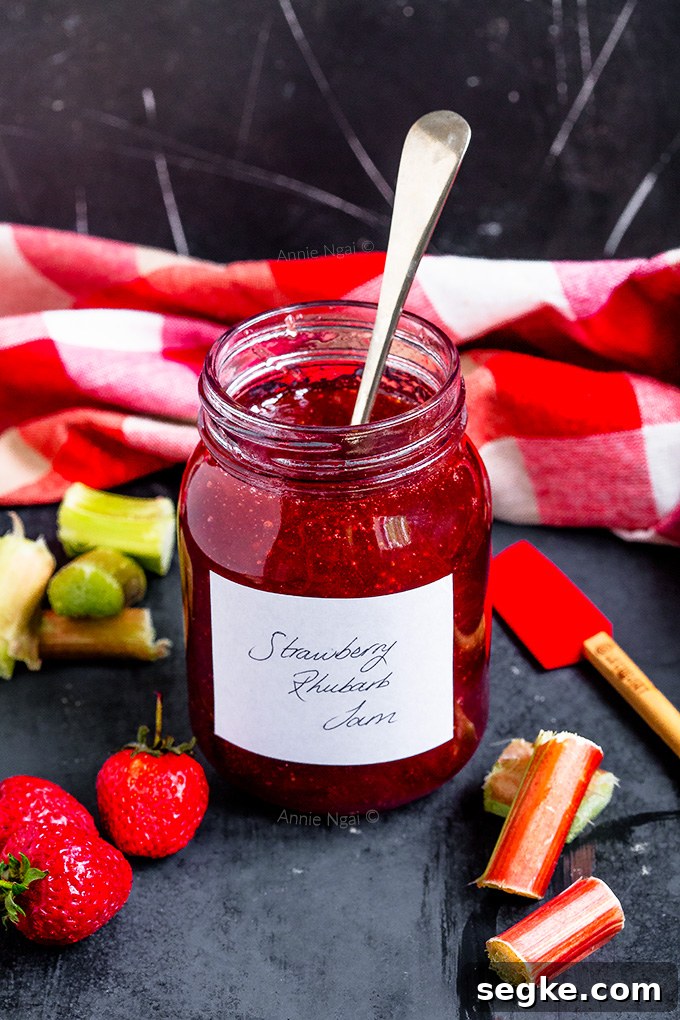
If you enjoy small-batch preserves, this recipe is a lovely way to use seasonal rhubarb and fresh strawberries. It’s forgiving, straightforward and yields a jar of bright, flavourful jam that complements many breakfasts and baked goods.