
If you haven’t guessed already, I’m completely in love with lemon. When it’s not the star of a dish, it’s usually the bright supporting flavor in almost everything I make.
 Even when lemon isn’t the headline, it’s rarely far away in my recipes. Today’s cake began as a plan to make a summery cheesecake—light, bright and just right for warm weather. My partner Jim loves cheesecake, so I wanted something refreshing that would still deliver that rich, creamy comfort of a classic cheesecake. The obvious answer: lemon.
Layers of lemon
This cheesecake is lemon-forward from top to bottom. Zest in the graham cracker crust, lemon-scented sugar in the filling, lemon juice and a touch of lemon bitters in the batter, and a finish of citrus whipped cream plus a generous spoonful of thick lemon curd on top. Each layer reinforces the bright, clean lemon flavor so every bite tastes freshly citrusy.
Easy press-in crust
A graham cracker crust is a timeless base for cheesecakes. For a gluten-free option you can substitute gluten-free crackers or make homemade gluten-free graham crumbs. I like adding grated lemon zest to the crumbs along with melted butter and a little brown sugar for richness. Press the crumbs into a parchment-lined 9-inch springform pan, working the sides first so the edge is even, then press the remainder across the bottom. Use the bottom of a measuring cup to compress the crust evenly and bake briefly until fragrant and set. Let it cool while you prepare the filling.
Lemon citrus sugar
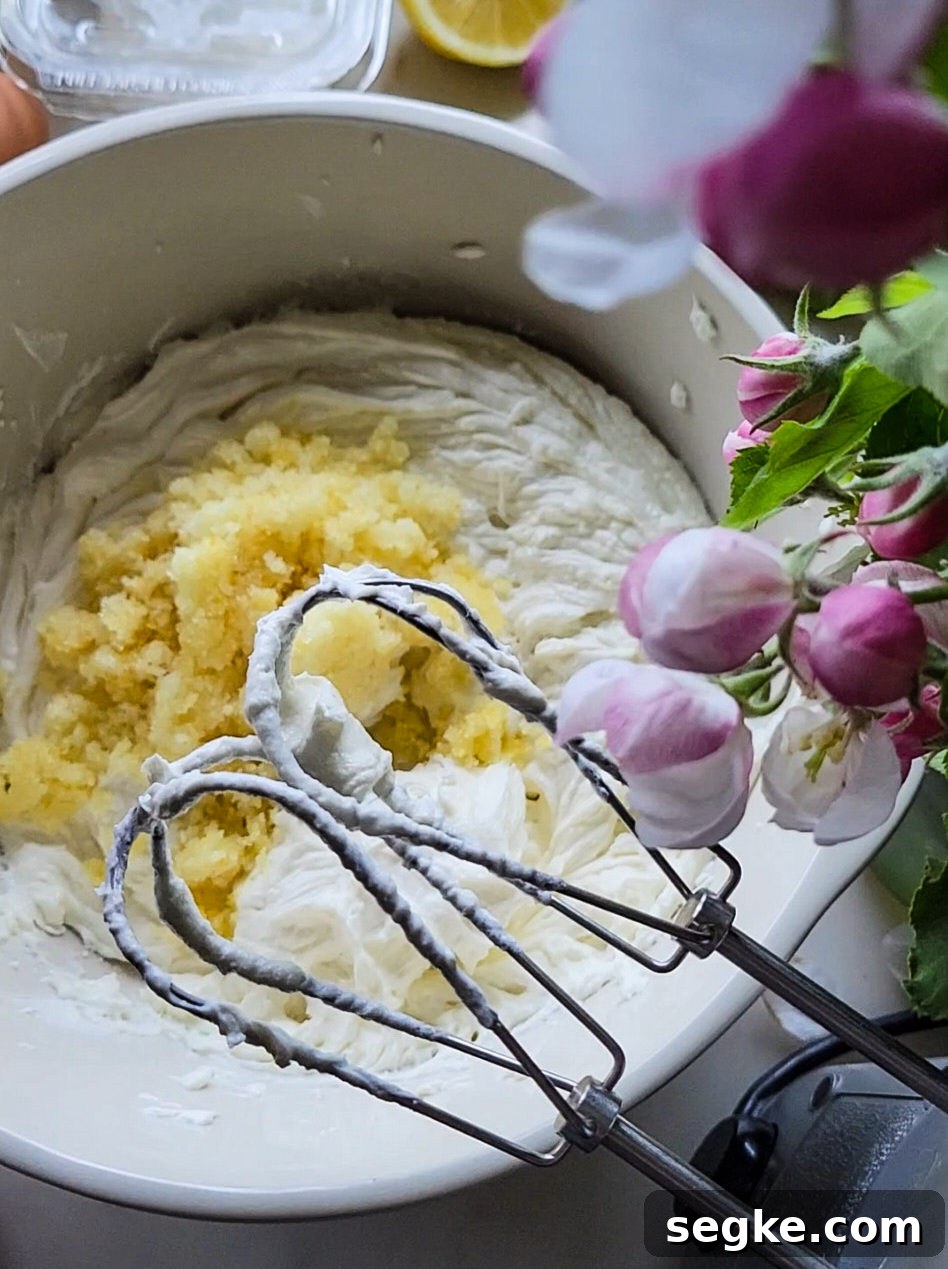
Infusing sugar with lemon zest intensifies both the sugar and the citrus. It’s simple: combine granulated sugar with fresh lemon zest in a food processor and pulse until well combined. The oils released from the zest perfume the sugar and give the filling an unmistakable lemon aroma.
Lemon bitters
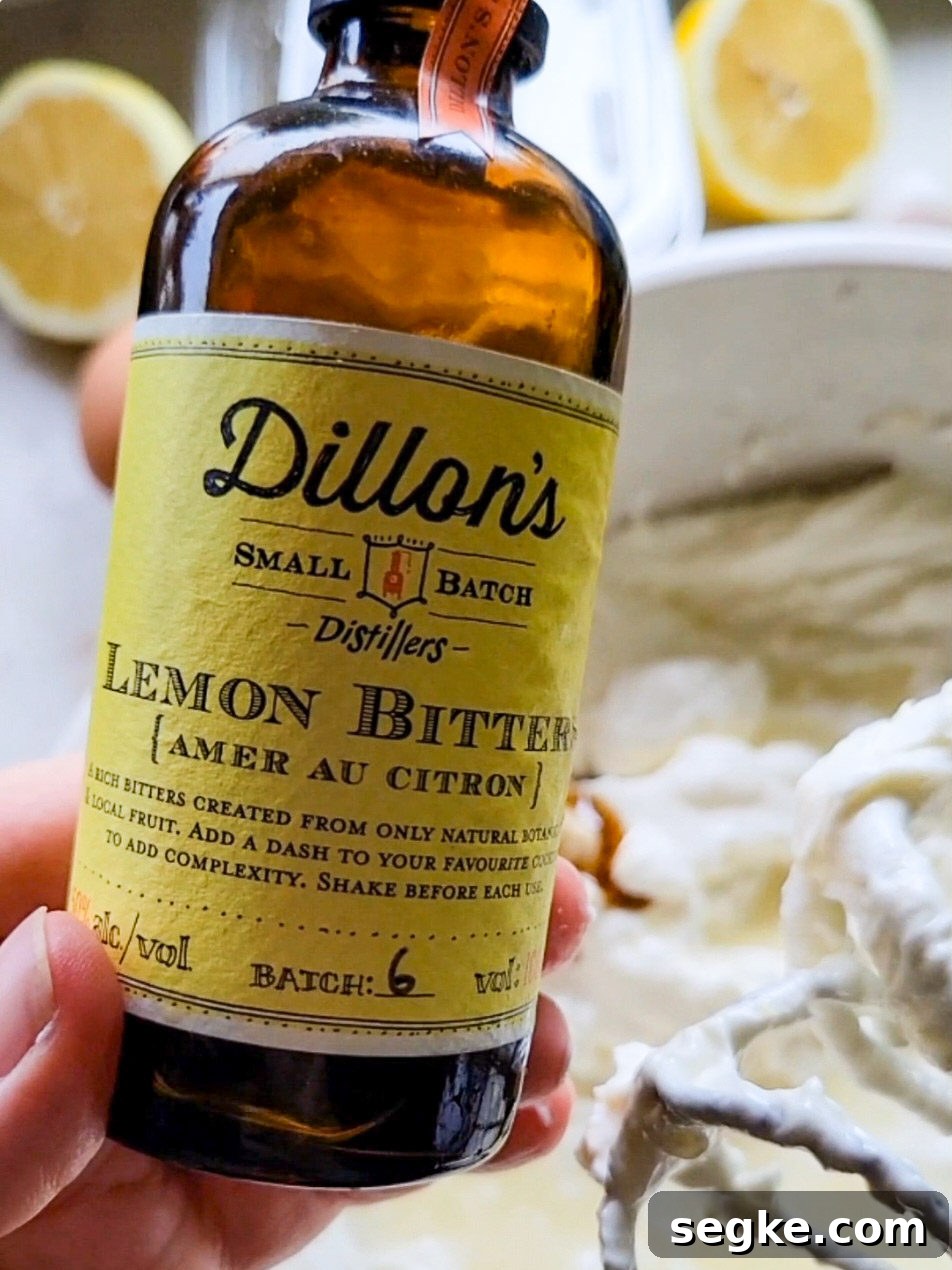
I like to use bitters in both sweet and savory recipes when I want to deepen or complement a flavor. Think of bitters as a finishing touch that adds complexity—use them sparingly. In this cheesecake, a small amount of lemon bitters intensifies the citrus profile and gives the filling a layered, slightly floral edge.
Cream cheese tip
If you can find fresh cream cheese from a local cheesemonger, your cheesecake will have a silkier texture and a brighter tang than mass-produced bricks. Local cream cheese often comes in tubs and is softer and creamier, which helps the filling blend smoothly for a more luxurious finish.
How to bake a cheesecake in summer — no water bath
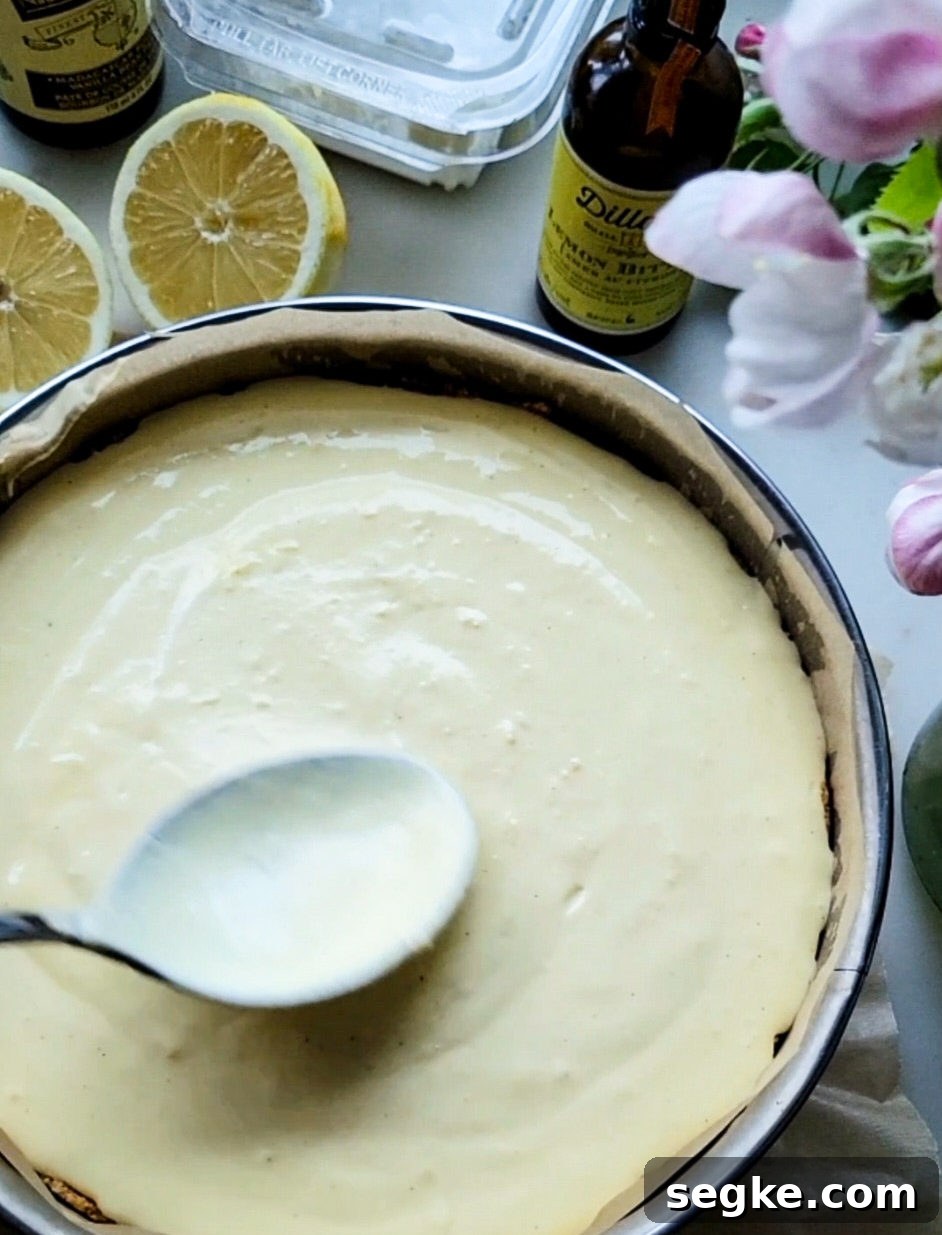
This cheesecake is ideal for warm-weather baking because it bakes at a low temperature. A low-and-slow bake keeps the kitchen cooler and helps prevent the filling from going into thermal shock, which is a common cause of cracks. With this method you don’t need a water bath; the slow, gentle heat yields a smooth, evenly set cheesecake without cracks.
After baking, allow the cheesecake to cool gradually inside the turned-off oven for about an hour. Because the pan is lined with parchment, the cake won’t adhere to the sides, which reduces the chance of cracking as it contracts slightly while cooling. Once it reaches room temperature, chill the whole pan in the refrigerator—ideally overnight. Cheesecake always benefits from resting in the fridge so the texture firms and flavors meld.
How to top this lemon cheesecake
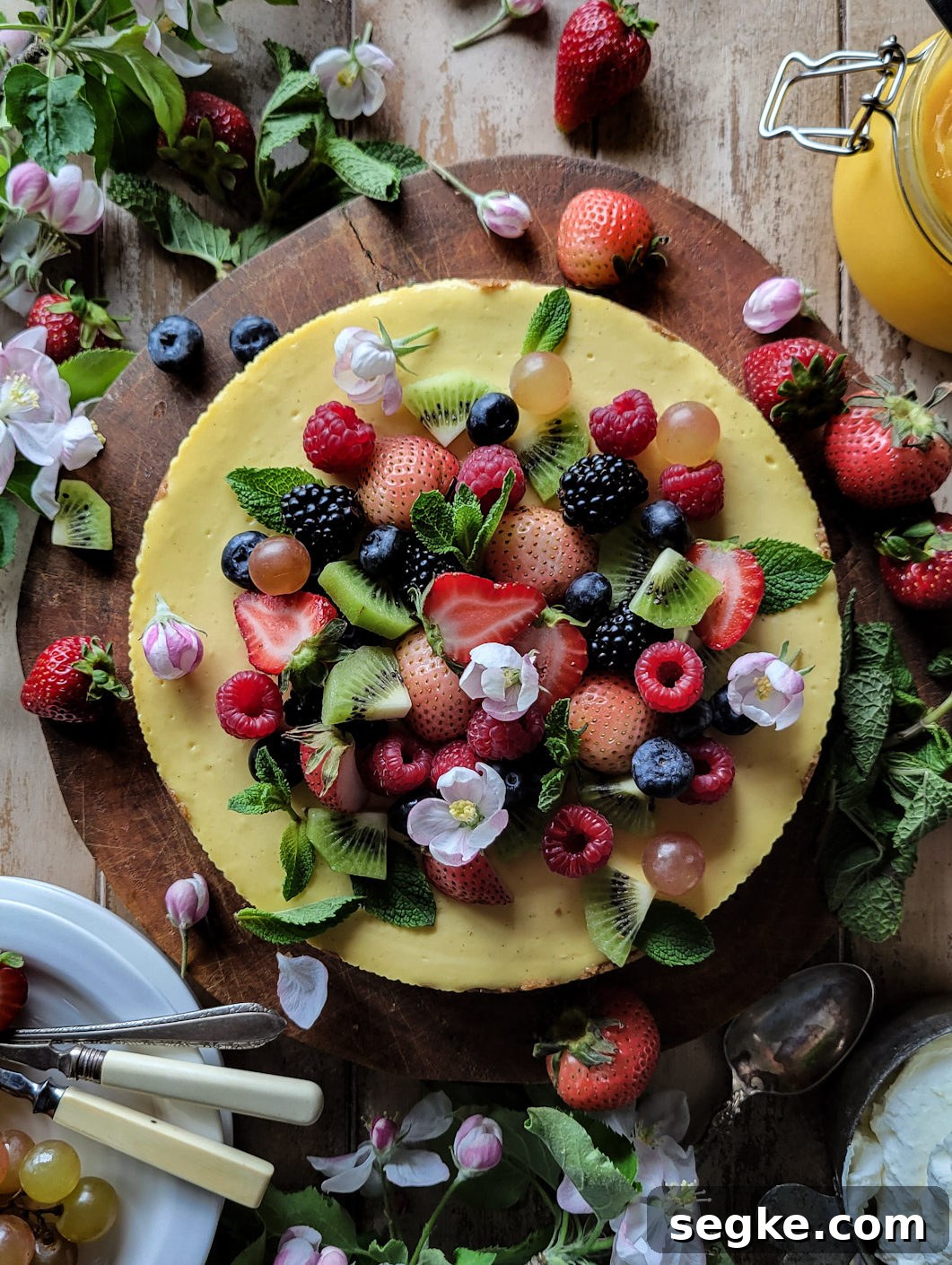
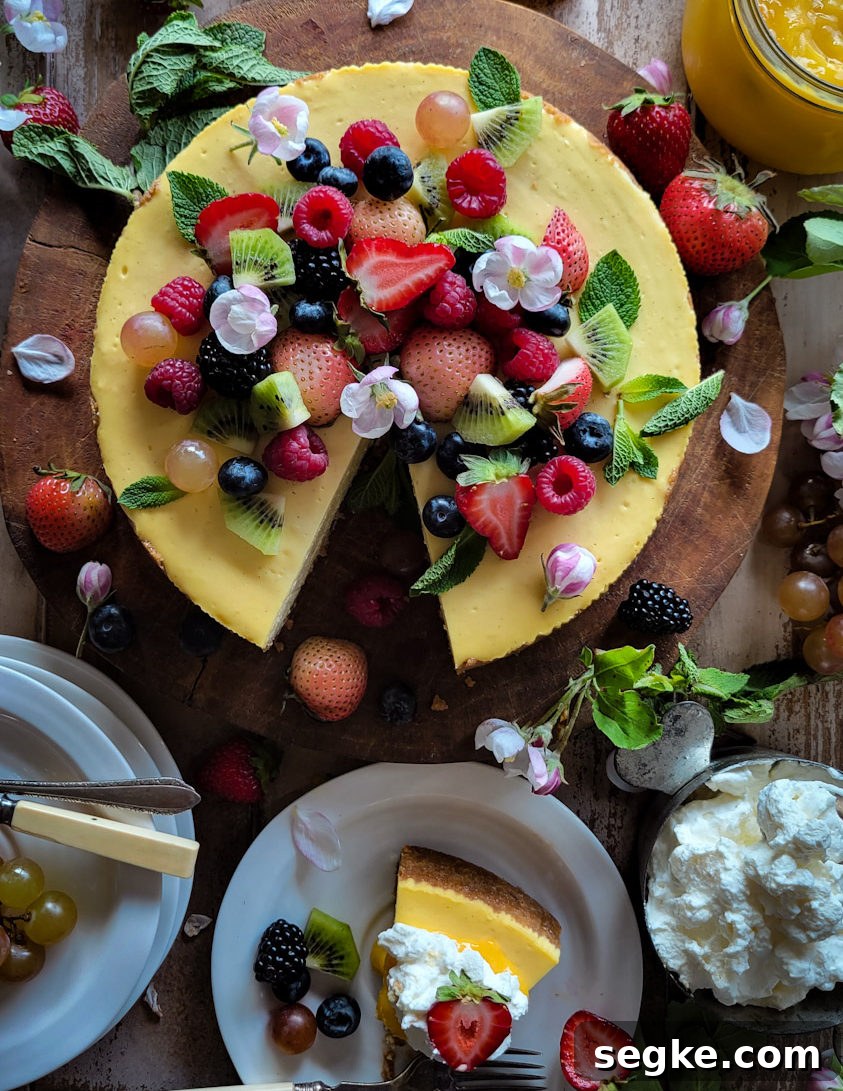
Finish with citrus whipped cream—heavy cream whipped with icing sugar and extra lemon zest—so the brightness continues through to the final bite. My favorite finishing touch is a spoonful of dense, velvety lemon curd for concentrated citrus flavor. Add fresh berries or sliced fruit to make the cake a showstopper; blot any cut fruit dry before arranging it on the cake to limit color bleed. A few mint leaves also make a pretty base for the fruit, but remove them before slicing or serve them on the side.

Final thoughts
This lemon cheesecake serves 10–12 slices. If you’re baking for two, halve the recipe and use a 6-inch springform pan, or make the full cake and freeze half for another day. To freeze, wrap the cooled cheesecake (still on its springform base) in a double layer of plastic wrap, then in foil, and freeze for up to one month. Thaw in the refrigerator overnight for best texture; if you need it sooner, you can thaw at room temperature for a few hours. A dollop of whipped cream and lemon curd will hide any small surface imperfections after thawing.
Lemony Lemon Cheesecake
Dessert
North American
cream cheese, gluten free, lemon, lemon curd
40
minutes
1
hour
30
minutes
4
hours
10
slices
Ingredients
Citrus Graham Cracker Crust
- 2 cups graham cracker crumbs (240g)
- 1/4 cup granulated white sugar (50g)
- 6 tbsp butter, melted (85g)
- Zest from one lemon
Lemon Cheesecake Filling
- 1 cup granulated white sugar (200g)
- 1 tbsp lemon zest
- 32 oz (904 g) or 4 packages cream cheese, room temperature
- 3 tbsp all-purpose flour (22 g) — can use a gluten-free cup-for-cup substitute
- 1/2 cup sour cream, room temperature (120g)
- 1/4 cup freshly squeezed lemon juice (60ml)
- 3/4 tsp vanilla extract
- 3/4 tsp lemon bitters
- 4 large eggs, room temperature
To finish
- Citrus whipped cream (see notes)
- Fresh berries — slice and pat dry before arranging
- Mint leaves — optional garnish; remove before slicing
- Lemon curd — for serving
Instructions
Lemon graham cracker crust
- Preheat the oven to 350°F (175°C). Line the bottom and sides of a 9-inch (23 cm) springform pan with parchment paper, trapping the paper between the pan base and sides. Trim any excess. Lightly spray the pan sides so the parchment stays in place.
- Combine graham crumbs, sugar, melted butter and lemon zest in a bowl or food processor until evenly moistened. If you used the food processor, you can use the same bowl for the sugar later.
- Press the crumb mixture up the sides about one inch and use the remaining crumbs to cover the bottom. Use a measuring cup to press the crust firmly and evenly. Bake for 10 minutes, then remove and let cool while you prepare the filling.
Lemon cheesecake filling
- Reduce the oven temperature to 275°F (135°C).
- Place the granulated sugar and 1 tablespoon lemon zest in a food processor and blend until the zest is well incorporated and aromatic.
- In a large bowl, beat the room-temperature cream cheese, lemon sugar and flour on low speed until smooth and lump-free.
- Add the sour cream, lemon juice, lemon zest, vanilla and lemon bitters; stir to combine.
- Add the eggs one at a time, mixing on low speed until just combined between additions. Scrape the bowl down before adding the final egg. Avoid over-mixing to keep excess air out of the batter.
- Pour the filling into the prebaked crust and smooth the top. Place the springform pan on a rimmed baking sheet and bake in the center of the oven until the outer two inches are set but the center still has a slight jiggle, about 1 hour 15 minutes to 1 hour 30 minutes.
- Turn off the oven and leave the cake inside as the oven cools for about an hour. Remove to a wire rack and allow to reach room temperature, then refrigerate at least 4 hours or ideally overnight.
To serve
- Top with sliced berries and mint leaves if desired. Use a sharp serrated knife warmed under hot water and wiped dry between slices for clean cuts.
- Serve each slice with a spoonful of citrus whipped cream and lemon curd.
- Store leftovers in an airtight container in the refrigerator for up to 3 days.
-
See the blog post notes below for additional tips and variations.
Recipe notes
The recipe is listed for 10 servings, but you can stretch it to 12 smaller slices.
For best flavor and texture, don’t substitute Greek yogurt for the sour cream. Sour cream gives the filling a subtle tang that balances the lemon.
Citrus whipped cream
1 cup whipping cream
2 tbsp icing sugar
1 tbsp fresh lemon zest (or more)
Whip the cream starting at low speed and increase to medium-high. When it becomes foamy, add the sugar and zest and whip to firm peaks. Make ahead and keep chilled until serving.
Lemon curd — use your preferred lemon curd recipe for a thick, glossy finish.